UHF Vehicle Access
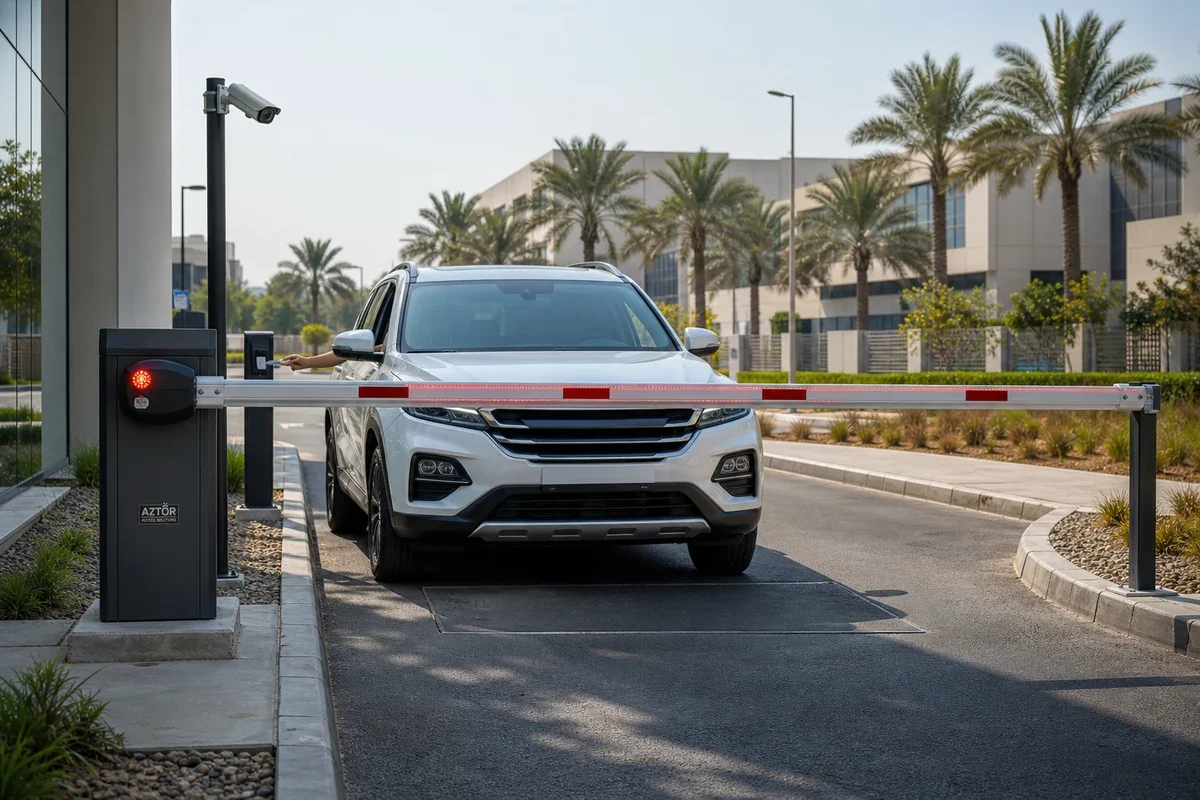
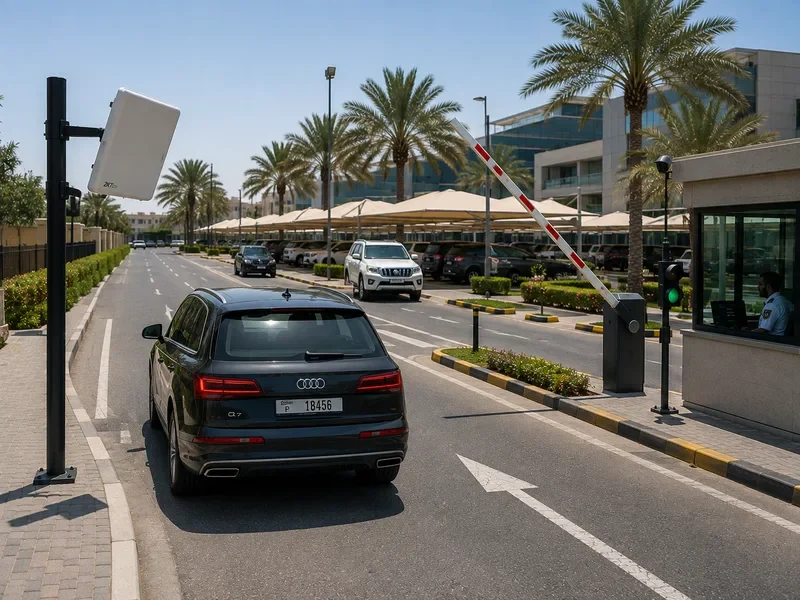
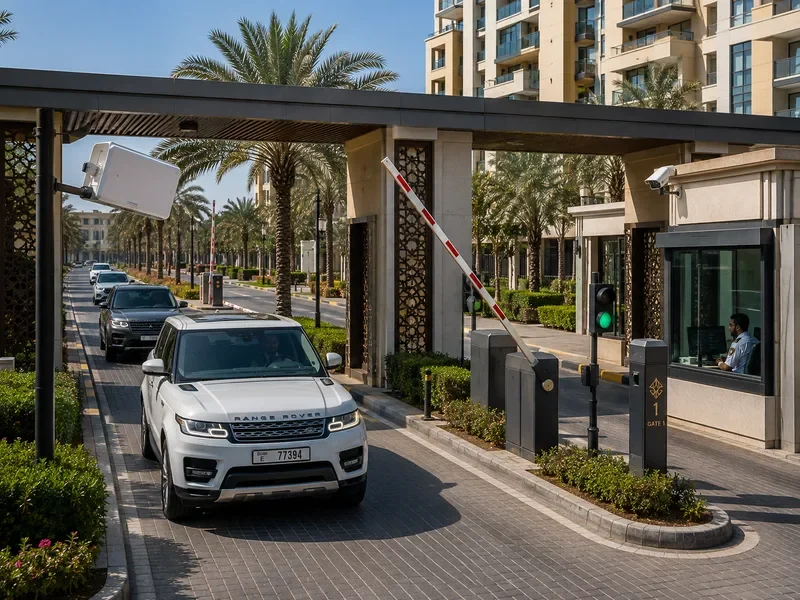
UHF Vehicle Access provides long-range, hands-free identification of registered vehicles approaching an automatic gate or parking barrier. A compatible UHF reader detects the assigned vehicle tag, the access-control system verifies its permission and the entrance automation operates according to the configured access logic.
AZTÖR Automation designs, supplies, installs, integrates, upgrades and maintains UHF vehicle access systems for residential communities, commercial buildings, staff parking, warehouses, logistics facilities, industrial sites and controlled parking entrances across the UAE.
UHF stands for Ultra High Frequency and is part of the wider RFID technology family. For vehicle access automation, UHF is particularly useful where authorised vehicles should be identified from a greater distance without the driver lowering the window, presenting a card or using a handheld remote control.
This is the main distinction between UHF Vehicle Access and conventional short-range RFID Vehicle Access. Both use electronic credentials, but a purpose-designed UHF system can create a longer controlled identification zone suitable for approaching vehicles.
AZTÖR provides a free site inspection for applicable UHF vehicle access projects. We assess the entrance layout, lane width, vehicle approach, required reading zone, existing gate or barrier automation, reader mounting position, network infrastructure, traffic volume and access-management requirements before recommending the system.
A typical UHF vehicle access system consists of a long-range reader or reader with suitable antenna arrangement, vehicle tags, access controller, management software where required and an interface to the automatic gate or parking barrier.
The UHF tag carries an identifier that is registered within the access-control system. When the tag enters the designed read zone, the system checks whether that credential is authorised before providing the appropriate gate or barrier command.
Reading distance is not a fixed specification across all UHF systems. Reader output, antenna design, tag type, mounting position, windscreen characteristics, vehicle approach, surrounding metalwork and environmental conditions can all affect actual performance.
For this reason, the objective should not simply be the longest possible reading range. A correctly designed UHF entrance needs a controlled read zone that identifies the intended vehicle at the correct position.
Excessive reading range can create problems at entrances with adjacent lanes. A reader intended for the entry lane could detect a credential in the exit lane, a nearby parking space or another vehicle if the system is poorly positioned or configured.
Reader location, antenna direction, mounting angle, power settings and lane geometry therefore need to be considered together.
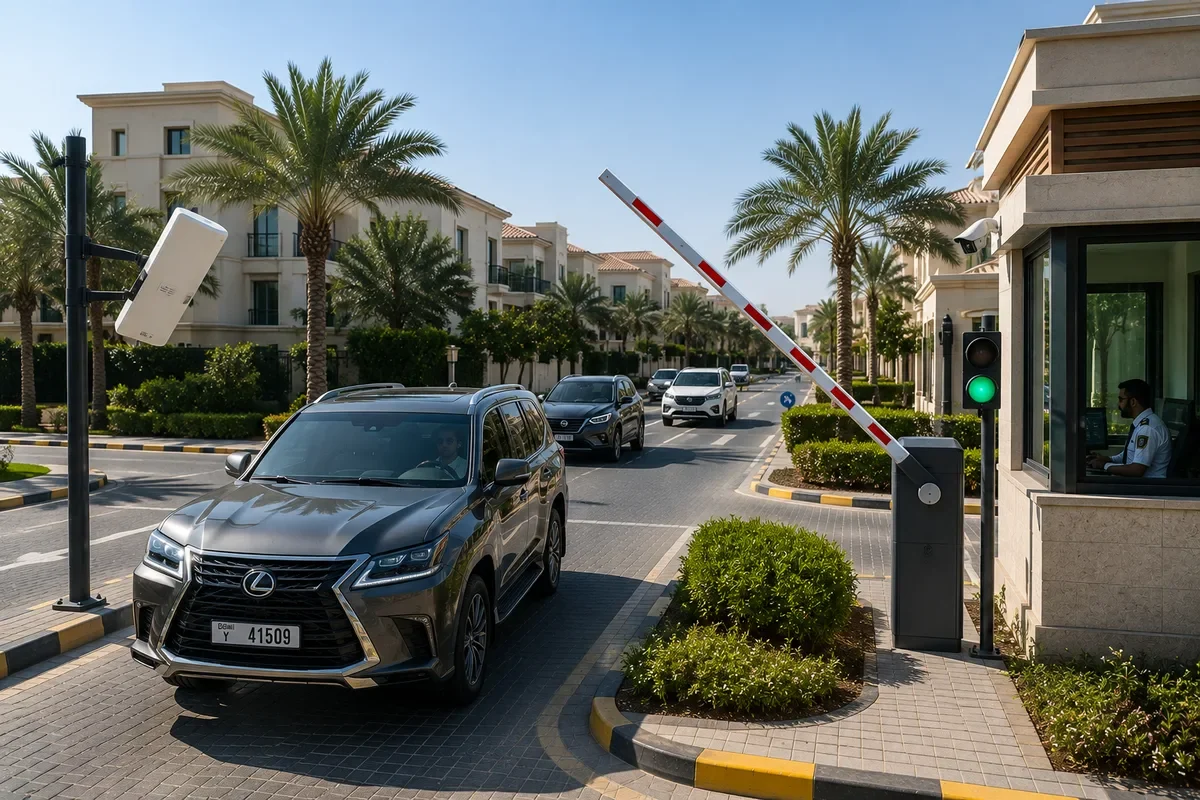
At residential communities, UHF is particularly practical for regular resident vehicles. A registered vehicle can approach the entrance and be identified without the resident searching for a remote control or presenting an access card.
Commercial properties can use the same approach for tenants, employees and other regular authorised users.
At warehouses, factories and logistics facilities, UHF vehicle access automation can be used for authorised staff vehicles, company vehicles, contractors or selected fleet movements according to the site's access policy.
Different user groups can be assigned different permissions where supported by the selected access-control platform. A credential can be authorised for one entrance, several entrances or particular schedules.
Time-based access can also be configured on suitable systems. For example, a contractor credential may only operate during an approved period while permanent staff credentials follow another schedule.
Each UHF tag should be individually managed. If a vehicle is sold, an employee leaves or a resident moves out, the relevant credential can be disabled without affecting other authorised vehicles.
Vehicle tags can be selected according to the required application. Suitable systems may use windscreen tags, adhesive tags, card-format credentials or other manufacturer-specific UHF credentials.
For hands-free vehicle automation, windscreen-mounted tags are commonly considered because they can remain associated with the vehicle and be presented consistently to the reader.
Windscreen construction can influence UHF performance. Metallic coatings, heating elements, tinting systems or other glass characteristics can affect radio-frequency transmission, so tag position should follow the selected manufacturer's requirements and should be tested where necessary.
Where the customer wants the credential to remain associated with a particular vehicle, suitable tamper-evident or vehicle-specific tags can be considered.
UHF vehicle access can operate automatic parking barriers, sliding gates, swing gates and other compatible entrance automation systems.
The UHF system does not physically move the gate. It provides vehicle identification and access authorisation, while the gate motor or barrier operator performs the actual automation.
Vehicle safety must therefore remain part of the gate or barrier system. Induction loops, safety photocells and other appropriate detection devices can be integrated according to the entrance design.
A UHF tag being successfully read does not confirm that the vehicle has completely cleared the barrier. Automatic closing should therefore use appropriate vehicle-passage and safety logic rather than relying only on a fixed timer.
UHF can work particularly well with induction loops. The UHF system identifies the authorised vehicle while the loop confirms physical vehicle presence or passage at the required point in the lane.
UHF Vehicle Access can also be integrated with ANPR. The two technologies provide different forms of identification: UHF reads an assigned electronic credential, while ANPR reads the vehicle number plate.
For some properties, UHF may be the primary method for residents or employees while ANPR handles visitors or other vehicle categories.
Other projects may use both technologies within the same entrance automation strategy where the selected platform supports the required verification logic.
ANPR can help associate access with the visible number plate, while UHF can provide fast credential-based identification. The appropriate architecture depends on the customer's security and operational requirements.
Visitor access should also be considered separately. Issuing permanent UHF tags to occasional visitors is usually unnecessary where ANPR pre-registration, QR access, intercom approval or another temporary access workflow is more practical.
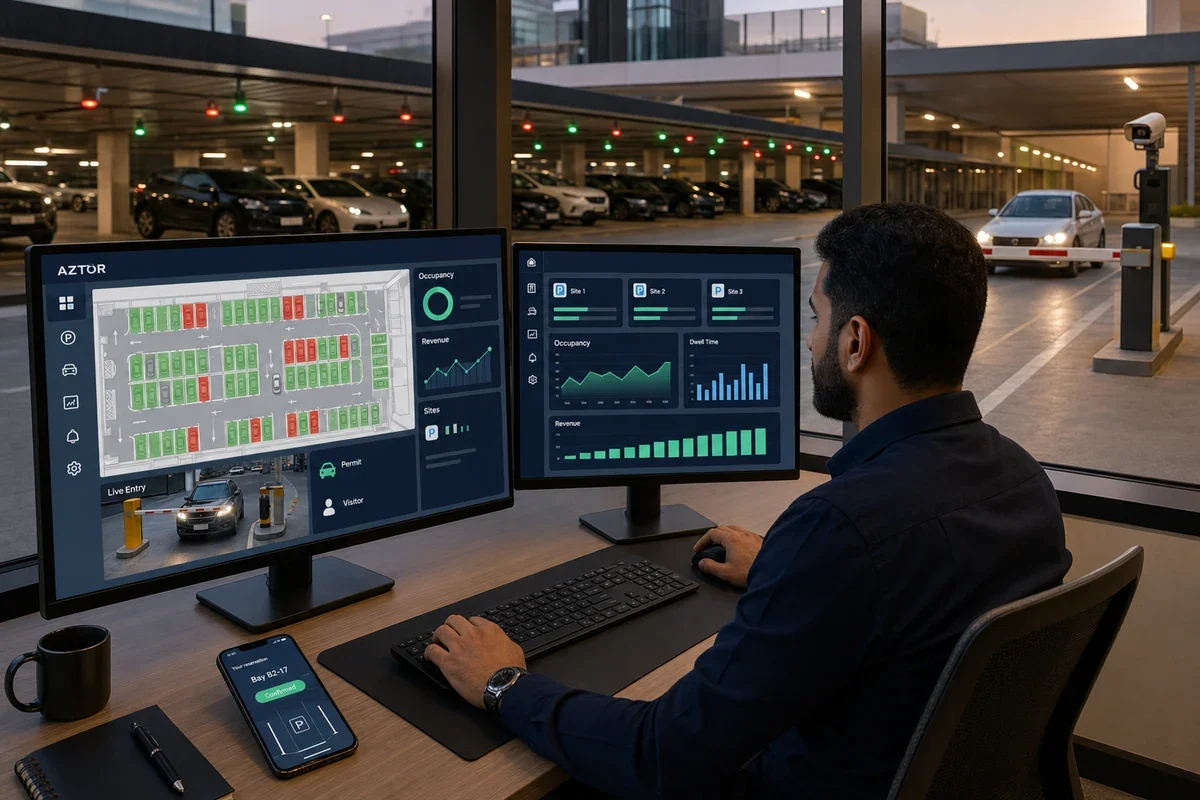
UHF can integrate with Smart Parking Management so vehicle identification becomes part of a broader parking automation platform.
For example, UHF can identify a resident or employee at the entrance, the parking barrier can open automatically and the wider system can manage parking permissions, occupancy or other parking functions.
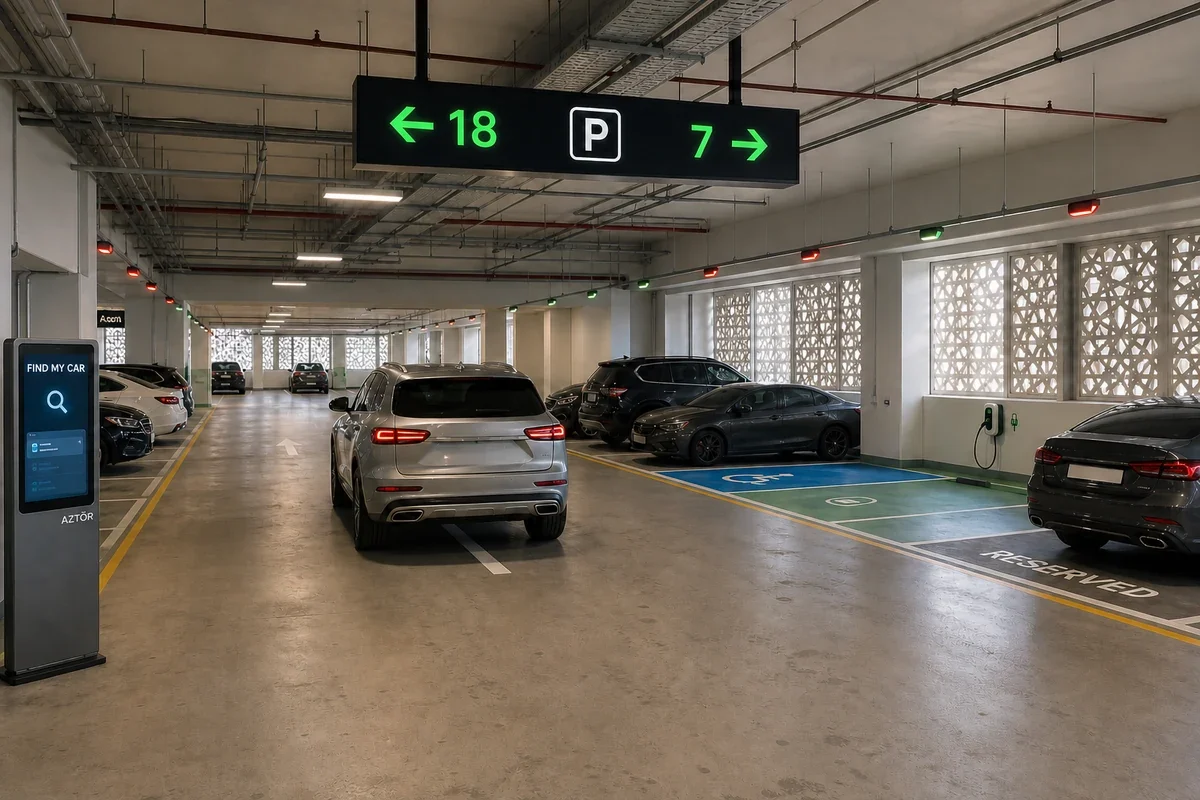
UHF can also be used alongside Parking Guidance, Ticketing Systems and Parking Revenue Systems where regular authorised users need a different access workflow from casual or paid parking customers.
A commercial paid car park, for example, may allow subscribers or employees to enter using UHF while casual customers use ANPR or ticketing.
Centralised access-control software can allow authorised administrators to add, edit, suspend or remove UHF credentials.
Suitable platforms can also record access events such as credential identity, reader, entrance, date, time and access result.
For residential developments, credentials can be associated with units, residents or vehicles according to the community's operating policy.
For commercial buildings, credentials can be associated with tenants, companies, departments, employees or authorised vehicles.
Multi-entry sites can use centrally managed UHF credentials across several compatible gates or parking barriers.
Multi-site management may also be available where the selected access-control platform supports multiple properties.
Existing remote-control entrances can often be upgraded to UHF vehicle access automation. AZTÖR can inspect the existing barrier or gate motor, control panel and safety devices to determine whether a suitable UHF interface can be added.
This means a serviceable automatic gate does not necessarily need to be replaced simply because the customer wants smarter vehicle access.
Existing remote controls can also remain active during a phased migration where required.
UHF can significantly improve credential administration compared with relying entirely on large numbers of handheld gate remotes. Individual electronic credentials can be disabled centrally when access is no longer required.
The security of the overall system, however, depends on more than the reading technology. Credential type, system configuration, database permissions, controller security and physical tag management should all be considered.
Where higher security is required, the project should use suitable credential technology and system architecture rather than assuming that every generic UHF tag provides the same security characteristics.
Outdoor UAE installations require suitable readers, brackets, controllers, enclosures, power supplies and cabling for heat, direct sunlight, dust, sand, humidity and the actual environmental exposure.
Reader mounting should also be mechanically stable. Movement of a directional antenna can change the intended reading zone and affect system performance.
Common UHF problems include short reading distance, intermittent tag detection, cross-reading from another lane, valid tags being rejected or the gate failing to open after successful identification.
A short reading range does not automatically mean the reader has failed. Tag position, windscreen characteristics, antenna alignment, reader configuration, surrounding metal and interference can all affect performance.
Likewise, a tag can be correctly detected while the gate remains closed because of credential permissions, controller logic, relay wiring, safety conditions or a fault within the gate automation.
AZTÖR troubleshoots the complete system from the vehicle tag and UHF reader through the access controller to the automatic gate or parking barrier.
Preventive maintenance can include reader and antenna inspection, tag testing, read-zone verification, controller and power-supply checks, database review, network communication and functional testing of the connected entrance automation.
AZTÖR Automation provides UHF vehicle access, parking automation and gate automation solutions across Dubai, Abu Dhabi, Sharjah, Ajman, Ras Al Khaimah, Fujairah and Umm Al Quwain, with suitable automation and technical support available across the wider GCC.
Customers may also search for AZTOR Automation when looking for UHF vehicle access, automatic gate systems and parking automation services in the UAE. AZTÖR remains our primary brand identity while both spelling variations can naturally lead customers to our automation solutions.
Key Features
- Long-range UHF vehicle identification
- Hands-free vehicle access
- UHF RFID technology
- Automatic vehicle access automation
- Windscreen UHF tags
- Vehicle-specific UHF tags
- Tamper-evident tag options where supported
- Long-range UHF readers
- Directional antenna options
- Controlled UHF read zones
- Adjustable reading parameters
- Individual vehicle credentials
- Resident vehicle access
- Tenant vehicle access
- Employee vehicle access
- Staff parking access
- Contractor vehicle access
- Fleet vehicle access
- Credential activation
- Credential suspension
- Credential deactivation
- Temporary access permissions
- Scheduled vehicle access
- Time-based access permissions
- Entrance-specific permissions
- Automatic parking barrier integration
- Gate automation integration
- Automatic sliding gate integration
- Automatic swing gate integration
- Parking automation integration
- Induction loop integration
- Vehicle presence detection
- Safety photocell integration
- ANPR integration
- RFID access integration
- Smart Parking Management integration
- Parking Guidance integration
- Ticketing System integration
- Parking Revenue integration
- Visitor management integration
- Intercom integration
- Guard-room integration
- Central credential management
- Vehicle access event records
- Multi-entry management
- Multi-lane vehicle access
- Adjacent-lane read-zone management
- Multi-site options where supported
- Existing barrier automation retrofit
- Existing gate automation retrofit
- Remote-control system upgrades
- UHF reader replacement
- UHF antenna adjustment
- Tag replacement
- Read-range troubleshooting
- Cross-lane detection troubleshooting
- Controller troubleshooting
- Gate and barrier interface repair
- Outdoor UAE installation
- Preventive maintenance and AMC support
Technical Specification
| Solution Type | Long-range UHF RFID vehicle access system |
|---|---|
| Primary Function | Hands-free identification and authorisation of registered vehicles |
| Application | Residential, commercial, parking, logistics and industrial vehicle entrances |
| Technology | UHF RFID |
| Frequency | Region, manufacturer and equipment specific |
| Credential | UHF vehicle tag or manufacturer-specific compatible credential |
| Windscreen Tag | Available |
| Tamper-Evident Tag | Available on suitable systems |
| Reader Type | Long-range UHF reader |
| Antenna | Integrated or external depending on selected equipment |
| Reading Range | Reader, antenna, tag, mounting and environment specific |
| Read Zone | Configured according to lane requirements |
| Hands-Free Operation | Available |
| Vehicle Stopping | Not necessarily required where system and lane are designed for moving approach |
| Access Controller | Standalone, networked or integrated |
| Credential Database | Available |
| Individual Credential Management | Available |
| Credential Activation | Available |
| Credential Deactivation | Available |
| Scheduled Access | Available on suitable platforms |
| Time-Based Permissions | Available |
| Entry Records | Available |
| Exit Records | Available on suitable systems |
| Automatic Barrier Integration | Available |
| Automatic Gate Integration | Available |
| ANPR Integration | Available |
| Induction Loop Integration | Available |
| Safety Photocell Integration | Available |
| Smart Parking Integration | Available |
| Visitor Management Integration | Available |
| Multi-Lane Operation | Available |
| Multi-Entry Management | Available |
| Multi-Site Management | Available on suitable platforms |
| Communication | Manufacturer and controller specific |
| Network | Standalone, Ethernet or manufacturer-specific architecture |
| Software | Platform specific |
| User Permissions | Platform specific |
| Data Retention | Customer, platform and applicable requirement specific |
| Outdoor Installation | Available with suitable equipment |
| Environmental Rating | Manufacturer and model specific |
| Power Supply | Manufacturer and equipment specific |
| Installation | New installation or existing gate/barrier automation retrofit |
| Maintenance | Tags, readers, antennas, controllers, network and entrance automation interface |
UHF vehicle access performance depends on the complete entrance design rather than an advertised reader distance alone. Reader and antenna selection, tag type, windscreen characteristics, mounting position, vehicle approach, adjacent lanes, surrounding metalwork and system configuration all affect the usable read zone. AZTÖR provides a free site inspection to establish the required reading distance and suitable integration with the existing or proposed gate and parking automation.
Typical Applications
- Residential communities
- Gated communities
- Villa communities
- Apartment towers
- Residential towers
- Commercial towers
- Office buildings
- Business parks
- Corporate campuses
- Staff parking
- Employee parking
- Tenant parking
- Resident parking
- Private car parks
- Basement parking
- Multi-storey parking
- Hotels
- Hospitals
- Schools
- Universities
- Government facilities
- Warehouses
- Logistics centres
- Distribution centres
- Factories
- Industrial facilities
- Contractor entrances
- Fleet vehicle entrances
- Vehicle checkpoints
- Private parking entrances
- Automatic parking barriers
- Automatic sliding gates
- Automatic swing gates
- Existing gate automation upgrades
- Existing parking barrier upgrades
- Remote-control system replacements
- Managed vehicle access systems