Ticketing Systems
Parking Ticketing Systems manage vehicle entry, parking sessions, payment and exit at controlled car parks. They can combine entry terminals, tickets or digital credentials, automatic barriers, payment equipment, validation and central management software into one coordinated parking operation.
AZTÖR supplies, installs, integrates, upgrades and maintains parking ticketing solutions for shopping malls, hotels, hospitals, commercial buildings, public parking facilities, mixed-use developments and other managed car parks across the UAE.
A parking ticketing system should be designed around the commercial and operational requirements of the car park rather than simply installing a ticket dispenser beside a barrier. Traffic volume, parking tariffs, entry and exit lanes, payment methods, validation requirements, operating hours and staffing all influence the final architecture.
Traditional ticket-based parking normally issues a physical ticket when a vehicle enters. The parking session is recorded by the system, and the applicable parking charge is calculated according to the configured tariff before the vehicle exits.
Depending on the selected platform, tickets can use barcode, QR, magnetic or other manufacturer-specific technologies. The appropriate format depends on the equipment ecosystem and parking-management platform.
Modern parking facilities can also operate using ticketless technologies. ANPR can associate the vehicle's number plate with its parking session, reducing or eliminating the need for a physical entry ticket where the selected system supports this workflow.
Hybrid parking systems can support more than one user type. Casual visitors may use tickets or ANPR, while employees, residents, tenants or regular customers use UHF, RFID, access cards or another registered credential.
AZTÖR provides a free site inspection for applicable parking ticketing projects. We assess the entry and exit lanes, traffic volume, parking capacity, existing barriers, available islands, network infrastructure, electrical requirements, cashier locations and required payment workflow before recommending the system.
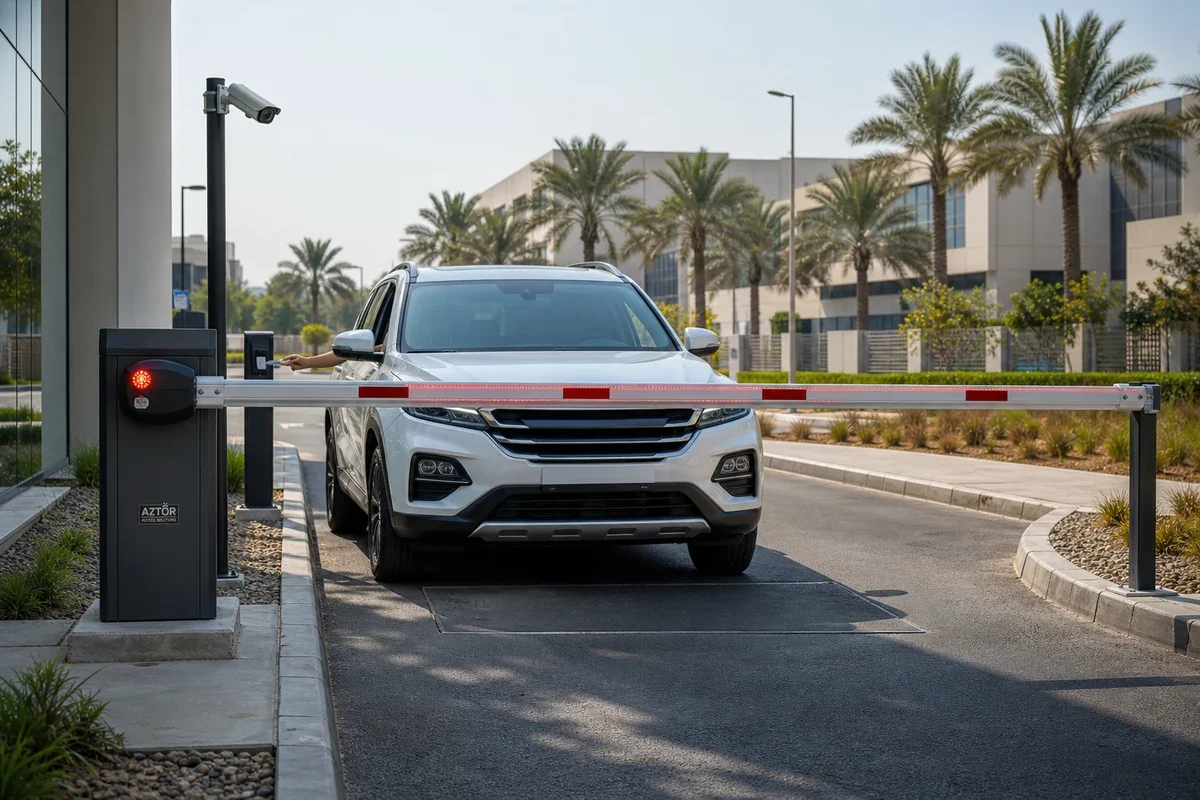
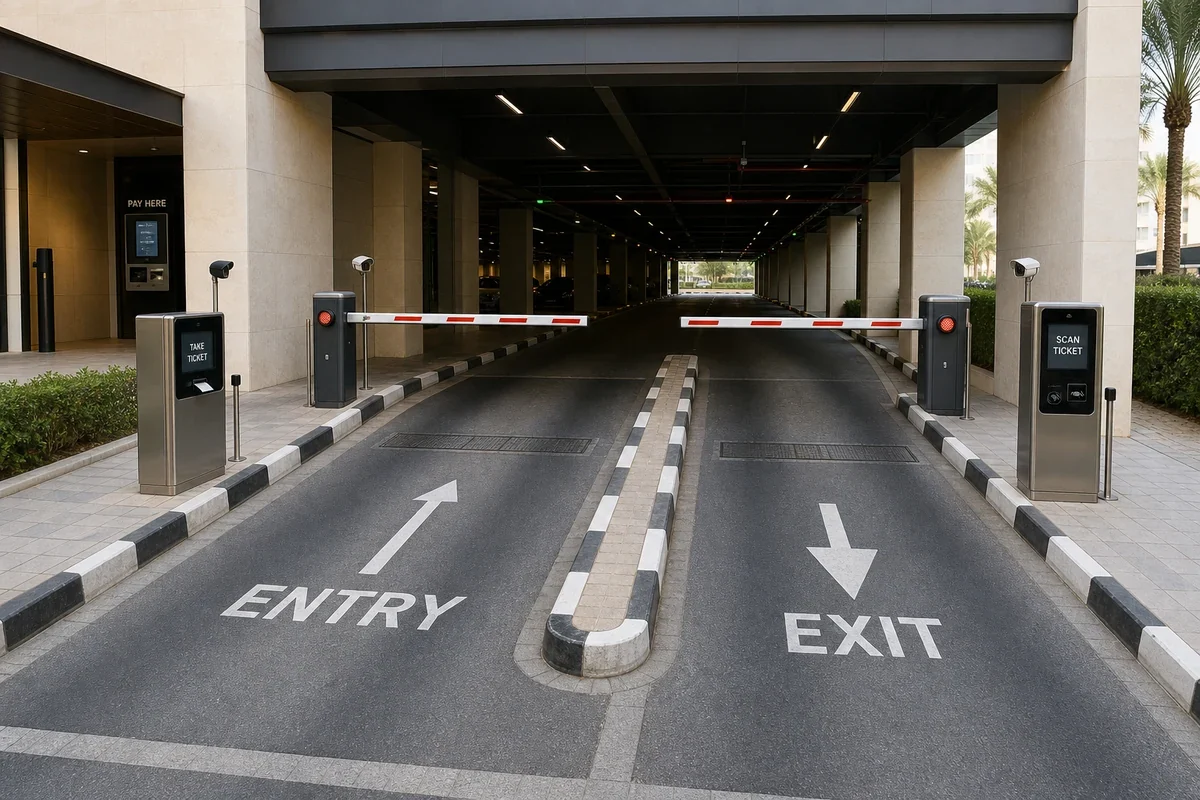
At a conventional ticketed entry lane, the vehicle is detected at the terminal and the driver requests or receives an entry credential according to the selected system. The connected barrier is then released according to the configured entry sequence.
Vehicle-detection loops or other suitable presence sensors can help ensure that ticketing equipment and barriers respond to an actual vehicle in the correct lane position.
The ticket dispenser should be positioned so drivers can reach it conveniently without opening the vehicle door or creating an awkward approach. Lane width, island position and terminal height therefore need to be considered during civil and equipment planning.
At exit, the parking credential is processed according to the configured workflow. The system confirms the parking session and payment or validation status before sending an authorised opening command to the exit barrier.
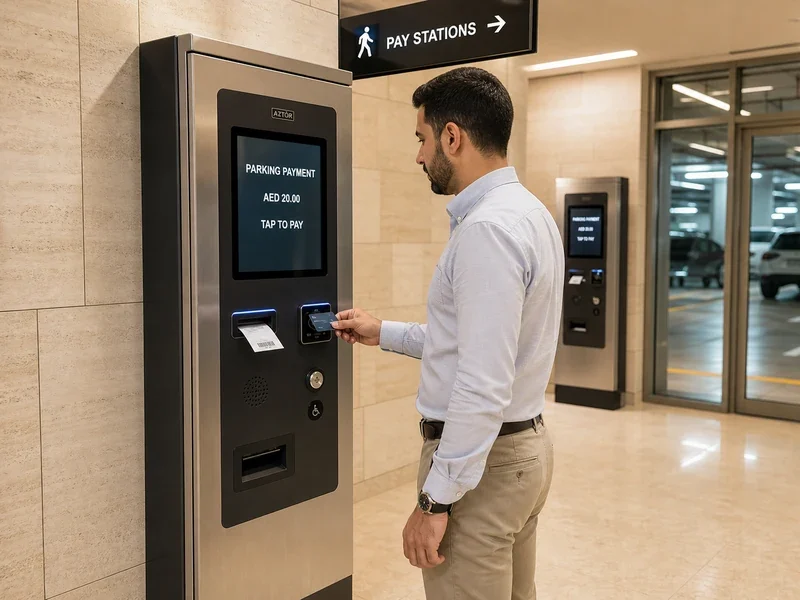
Payment can be handled through several methods depending on the selected platform. These can include staffed cashier stations, automatic pay stations, payment at exit, digital payment or other compatible payment technologies.
Automated pay stations can allow customers to settle parking charges before returning to their vehicle. This can reduce transaction time at the exit lane when the overall system is designed around a pay-before-exit workflow.
Payment-terminal functionality, card acceptance, contactless payments, receipts and integrations depend on the selected payment provider, acquiring arrangement and parking platform. These should be confirmed for the specific UAE deployment rather than assumed to be universally available.
Cash payment can also be supported on suitable parking systems where the project requires it. Cash-handling equipment introduces additional operational requirements including note or coin handling, replenishment, collection, reconciliation and maintenance.
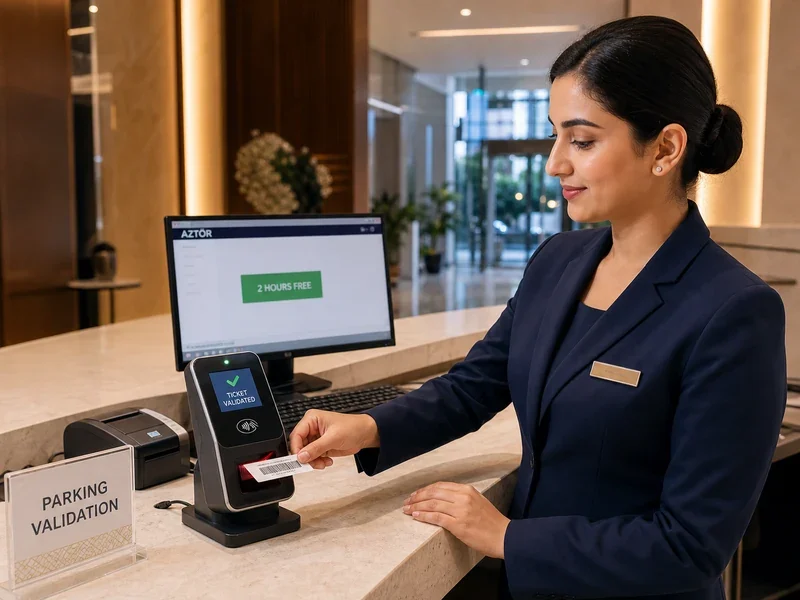
Many commercial properties require parking validation. Shopping malls, hotels, hospitals, restaurants, offices and other facilities may provide free or discounted parking to qualifying customers according to configured rules.
Validation can be implemented through suitable cashier terminals, reception systems, digital platforms, QR workflows or other supported technologies depending on the selected parking solution.
Parking tariffs can normally be configured according to the capabilities of the selected management software. Examples can include grace periods, hourly tariffs, daily maximums, lost-ticket rules, complimentary periods and other site-specific parking policies.
The actual tariff rules remain the responsibility of the parking operator and should be configured according to the property's commercial policy and applicable requirements.
Lost-ticket handling should be considered during system design. The workflow can differ significantly between a physical ticket system and an ANPR-supported parking system.
ANPR can be integrated with ticketing to provide an additional vehicle reference at entry and exit. Depending on the selected platform, this can support ticketless operation, ticket verification or more efficient lost-ticket investigation.
ANPR performance depends on suitable cameras, positioning, illumination, lane geometry, plate visibility and software. A standard surveillance camera should not automatically be assumed to provide reliable parking ANPR functionality.
Season-pass and regular-user parking can also be incorporated. Employees, tenants or subscribed users can receive parking permissions that bypass the normal casual parking payment workflow according to the configured system.
UHF long-range vehicle identification can be particularly useful for regular users because the credential can be detected as the vehicle approaches the barrier.
Parking ticketing can also be integrated with Smart Parking Management. The ticketing system handles the parking session and commercial transaction while the wider platform can provide occupancy, user management, reporting and other parking functions.
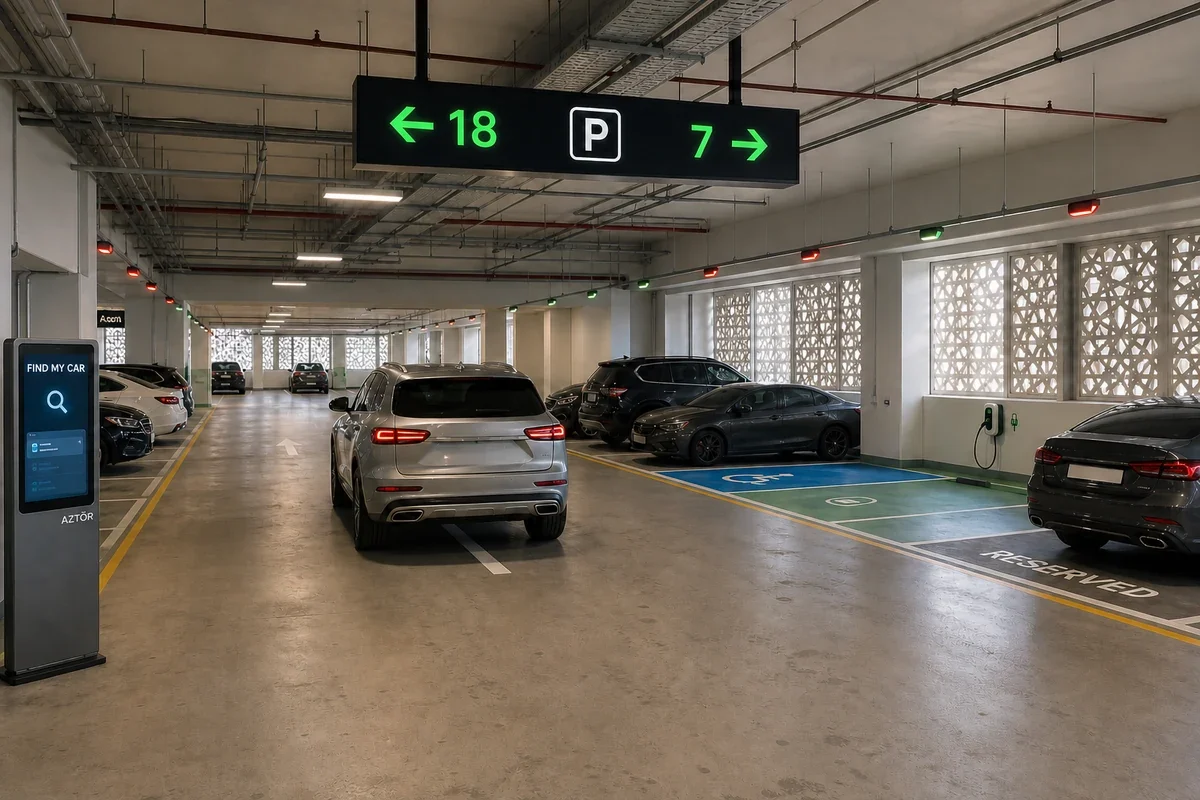
Parking Guidance can be added separately to direct drivers toward floors or zones with available spaces after they enter the car park.
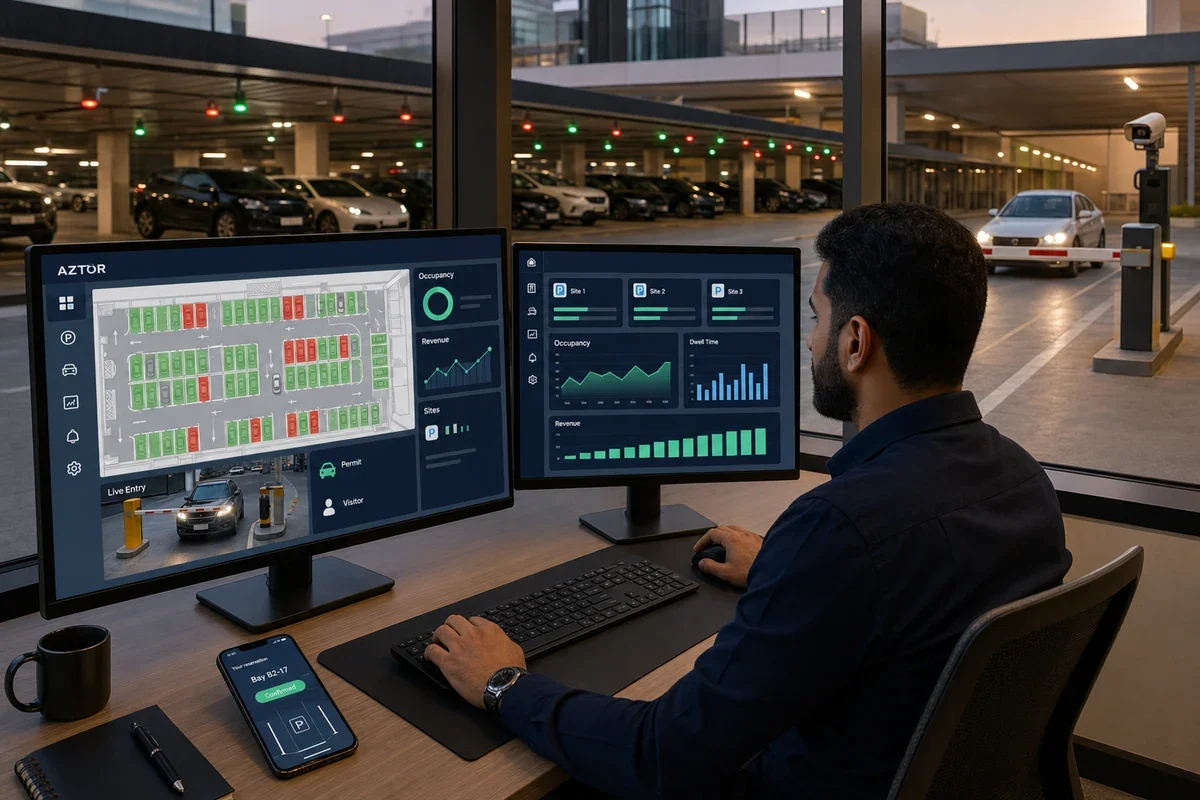
Central management software can provide authorised operators with information about entry and exit transactions, active parking sessions, payments, validations, equipment status and other system-specific data.
Suitable systems can generate operational and financial reports. Exact reporting, reconciliation, audit and export capabilities depend on the selected parking-management platform.
User permissions should be configured so that cashiers, supervisors, administrators and technical personnel have access only to the functions appropriate to their roles.
Where the system processes vehicle number plates, payment information, customer details or identifiable access records, the project should consider applicable UAE privacy, cybersecurity and data-protection requirements.
Payment-card information should be handled through appropriate payment infrastructure rather than being unnecessarily stored within unrelated parking equipment. The selected payment solution and service providers should meet the requirements applicable to the intended transaction environment.
Parking equipment should also have a practical fallback procedure. Network, payment or server interruptions should not result in uncontrolled vehicle movement or leave the facility without an authorised operational process.
The exact fallback arrangement depends on the selected architecture and can include local operation, authorised manual controls, offline functionality supported by the platform or other site procedures.
Entry and exit barriers remain physical traffic-control devices and require suitable safety detection even when they are connected to sophisticated ticketing software. Vehicle loops, photocells and other suitable sensors should be designed around the lane.
Traffic lights, intercoms and help-call facilities can also be integrated where drivers may require assistance at entry, payment or exit points.
For busy car parks, transaction speed is important. Slow ticket collection, payment or validation can create queues even when the barrier itself opens quickly, so the complete customer journey should be considered.
Multi-lane facilities can use separate entry and exit terminals connected to a central system. Lane status and transaction information can then be monitored centrally where supported by the platform.
Multi-site parking management is also available on suitable platforms for operators managing more than one car park, subject to the software architecture and commercial requirements.
Existing parking facilities can often be upgraded. AZTÖR can inspect existing barriers, loops, terminals, ANPR cameras, network equipment and controls to determine which components can reasonably be retained.
A conventional ticket-based car park may also be assessed for migration toward hybrid or ticketless operation where the existing infrastructure and selected new platform support the transition.
Common ticketing faults include tickets not being issued, unreadable tickets, entry terminals remaining offline, barriers not receiving opening commands, payment stations rejecting transactions or exit terminals failing to recognise a completed parking session.
These problems can originate from the terminal, printer or reader, sensor, controller, barrier, network, server, software or payment integration. Effective troubleshooting therefore requires checking the complete transaction chain.
Preventive maintenance can include entry and exit terminals, ticket printers and readers, barriers, loops, photocells, intercoms, pay stations, controllers, ANPR cameras, network equipment and other field devices included in the installed solution.
AZTÖR provides parking ticketing system installation, integration, upgrades, repair and maintenance across Dubai, Abu Dhabi, Sharjah, Ajman, Ras Al Khaimah, Fujairah and Umm Al Quwain, with suitable smart parking solutions available across the wider GCC.
Key Features
- Automated parking ticketing systems
- Parking entry ticket terminals
- Parking exit terminals
- Ticket dispensers
- Ticket readers
- Barcode ticketing options
- QR ticketing options
- Manufacturer-specific ticket technologies
- Ticketless parking options
- Hybrid ticket and ticketless parking
- Automatic parking barrier integration
- Entry barrier control
- Exit barrier control
- Vehicle detection
- Induction loop integration
- Safety photocell integration
- ANPR integration
- UHF vehicle access integration
- RFID integration
- Regular-user parking
- Season-pass parking
- Visitor parking
- Casual parking management
- Paid parking management
- Parking tariff configuration
- Grace-period configuration
- Hourly parking tariffs
- Daily parking rules
- Lost-ticket workflows
- Parking validation
- Retail parking validation
- Hotel parking validation
- Hospital parking validation
- Office parking validation
- Cashier station integration
- Automatic pay station integration
- Payment-at-exit options
- Digital payment integration where supported
- Contactless payment options where supported
- Cash payment options where required
- Receipt printing options
- Parking session management
- Entry and exit transaction records
- Parking duration calculation
- Central parking management software
- Operator dashboard
- Cashier user accounts
- Supervisor permissions
- Administrator permissions
- Operational reporting
- Financial reporting
- Transaction reporting
- Validation reporting
- Equipment-status monitoring
- Intercom integration
- Help-call integration
- Traffic-light integration
- Multi-entry management
- Multi-exit management
- Multi-lane parking management
- Multi-site management where supported
- Smart Parking Management integration
- Parking Guidance integration
- Existing parking-system upgrades
- Ticket-to-ANPR migration options
- System troubleshooting
- Preventive maintenance and AMC support
Technical Specification
| Solution Type | Automated parking ticketing system |
|---|---|
| Primary Function | Manage parking entry, sessions, payment, validation and exit |
| Application | Commercial, public and controlled parking facilities |
| Parking Mode | Ticketed, ticketless or hybrid |
| Entry Terminal | Available |
| Exit Terminal | Available |
| Ticket Dispenser | Available on ticket-based systems |
| Ticket Reader | Available |
| Ticket Technology | Barcode, QR or manufacturer-specific |
| ANPR | Available |
| UHF Access | Available |
| RFID Access | Available |
| Automatic Barriers | Integrated where required |
| Vehicle Detection | Induction loop or compatible detection technology |
| Safety Photocells | Available |
| Parking Tariffs | Software configurable |
| Grace Period | Platform specific |
| Lost Ticket Management | Available according to platform |
| Parking Validation | Available |
| Cashier Station | Available |
| Automatic Pay Station | Available |
| Payment at Exit | Available on suitable systems |
| Cash Payment | Available on suitable equipment |
| Card Payment | Subject to selected payment solution and provider |
| Contactless Payment | Subject to selected payment solution |
| Digital Payment | Platform and payment-provider specific |
| Receipt Printing | Available on suitable terminals |
| Parking Duration | Available |
| Season Passes | Available on suitable platforms |
| Regular User Management | Available |
| Central Software | Available |
| Management Dashboard | Available |
| Transaction Records | Available |
| Operational Reports | Platform specific |
| Financial Reports | Platform specific |
| User Permissions | Platform specific |
| Intercom | Available |
| Help Call | Available |
| Traffic Lights | Available |
| Multi-Lane Operation | Available |
| Multi-Site Operation | Available on suitable platforms |
| Parking Guidance Integration | Available |
| Smart Parking Integration | Available |
| Network | Ethernet or manufacturer-specific architecture |
| Server Architecture | Cloud, on-premises or platform specific |
| Data Retention | Customer, platform and applicable requirement specific |
| Power Backup | Project and equipment specific |
| Installation | New installation or existing parking-system upgrade |
| Maintenance | Terminals, printers, readers, barriers, sensors, payment equipment, controllers and network devices |
Parking ticketing systems should be designed around the required parking business model, number of entry and exit lanes, expected transaction volume, tariff structure, validation process, payment methods and existing infrastructure. Ticket, payment and software functionality varies by manufacturer and service provider. Payment integration should be confirmed for the intended UAE deployment. AZTÖR provides a free site inspection before finalising the system architecture.
Typical Applications
- Shopping malls
- Retail developments
- Commercial towers
- Office buildings
- Business parks
- Hotels
- Resorts
- Hospitals
- Healthcare facilities
- Mixed-use developments
- Public car parks
- Private paid parking
- Multi-storey car parks
- Basement parking
- Visitor parking facilities
- Airport parking
- Transport facilities
- Exhibition centres
- Entertainment venues
- Leisure destinations
- Universities
- Government facilities
- Commercial developments
- Corporate campuses
- Managed parking facilities
- Staff and visitor parking
- Hotel guest parking
- Retail customer parking
- Hospital visitor parking
- Existing ticketing-system upgrades
- Ticketless parking conversions