Door Access Control
Door Access Control allows organisations to decide who can enter a controlled door, when they can enter and which areas they are authorised to access. Instead of relying only on mechanical keys, access permissions can be managed electronically and changed as operational requirements change.
AZTÖR Automation supplies, installs, integrates, upgrades, repairs and maintains door access control systems for offices, commercial towers, residential buildings, hotels, warehouses, factories, healthcare facilities, schools, data centres and other controlled premises across the UAE.
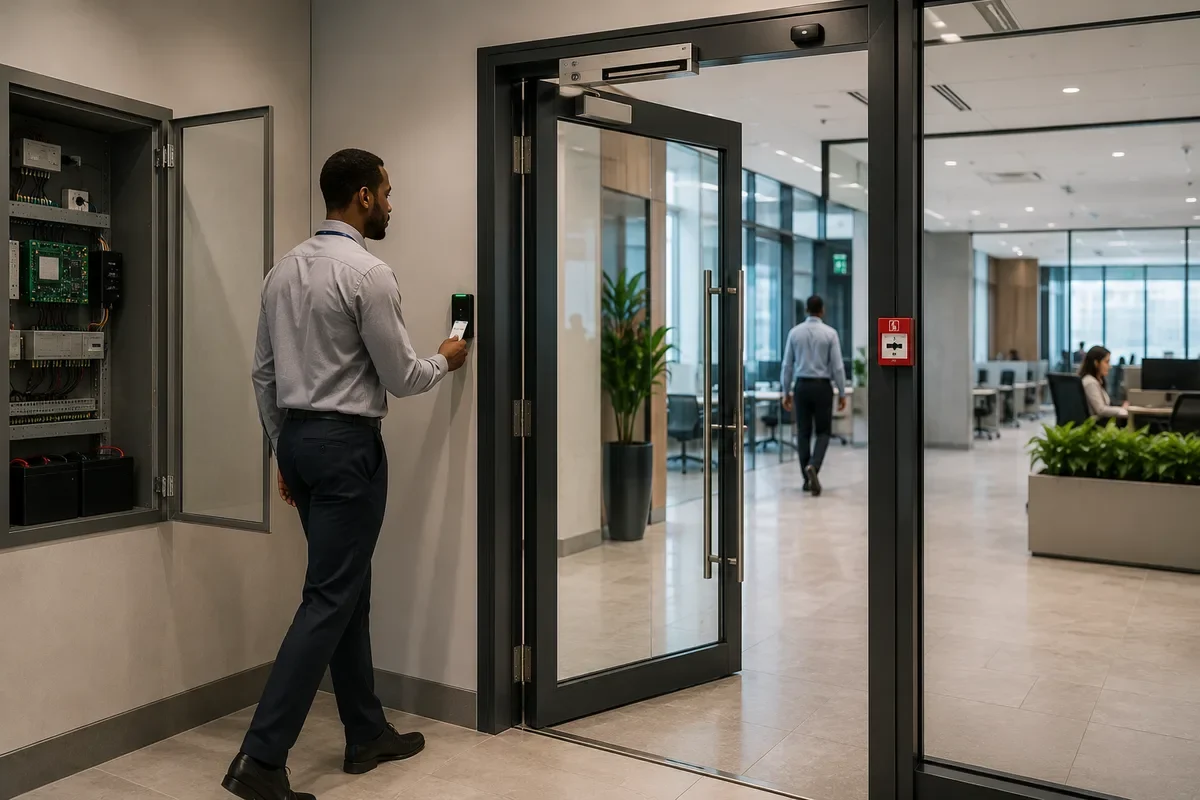
A complete access-controlled door is more than a card reader. The system can include the credential reader, access controller, electronic lock, power supply, door position monitoring, request-to-exit device, emergency-release arrangement, software and integration with the physical door and door automation.
AZTÖR provides a free site inspection for applicable access control projects. We assess the door type, frame, locking arrangement, traffic level, required security, user groups, existing network, fire and life-safety requirements, door automation and the customer's preferred credential technology before recommending the system.
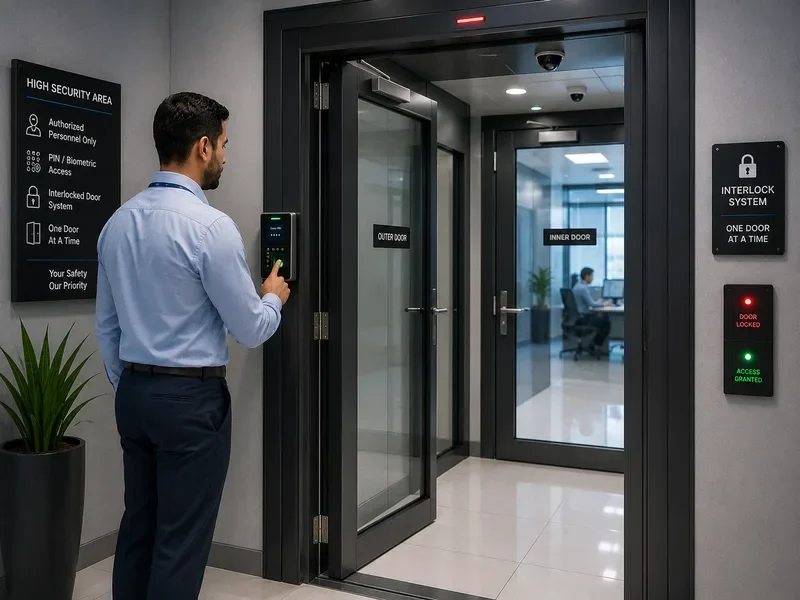
Access can be provided using RFID cards, key fobs, PIN codes, biometric credentials, mobile credentials, QR codes or other technologies supported by the selected access-control platform.
Different credential technologies serve different requirements. A simple office may require cards or PIN access, while a higher-security area may use multi-factor authentication or another stronger verification workflow.
RFID card access remains widely used because individual cards can be assigned to users and centrally activated, suspended or removed.
Key fobs provide similar electronic credential functionality in a compact format where supported by the selected reader system.
PIN keypads can provide credential-free entry or can be combined with a card or other credential for multi-factor access.
Biometric access can use fingerprint, facial or other supported biometric technologies where appropriate for the application and applicable privacy requirements.
Biometric technology should not automatically be treated as the correct solution for every door. User population, environment, security requirement, privacy, operational continuity and alternative access procedures should all be considered.
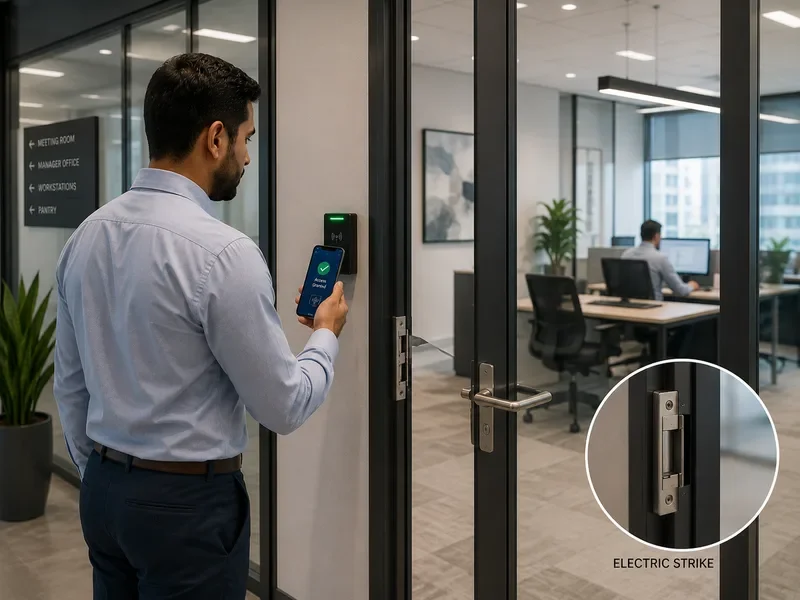
Mobile access can allow compatible smartphones to act as electronic credentials using the technology supported by the selected platform.
QR credentials can be particularly useful for temporary visitors because a time-limited credential can be issued without providing a permanent physical access card.
The access reader sends credential information to the access-control system, which checks the user's permissions before deciding whether the door should be released.
The reader itself does not normally provide the complete security decision. Controller architecture, credential database, door hardware and system configuration all contribute to the final access process.
Door controllers can be standalone, networked or part of a larger enterprise access-control architecture depending on the number of doors and required management functions.
A small property may require only a few controlled doors, while a commercial tower, industrial facility or campus may require central management of many doors and user groups.
Suitable platforms can manage access by user, department, tenant, door, zone, date and time schedule.
For example, an employee may be permitted to enter the main office during normal working hours while a facilities team has extended access to technical rooms.
Temporary contractors can be given permissions that automatically expire after the authorised period where supported by the platform.
When an employee leaves or a card is lost, the credential can be disabled without changing the physical lock or reissuing keys to every other authorised user.
This is one of the major operational advantages of electronic door access control compared with relying entirely on mechanical keys.
Electronic locking must be selected according to the actual door.
Electromagnetic locks, electric strikes, motorised locks, electric locks and other manufacturer-specific locking devices can be used depending on the door construction, security requirement and life-safety strategy.
An electromagnetic lock should not simply be added to every door because it is easy to install. The door type, opening direction, frame, emergency egress and applicable life-safety requirements need to be considered.
Electric strikes can be suitable for compatible latch and frame arrangements where controlled release of the mechanical locking point is required.
Motorised and electromechanical locks can provide additional functionality for suitable doors and security applications.
Glass doors require appropriate brackets, patch fittings or compatible locking arrangements so the access-control hardware is installed without compromising the door system.
Metal, aluminium, timber, steel and specialist doors each require appropriate locking and cable-management solutions.
Door position contacts can monitor whether a controlled door is open or closed.
This allows suitable systems to identify conditions such as a door being held open beyond an allowed period.
A forced-door event can also be identified where the door opens without the expected authorised access sequence, subject to the controller and monitoring configuration.
Door-held-open and forced-door alarms can be valuable for security monitoring but need correct door contact installation and software configuration.
Request-to-exit devices allow authorised or normal egress from the secure side according to the door design.
These can include push buttons, touchless exit sensors, request-to-exit sensors or other suitable devices.
Emergency door release arrangements must be coordinated with the locking technology, applicable life-safety requirements and the approved building strategy.
Access control must never compromise required emergency egress.
Where access-controlled doors form part of an emergency escape route, the complete locking and release arrangement should be designed around the applicable fire and life-safety requirements.
Fire-alarm integration can be required for certain electrically locked doors so the system responds according to the approved emergency strategy.
The exact behaviour should not be assumed for every door. Fail-safe, fail-secure and emergency release requirements depend on the door, locking technology and project requirements.
Fail-safe generally refers to locking arrangements that release when power is removed, while fail-secure arrangements can remain secure when power is lost. The appropriate choice must consider both security and life safety.
Backup power can be incorporated where compatible and appropriate so access-control electronics continue operating during defined power interruptions.
Battery capacity and operating duration depend on the controller, locks, readers, auxiliary devices and selected power system, so AZTÖR does not apply a universal backup duration to every installation.
Door Access Control can integrate directly with automatic door systems.
An authorised card, biometric credential, mobile credential or other access request can provide an opening command to a compatible automatic sliding or swing door.
The access-control system determines whether entry is authorised, while the automatic door operator performs the physical door movement.
Safety sensors remain part of the automatic door system and should not be replaced by access-control devices.
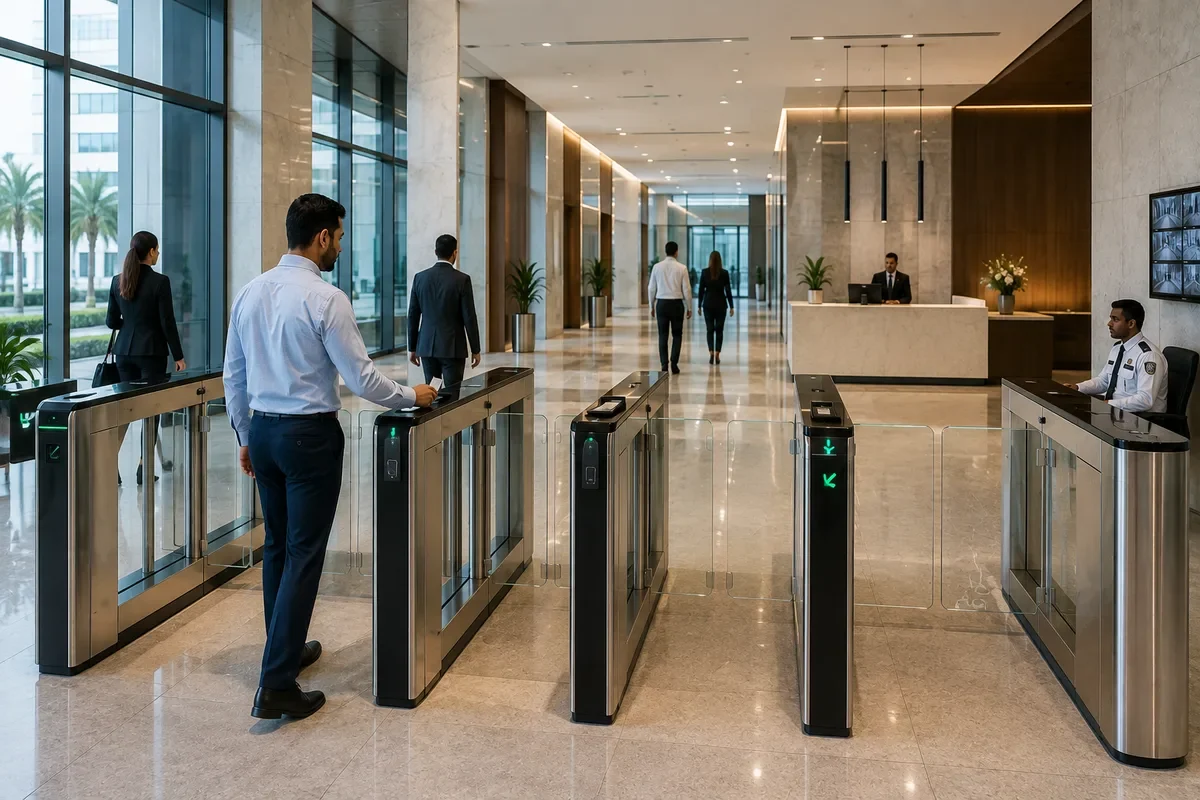
This integration is particularly useful at commercial entrances, office lobbies, staff entrances, hospitals and controlled internal areas where both security and automatic pedestrian movement are required.
AZTÖR Automation can coordinate access control with Automatic Sliding Doors, Automatic Swing Doors and other compatible entrance automation systems.
Access control can also integrate with intercom systems.
A visitor can contact reception or security, and an authorised operator can release the door remotely according to the configured system.
Video intercom can provide visual communication and verification where required.
Visitor Management can provide temporary door credentials for guests, contractors or service personnel.
Suitable systems can pre-register visitors and provide QR, mobile or other temporary credentials with defined validity periods.
Multi-tenant buildings can separate user administration between different companies or tenants where the selected platform supports delegated management.
Central administrators can retain overall system control while authorised tenant administrators manage their own users and doors.
Time and attendance can sometimes use information from compatible access-control platforms, but access-control event records should not automatically be treated as a complete attendance or payroll system.
Where formal attendance management is required, a dedicated time-and-attendance function or integration should be configured.
Door Access Control can integrate with CCTV and Video Management Systems.
For example, access events can be associated with relevant surveillance footage where compatible systems support event integration.
This can help authorised security personnel investigate a denied access event, forced door or other security incident.
Intrusion Detection can also integrate with access control where supported.
A user's credential may interact with alarm arming or disarming workflows according to the security design and permissions.
Building Management Systems can receive selected door or system status information where compatible integration interfaces are available.
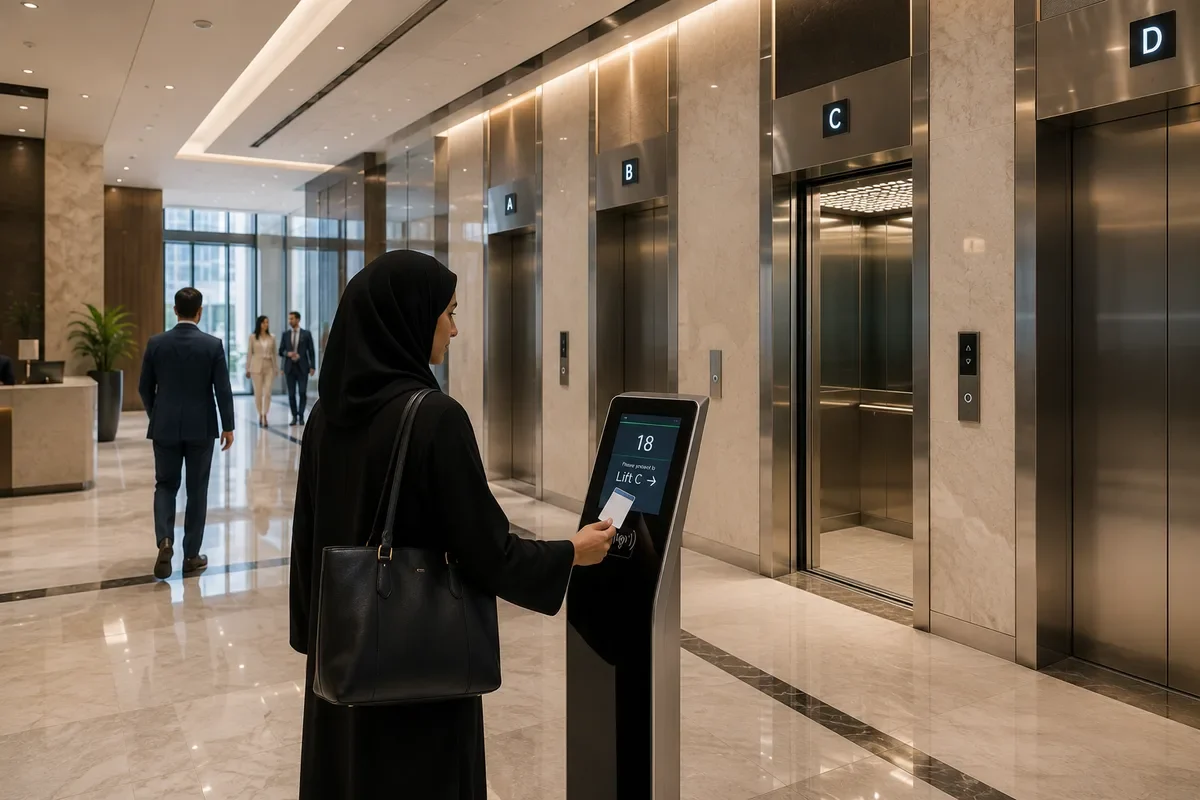
Elevator Access Control can also operate within a wider access-control platform, allowing authorised credentials to provide access to permitted floors where the lift system and access platform support the integration.
Parking and vehicle access credentials may also share a wider platform with pedestrian door access where compatible systems are selected.
For example, an employee credential could potentially be used for a parking entrance and selected office doors through a coordinated access-control environment.
The exact architecture depends on credential technology, reader compatibility and the selected manufacturer platform.
For UAE commercial and security projects, AZTÖR works with relevant access-control and security technologies from manufacturers such as Hikvision and other established systems selected according to project requirements, compatibility and availability.
Where a project requires integration with a particular existing manufacturer, AZTÖR first assesses the installed controllers, readers, credential technology, software version and available interfaces rather than assuming cross-brand compatibility.
Access-control products from different manufacturers are not automatically interchangeable.
Reader protocols, credential technologies, encryption, controller interfaces, software licensing and manufacturer-specific integrations can affect compatibility.
OSDP-capable reader/controller architectures can be considered on suitable modern systems where supported, while existing installations may use other manufacturer-specific or legacy interfaces.
Networked access-control systems require appropriate network planning.
Controllers, servers, workstations, switches, IP addressing and cybersecurity controls should be coordinated according to the selected architecture.
Where cloud-connected access control is used, internet connectivity, account security, service availability and the customer's data requirements should be considered.
Cloud access is not automatically better than on-premises access control. The correct architecture depends on the property, scale, security policy, IT environment and management requirements.
User permissions within the management software should follow appropriate role-based access principles.
Not every operator needs administrator-level access to every door, user or system configuration.
Access event records can include credential identity, door, date, time and access result depending on the selected system.
Where identifiable personal or biometric information is processed, the customer should establish appropriate access, retention and data-handling practices under applicable UAE requirements.
Biometric data in particular requires careful consideration because it is more sensitive than a conventional replaceable access card.
Outdoor readers used at external doors should be selected for the actual UAE environment, including heat, direct sunlight, dust, sand and humidity.
Indoor equipment should also be selected according to the operating environment. Warehouses, industrial facilities, wet areas and clean environments can require different reader and hardware characteristics.
Access control reliability depends heavily on the physical door.
A misaligned door, damaged closer, worn hinge or defective latch can create apparent access-control problems even when the reader and controller are functioning correctly.
AZTÖR therefore assesses the door hardware as well as the electronics when troubleshooting access problems.
Common faults include cards not being recognised, valid users being denied, locks not releasing, doors remaining unlocked, readers going offline, controllers losing communication, request-to-exit devices failing or door alarms being generated incorrectly.
A green reader indication does not always mean the lock itself is functioning correctly. The controller may have authorised access while the power supply, relay, cable, lock or door hardware has failed.
Likewise, a lock that remains permanently released may be caused by emergency-release circuits, fire-alarm interfaces, power faults, controller outputs or mechanical issues.
AZTÖR troubleshoots the complete access path from credential and reader through controller, power supply, locking device and physical door.
Existing access-control systems can often be expanded or upgraded without replacing every component.
Additional doors, readers or credentials may be added where the existing controller and software architecture have suitable capacity.
Older systems can also be assessed for migration to newer readers, controllers, mobile credentials, biometric access or centralised management.
However, retaining legacy equipment only makes sense when compatibility, security and spare-parts availability remain acceptable.
Preventive maintenance can include reader testing, lock operation, door contact testing, request-to-exit testing, emergency-release checks, power-supply inspection, battery checks, controller communication, database review and functional testing of automatic door integrations.
AZTÖR Automation provides Door Access Control, security automation, entrance automation, installation, integration, repair and maintenance across Dubai, Abu Dhabi, Sharjah, Ajman, Ras Al Khaimah, Fujairah and Umm Al Quwain, with suitable automation and technical support available across the wider GCC.
Key Features
- Electronic door access control
- Smart door access
- RFID card access
- Key fob access
- PIN keypad access
- Biometric access
- Fingerprint access
- Facial recognition access
- Mobile access credentials
- QR access credentials
- Multi-factor authentication options
- Single-door access control
- Multi-door access control
- Centralised access management
- Standalone access control
- Networked access control
- Cloud-connected options
- On-premises access control
- User management
- Credential management
- Access schedules
- Time-based permissions
- Door-specific permissions
- Zone-based permissions
- Temporary access permissions
- Contractor access
- Visitor access
- Automatic credential expiry
- Lost card deactivation
- Role-based administration
- Multi-tenant access management
- Access event records
- Denied access records
- Door status monitoring
- Door position contacts
- Door-held-open monitoring
- Forced-door monitoring
- Electronic locking
- Electromagnetic locks
- Electric strikes
- Electromechanical locks
- Motorised lock options
- Glass door locking
- Steel door access control
- Aluminium door access control
- Timber door access control
- Request-to-exit buttons
- Touchless exit buttons
- Request-to-exit sensors
- Emergency door release
- Fire-alarm integration where required
- Fail-safe locking options
- Fail-secure locking options where appropriate
- Backup power options
- Automatic Sliding Door integration
- Automatic Swing Door integration
- Entrance automation integration
- Intercom integration
- Video intercom integration
- Visitor Management integration
- CCTV integration
- VMS integration
- Intrusion Detection integration
- Elevator Access Control integration
- Building Management integration
- Parking access integration
- OSDP options where supported
- Existing access control upgrades
- Reader replacement
- Controller replacement
- Lock replacement
- Power supply replacement
- Access control troubleshooting
- Door automation troubleshooting
- Preventive maintenance
- AMC support
Technical Specification
| Solution Type | Electronic door access control system |
|---|---|
| Primary Function | Authorised pedestrian access and electronic door security |
| Application | Commercial, residential, industrial, healthcare and controlled areas |
| Credential Type | RFID, PIN, biometric, mobile, QR or manufacturer specific |
| RFID Card | Available |
| Key Fob | Available |
| PIN Access | Available |
| Fingerprint | Available on suitable systems |
| Facial Recognition | Available on suitable systems |
| Mobile Credential | Available on compatible platforms |
| QR Credential | Available on suitable systems |
| Multi-Factor Authentication | Available on suitable platforms |
| Reader Type | Credential and manufacturer specific |
| Controller | Standalone, networked or enterprise architecture |
| Doors per Controller | Manufacturer and model specific |
| User Capacity | Platform and controller specific |
| Credential Capacity | Platform and controller specific |
| Access Schedules | Available |
| Temporary Access | Available |
| Role-Based Permissions | Available |
| Door Groups | Available |
| Electronic Lock | Electromagnetic, electric strike, motorised or application specific |
| Door Position Contact | Available |
| Request to Exit | Available |
| Emergency Release | Project and life-safety specific |
| Fire Alarm Integration | Available where required and compatible |
| Fail-Safe Operation | Available with suitable locking architecture |
| Fail-Secure Operation | Available where appropriate |
| Backup Power | Available |
| Automatic Door Integration | Available |
| Intercom Integration | Available |
| Visitor Management Integration | Available |
| CCTV/VMS Integration | Available where compatible |
| Intrusion Integration | Available where compatible |
| Elevator Integration | Available where compatible |
| BMS Integration | Available where compatible |
| Parking Integration | Available where compatible |
| Reader Communication | Manufacturer specific, including OSDP where supported |
| Network | Standalone, Ethernet or manufacturer-specific architecture |
| Software | Manufacturer and platform specific |
| Cloud Management | Available on suitable platforms |
| On-Premises Management | Available |
| Event Reporting | Available |
| Data Retention | Customer, platform and applicable requirement specific |
| Outdoor Readers | Available with suitable environmental rating |
| Installation | New installation, expansion, retrofit or replacement |
| Maintenance | Readers, controllers, locks, power supplies, doors, sensors and integrations |
Door Access Control must be designed around the complete door rather than the reader alone. Door construction, locking method, emergency egress, fire and life-safety requirements, user volume, credential technology, controller architecture, network, automatic door integration and required security level all affect the final system. Biometric, mobile, cloud and third-party integrations depend on the selected platform. AZTÖR Automation provides a free site inspection before finalising the access control and door automation design.
Typical Applications
- Commercial offices
- Office buildings
- Commercial towers
- Corporate headquarters
- Business parks
- Residential towers
- Apartment buildings
- Residential communities
- Hotels
- Resorts
- Shopping malls
- Retail back-of-house areas
- Hospitals
- Clinics
- Healthcare facilities
- Schools
- Universities
- Government facilities
- Data centres
- Server rooms
- IT rooms
- Warehouses
- Logistics centres
- Factories
- Industrial facilities
- Manufacturing plants
- Staff entrances
- Employee entrances
- Tenant entrances
- Visitor entrances
- Reception areas
- Office doors
- Meeting rooms
- Management offices
- HR rooms
- Finance departments
- Server rooms
- Electrical rooms
- MEP rooms
- Plant rooms
- Storage rooms
- Restricted areas
- Laboratories
- Cleanrooms
- Automatic sliding door entrances
- Automatic swing door entrances
- Glass doors
- Steel doors
- Aluminium doors
- Multi-tenant buildings
- Controlled pedestrian entrances