Fixed Bollards
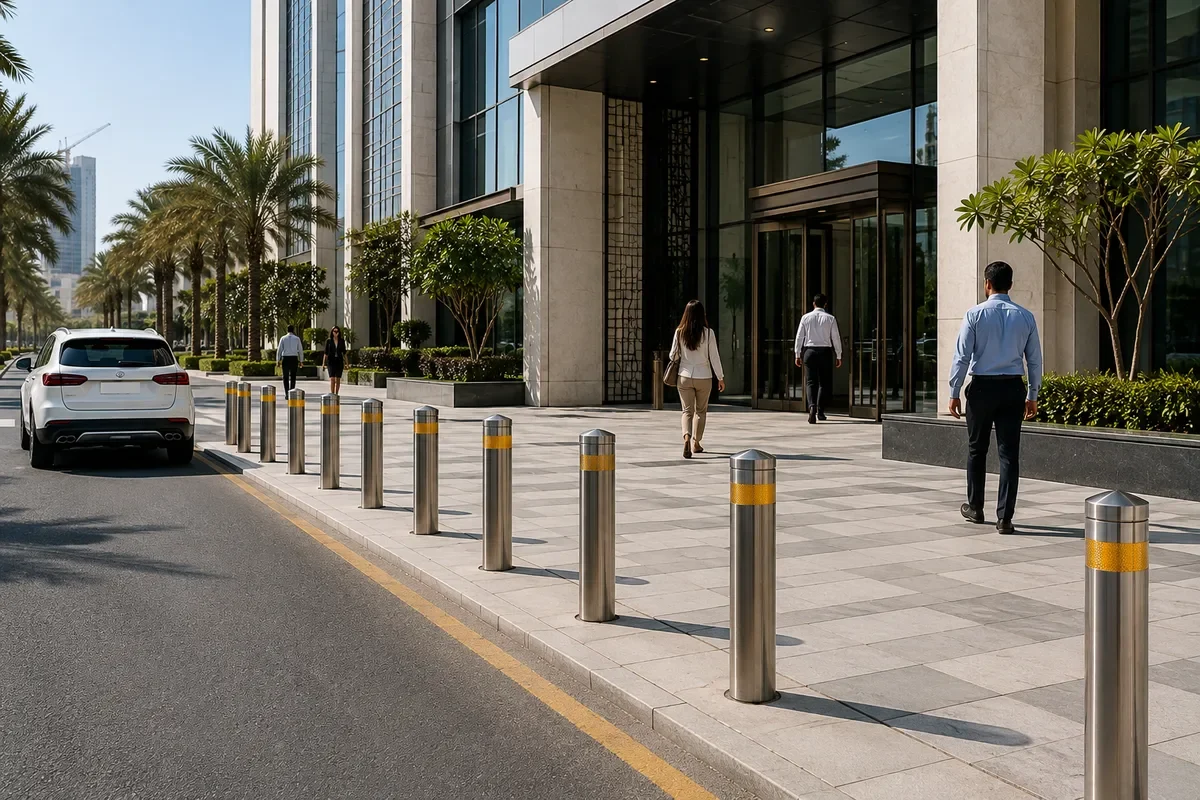
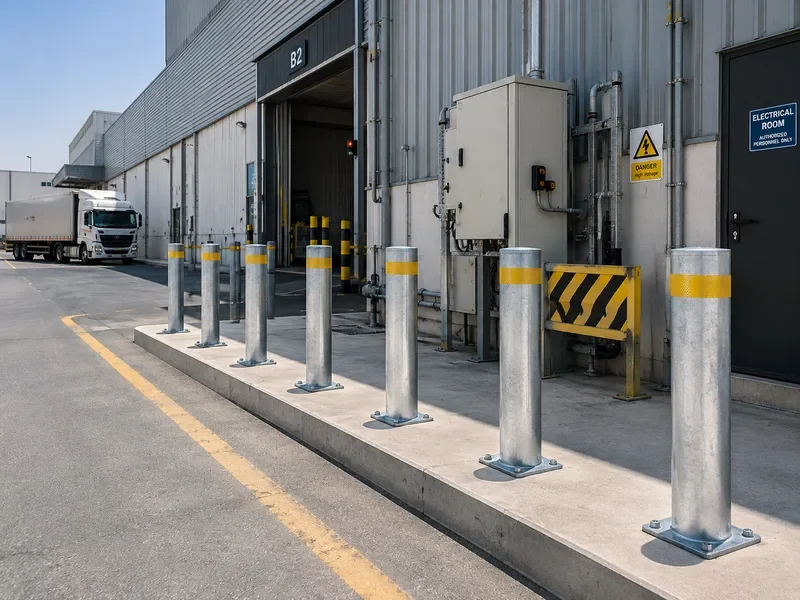
Fixed Bollards provide permanent physical separation between vehicles and areas where vehicle access is restricted. They are commonly installed around building entrances, pedestrian zones, parking areas, storefronts, walkways, utilities and other locations requiring a durable vehicle-control boundary.
AZTÖR Automation supplies and installs fixed bollard systems for residential, commercial, hospitality, industrial and controlled-access projects across the UAE.
Unlike Automatic Bollards, fixed bollards remain permanently raised and contain no motorised lifting mechanism. They are therefore particularly suitable for locations where vehicles never need to pass through the protected position.
Fixed bollards can also be combined with Automatic Bollards. Permanent bollards can protect the sides of an entrance while automatic retractable bollards provide controlled vehicle passage through the centre.
This combination can create a clear vehicle-control line without installing automation at every bollard position.
AZTÖR provides a free site inspection for applicable bollard projects. We assess the required protected area, vehicle routes, pedestrian movement, bollard spacing, existing road or pavement construction, underground services, architectural requirements and the intended level of vehicle protection before recommending a configuration.
Fixed bollards are available in steel, stainless steel and other manufacturer-specific constructions and finishes. Selection should consider the location, expected physical exposure, corrosion environment and architectural requirements.
Stainless-steel bollards are particularly suitable for premium commercial, hospitality and residential environments where appearance is important.
Galvanised, painted or powder-coated steel bollards can be considered for car parks, industrial facilities, warehouses, service areas and other practical vehicle-control applications.
Reflective bands can improve visibility around parking areas and vehicle routes, particularly during night operation.
Decorative sleeves and architectural finishes may also be available where bollards need to complement the surrounding building design.
Fixed bollards can be installed using embedded or surface-mounted configurations depending on the product, substrate and intended purpose.
Embedded bollards extend into an engineered foundation and are commonly selected where a more substantial permanent installation is required.
Surface-mounted bollards can be appropriate for suitable traffic-management and protection applications where the product and supporting concrete structure are designed for that installation method.
The fixing method should never be selected only for convenience. Bollard performance depends significantly on the foundation, anchoring and supporting structure.
Before installation, underground utilities should be considered. Electrical cables, drainage, water pipes, irrigation, telecommunications and other services may affect the proposed bollard locations.
Bollard spacing should also be designed around the actual objective of the installation.
Where the purpose is to prevent ordinary vehicles from entering a pedestrian area, spacing should restrict vehicle passage while maintaining the required pedestrian route.
Where wheelchairs, trolleys, emergency access or other movement requirements apply, the overall layout needs to consider those requirements as part of the site design.
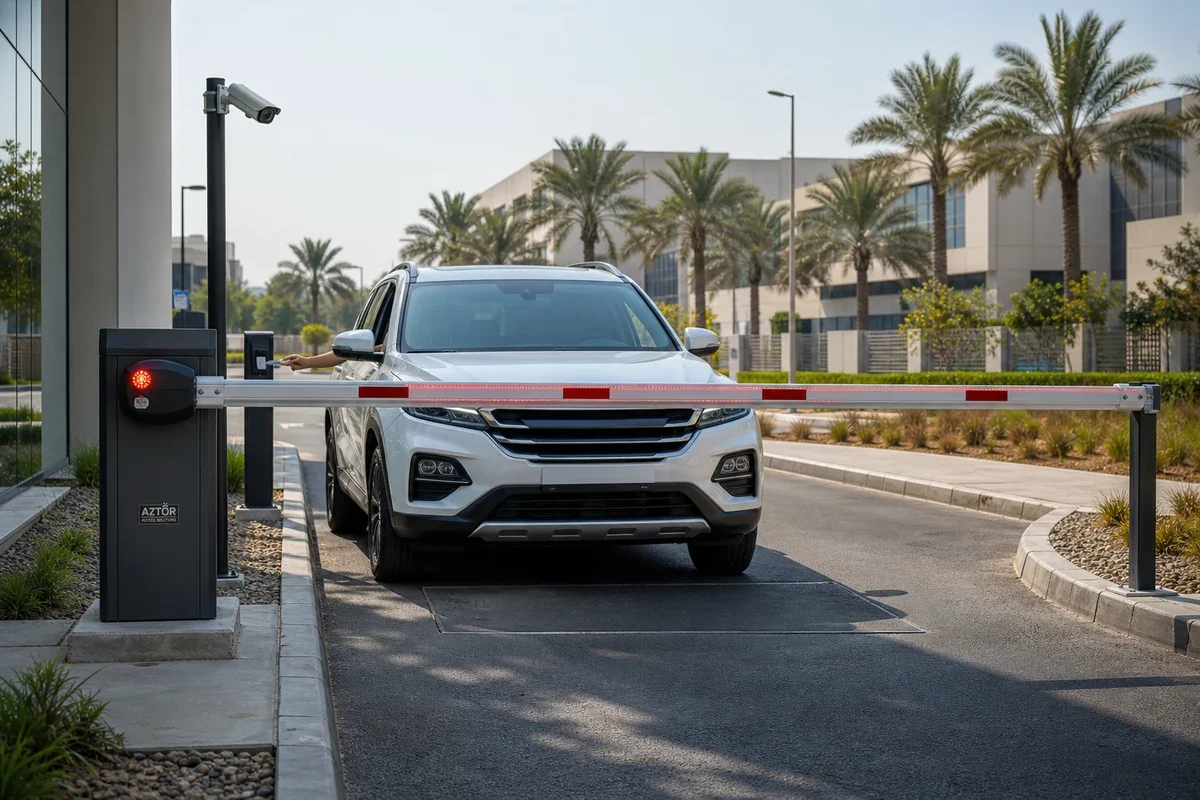
Fixed bollards are frequently installed at the edges of automatic vehicle entrances. They can protect gate motors, barrier cabinets, ANPR cameras, UHF reader pedestals, intercom stations, ticketing terminals and other parking automation equipment from accidental vehicle contact.
They can also protect building columns, façades, loading-bay equipment, utility cabinets, EV charging equipment and other vulnerable infrastructure.
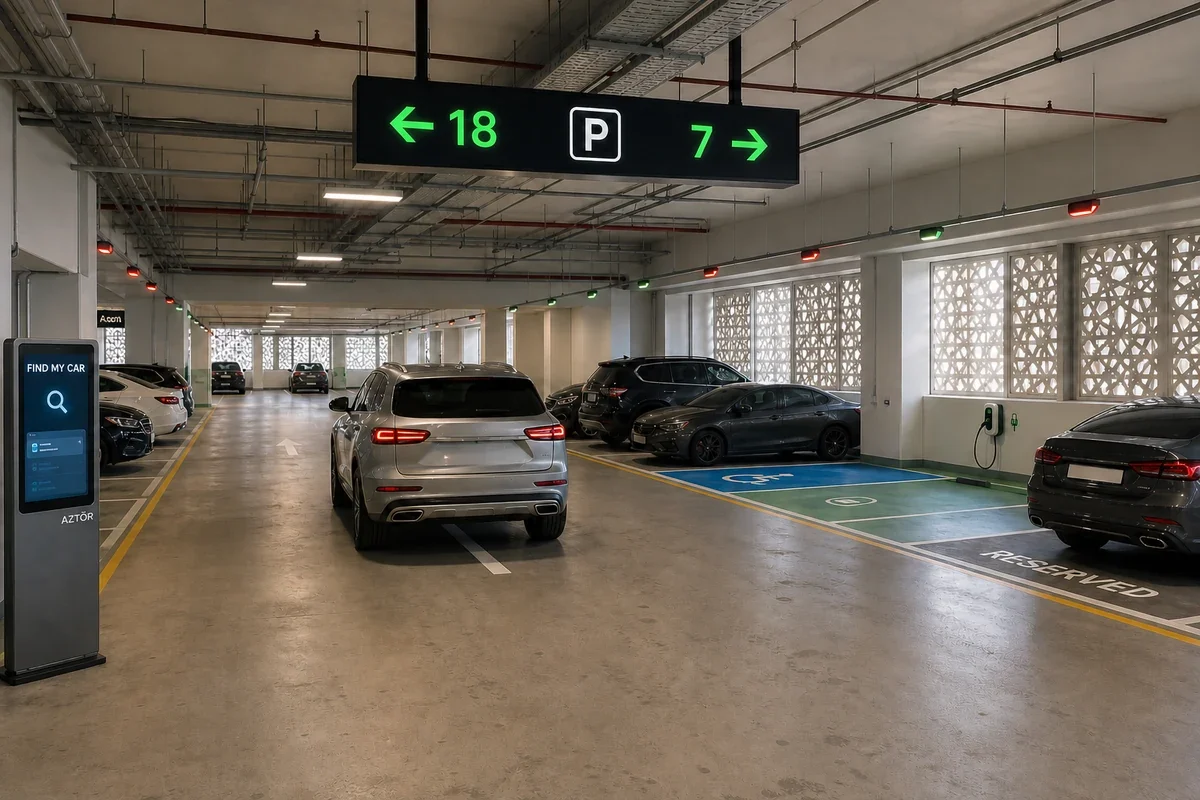
In car parks, fixed bollards can help define areas where vehicles should not enter or park.
They can be used around pedestrian walkways, lift lobbies, payment equipment, parking-control equipment and other areas where vehicle and pedestrian movements need clearer separation.
Warehouses and logistics facilities can use fixed bollards around door frames, building corners, equipment and service areas that are exposed to vehicle or forklift movements.
However, protection against forklifts inside a warehouse and protection against road vehicles outside a building can involve very different impact conditions. Bollard construction and placement should therefore reflect the actual hazard.
Fixed bollards can also be installed around automatic sliding gates and swing gates to protect automation equipment where the site geometry allows.
For parking barrier installations, bollards can protect the barrier cabinet, access reader, ticket terminal or guard equipment without interfering with the vehicle lane.
For ANPR entrances, fixed bollards can help protect camera poles or associated equipment positioned close to vehicle routes.
For UHF and RFID vehicle access, reader pedestals can similarly be protected from accidental vehicle impact using appropriately positioned bollards.
The bollards themselves should not obstruct the intended field of view, reading zone or driver interaction with parking automation equipment.
Pedestrian safety and accessibility should be considered when selecting bollard position, height, visibility and spacing.
Bollards located in pedestrian environments should be visually identifiable, particularly where surrounding paving or lighting conditions could make them difficult to notice.
Lighting, reflective elements or contrasting finishes can be considered according to the project and selected bollard design.
Outdoor UAE installations require consideration of heat, strong sunlight, dust, sand, humidity and, in coastal locations, increased corrosion exposure.
Suitable stainless steel grades, galvanising, coatings or other corrosion-protection systems can be selected according to the environment and manufacturer specifications.
Stainless steel should not automatically be described as maintenance-free. Surface contamination and environmental exposure can still require periodic cleaning and inspection.
Fixed bollards are also available in heavy-duty and security-oriented constructions, but the term fixed bollard does not automatically mean crash rated.
A normal steel bollard installed in concrete may provide useful physical protection against accidental low-speed vehicle contact, but that does not establish a certified vehicle-impact rating.
Where a project requires protection against deliberate or high-energy vehicle impact, the required performance should be established by the relevant security design, consultant, authority or project specification.
A crash-rated or hostile-vehicle mitigation bollard should have documented performance from recognised vehicle-impact testing for the applicable complete system and installation configuration.
Depending on the project, recognised standards can include ASTM F2656/F2656M, IWA 14-1 or another specified vehicle-impact testing standard.
Different standards, vehicle masses, impact speeds and penetration classifications should not be treated as interchangeable simply because two products are described as crash rated.
The foundation is particularly important for tested security bollards. A certified bollard installed using a substantially different foundation from its tested or approved configuration should not automatically be assumed to retain the documented performance.
For this reason, AZTÖR distinguishes general Fixed Bollards from specifically tested Crash-Rated or Anti-Ram Bollards.
Where the objective is ordinary parking control, equipment protection or pedestrian separation, a suitable conventional fixed bollard may be sufficient.
Where the objective is hostile-vehicle mitigation or critical-infrastructure protection, a documented security bollard system should be selected instead.
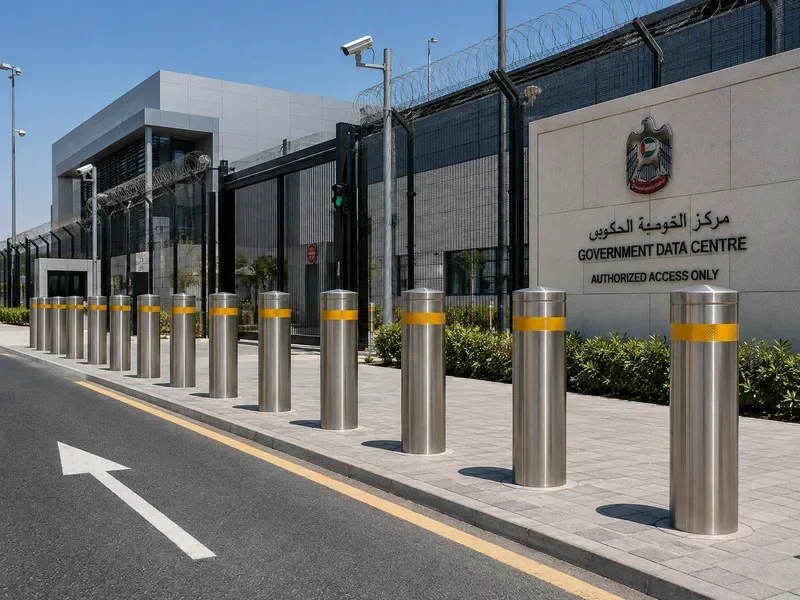
Fixed bollards can also complement access automation at high-security entrances. Fixed units can maintain the permanent perimeter while automatic or crash-rated retractable units control the authorised vehicle lane.
This approach allows the physical protection line to continue across areas where vehicle passage is never required.
For architectural entrances, bollard alignment is important. Uneven spacing, inconsistent heights or poor finished levels can make an otherwise premium installation look incorrect.
AZTÖR therefore considers the finished paving level, alignment and visible spacing as part of installation planning.
Where existing interlock, tiles, stone or other finished surfaces need to be opened for bollard installation, reinstatement should be coordinated around the required foundation and fixing method.
Fixed bollards can also be installed during new construction before final paving, allowing foundations and bollard positions to be coordinated with the surrounding civil works.
Damaged fixed bollards should be inspected after significant vehicle impact.
A visibly bent bollard may also indicate damage to its foundation, anchors or surrounding concrete.
Simply straightening or replacing the visible post without checking the supporting structure may leave the installation weakened.
Surface-mounted bollards should periodically be checked for loose anchors, damaged base plates and cracking around the fixing points.
Embedded bollards can be inspected for movement, corrosion, deformation and damage around the finished surface.
AZTÖR provides replacement of damaged fixed bollards and can assess existing bollard layouts where additional vehicle or parking equipment protection is required.
Because fixed bollards have no motor, they do not require the same automation maintenance as Automatic Bollards. However, physical condition, corrosion, foundations, anchors and visibility should still be periodically inspected.
Fixed Bollards also form an important supporting element within wider AZTÖR Automation projects. They can protect Automatic Bollards, Parking Barriers, ANPR systems, UHF readers, RFID pedestals, Ticketing Systems and other parking and vehicle access automation equipment.
AZTÖR Automation provides fixed bollard supply, installation, replacement and integration with wider parking automation and vehicle access projects across Dubai, Abu Dhabi, Sharjah, Ajman, Ras Al Khaimah, Fujairah and Umm Al Quwain, with suitable project support available across the wider GCC.
Key Features
- Permanent vehicle restriction
- Fixed vehicle bollards
- Parking protection bollards
- Pedestrian protection bollards
- Building protection bollards
- Equipment protection bollards
- Commercial bollards
- Residential bollards
- Industrial bollards
- Architectural bollards
- Steel bollards
- Stainless-steel bollards
- Galvanised steel options
- Powder-coated finish options
- Decorative finish options
- Reflective band options
- High-visibility options
- Embedded bollard installation
- Surface-mounted bollard options
- Concrete foundation installation
- Heavy-duty construction options
- Pedestrian-zone protection
- Parking-area protection
- Walkway protection
- Building entrance protection
- Storefront protection
- Column protection
- Utility protection
- EV charger protection
- Gate motor protection
- Parking barrier protection
- ANPR equipment protection
- UHF reader protection
- RFID reader pedestal protection
- Ticketing terminal protection
- Parking equipment protection
- Loading-area protection
- Warehouse protection
- Automatic gate integration
- Automatic bollard integration
- Parking automation integration
- Vehicle access automation integration
- Permanent perimeter protection
- Crash-rated options where specifically required
- Certified impact-rated options where documented
- Outdoor UAE installation
- Corrosion-resistant options
- Damaged bollard replacement
- Foundation inspection
- Anchor inspection
- Existing bollard replacement
- New construction installation
- Retrofit installation
Technical Specification
| Solution Type | Fixed vehicle-control bollard |
|---|---|
| Primary Function | Permanent restriction, separation or protection from vehicle movement |
| Operation | Permanently raised |
| Automation | Not required for standard fixed bollards |
| Application | Parking, pedestrian, commercial, industrial and security areas |
| Construction | Steel, stainless steel or manufacturer specific |
| Bollard Diameter | Manufacturer and project specific |
| Bollard Height | Manufacturer and project specific |
| Wall Thickness | Manufacturer and model specific |
| Finish | Stainless steel, galvanised, painted, powder-coated or manufacturer specific |
| Reflective Band | Available |
| Architectural Finish | Available |
| Mounting Type | Embedded or surface mounted depending on product |
| Foundation | Product, substrate and application specific |
| Anchoring | Manufacturer and structural requirement specific |
| Spacing | Application, vehicle and site specific |
| Outdoor Application | Available |
| Corrosion Protection | Selected according to environment |
| Parking Barrier Protection | Available |
| ANPR Equipment Protection | Available |
| UHF Reader Protection | Available |
| RFID Pedestal Protection | Available |
| Gate Automation Protection | Available |
| Pedestrian Area Protection | Available |
| Vehicle Separation | Available |
| Crash Rating | Only for independently tested and documented systems |
| Impact Rating | Product and tested configuration specific |
| Vehicle Impact Standard | Project-specified recognised standard where required |
| Installation | New construction or retrofit |
| Maintenance | Physical condition, corrosion, foundations, anchors and visibility |
Fixed bollards should be selected according to their actual purpose, including parking control, pedestrian separation, equipment protection, accidental vehicle protection or certified security protection. Bollard dimensions, spacing, foundation and anchoring depend on the site and selected product. Conventional fixed bollards must not be represented as crash rated unless the complete system and installation configuration have documented vehicle-impact performance. AZTÖR Automation provides a free site inspection before finalising the bollard layout and installation.
Typical Applications
- Residential communities
- Villa developments
- Apartment buildings
- Commercial towers
- Office buildings
- Business parks
- Corporate campuses
- Hotels
- Resorts
- Shopping malls
- Retail entrances
- Storefronts
- Mixed-use developments
- Pedestrian areas
- Pedestrian walkways
- Building entrances
- Building façades
- Private roads
- Private parking
- Public parking areas
- Basement parking
- Multi-storey car parks
- Parking barrier equipment
- ANPR camera protection
- UHF reader protection
- RFID reader protection
- Ticketing terminal protection
- EV charging areas
- Utility equipment
- Government facilities
- Hospitals
- Schools
- Universities
- Warehouses
- Logistics centres
- Factories
- Industrial facilities
- Loading areas
- Vehicle checkpoints
- Security entrances
- Automatic gate entrances
- Automatic bollard installations
- Protected perimeter areas
- Critical infrastructure where specified systems are required