Crash Rated Gates
Crash-rated gates are specialist vehicle security systems designed to resist defined vehicle-impact conditions at controlled entrances. Unlike a conventional heavy-duty gate, a crash-rated system is selected around documented impact performance, including vehicle mass, impact speed, penetration performance and the test standard applicable to the project.
These systems are typically considered for critical infrastructure, government facilities, utilities, data centres, airports, logistics facilities, sensitive industrial sites and other locations where the security design requires protection against hostile or unauthorised vehicle entry.
A heavy steel gate should never be described as crash rated simply because it is large or strongly constructed. Genuine crash-rated performance must relate to a tested system and its documented configuration. The gate leaf, supporting structure, foundations, posts, drive system and other critical components may all form part of the tested assembly.
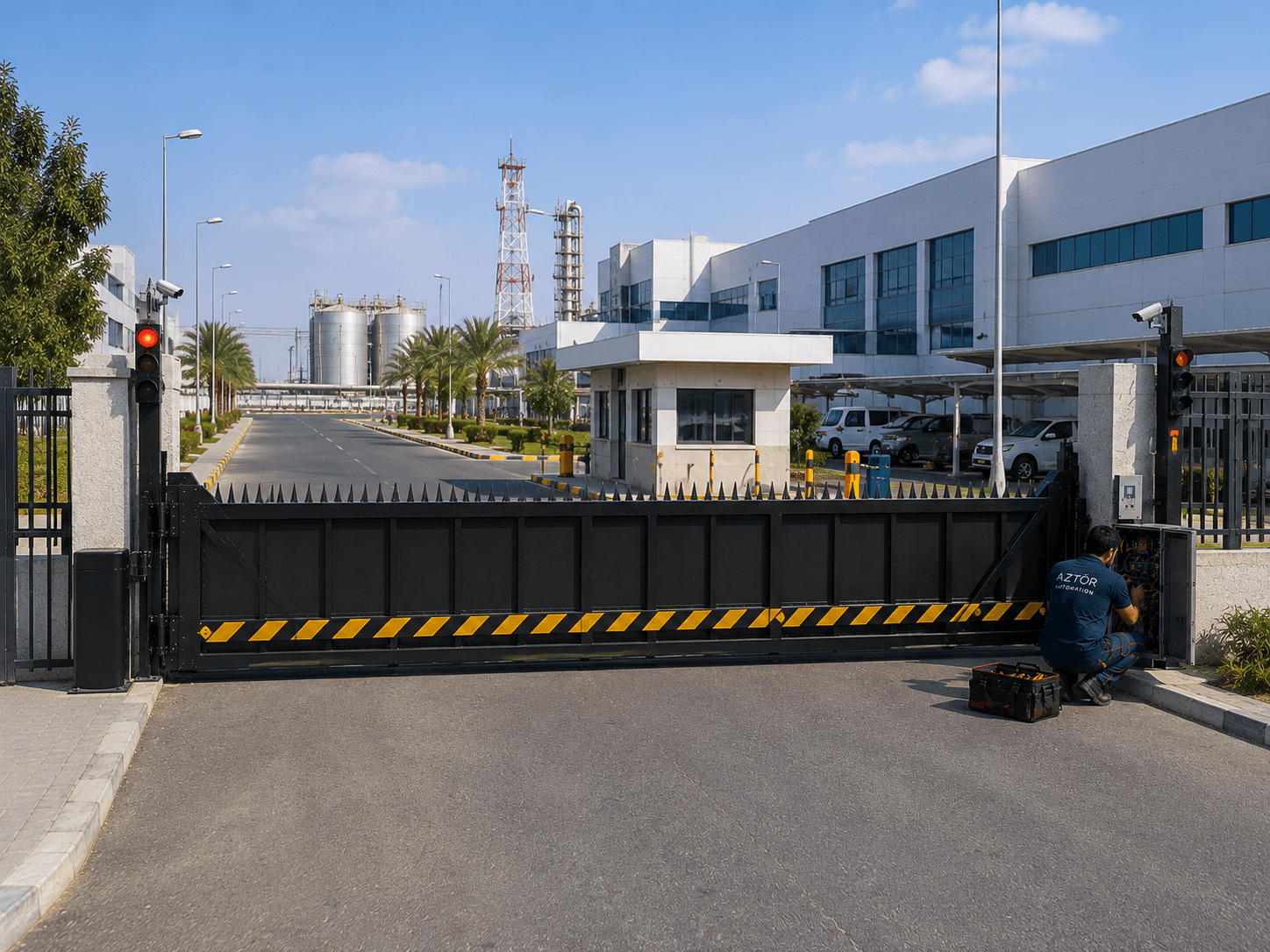
Depending on the security requirement, a project may use crash-rated sliding gates, cantilever gates, swing gates or another certified vehicle security barrier. The correct solution depends on the available entrance width, required penetration performance, approach conditions, operating frequency, available foundation area and the overall physical-security strategy.
AZTÖR provides a free preliminary site inspection for applicable crash-rated gate requirements. We review the entrance geometry, vehicle approach, clear opening, available run-back or swing area, ground and foundation constraints, traffic flow, operating requirements, access-control interfaces and available electrical infrastructure before identifying suitable system options.
The required impact rating should come from the project's security consultant, authority requirement or approved security risk assessment. Where a specific rating has already been specified, AZTÖR can work around that requirement when sourcing and integrating an appropriate tested system. We do not substitute an unrated fabricated gate where a documented crash rating is required.
International vehicle-impact standards use different classifications and test methodologies. Depending on the project, specifications may reference standards such as ASTM F2656/F2656M, IWA 14-1 or other recognised vehicle-security testing requirements. The actual tested rating and certification of the selected product must be verified against the project's specification rather than treated as interchangeable terminology.
Crash-rated gates may be automated for controlled daily vehicle access while retaining their required security function. The drive and control system can be integrated with guard-house controls, card readers, biometric systems, intercoms, UHF vehicle identification, ANPR and compatible central security platforms according to the approved project design.
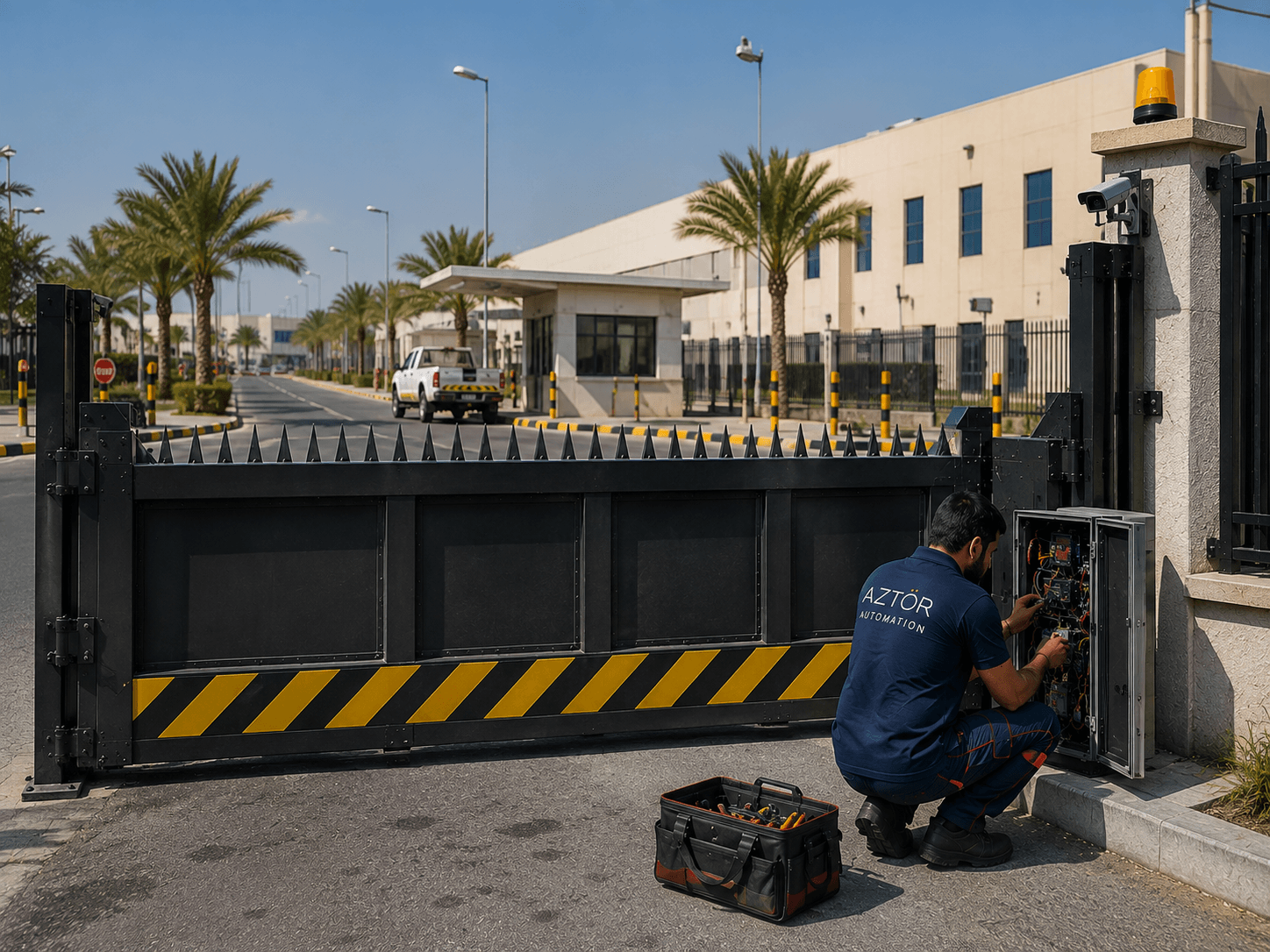
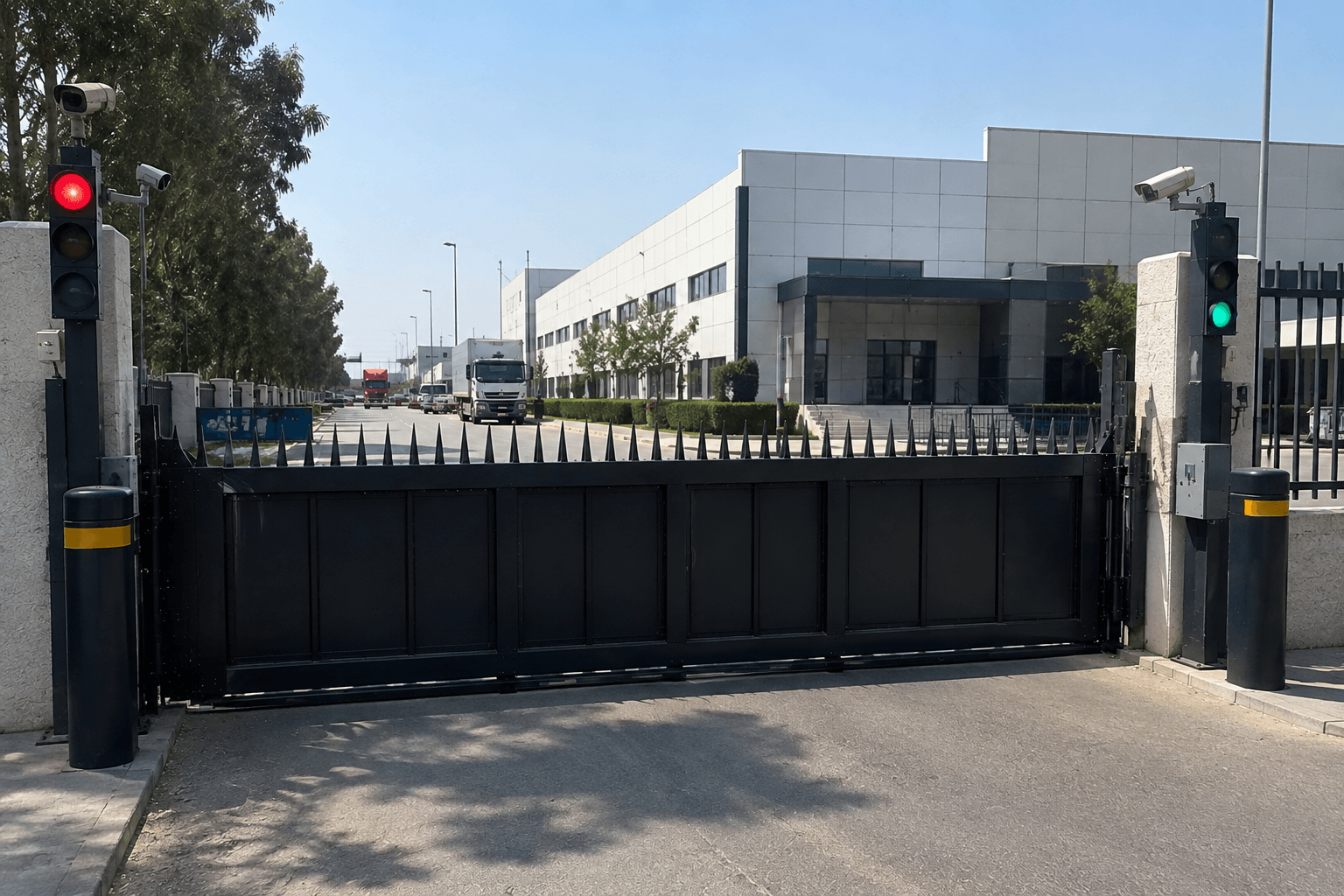
Safety and security are separate but equally important considerations. A crash-resistant gate has substantial structural mass and must be provided with an appropriate operational safety system. Depending on the selected product, this can include photocells, safety edges, vehicle detectors, warning lights, audible warnings, emergency stop controls and monitored gate positions.
Foundation design is particularly important. Crash performance is based on the complete tested installation arrangement, and changing critical foundations, anchoring, posts or structural components can affect the validity of the claimed performance. Installation should therefore follow the selected manufacturer's tested and approved requirements.
AZTÖR can support the integration, servicing and preventive maintenance of suitable crash-rated gate systems. Maintenance focuses on preserving both reliable day-to-day operation and the integrity of critical components rather than modifying the system in ways that could compromise its documented impact performance.
AZTÖR supports suitable crash-rated gate and high-security vehicle access projects across Dubai, Abu Dhabi, Sharjah, Ajman, Ras Al Khaimah, Fujairah and Umm Al Quwain, with project-specific support available across the wider GCC.
Key Features
- Tested vehicle-impact protection systems
- Crash-rated sliding gate options
- Crash-rated cantilever gate options
- Crash-rated swing gate options where available
- High-security vehicle access control
- Project-specific impact rating selection
- Documented tested system configurations
- Heavy structural gate construction
- Engineered support posts and foundations
- Automatic and controlled operation options
- Guard-house control integration
- Central security system integration
- Card and biometric access integration
- Intercom integration
- UHF vehicle identification integration
- ANPR integration where required
- Vehicle loop and detection integration
- Gate position monitoring
- Safety photocell integration
- Safety edge protection where applicable
- Warning light and audible warning options
- Emergency stop controls
- Manual or emergency operating provisions according to selected system
- Preventive inspection and maintenance support
- Suitable for critical infrastructure applications
Technical Specification
| Gate Type | Crash-rated vehicle security gate |
|---|---|
| Configuration | Sliding, cantilever, swing or manufacturer-specific tested configuration |
| Security Function | Vehicle impact resistance according to selected tested system |
| Impact Standard | ASTM F2656/F2656M, IWA 14-1 or project-specified recognised standard |
| Impact Rating | Project-specific and verified against selected manufacturer's test documentation |
| Vehicle Mass | According to documented test classification |
| Impact Speed | According to documented test classification |
| Penetration Performance | According to selected test standard and certified product result |
| Gate Construction | Manufacturer-specific reinforced security construction |
| Foundation | Engineered according to tested or manufacturer-approved installation requirements |
| Support Structure | Manufacturer-specific posts, carriages, hinges or structural assemblies |
| Operation | Manual, automatic or controlled according to selected system |
| Drive System | Manufacturer-approved automation appropriate to tested gate configuration |
| Duty Cycle | According to selected system and operational requirement |
| Power Supply | According to selected automation and project electrical provision |
| Control | Guard station, push button, access control or authorised security system |
| Access Control | Card, biometric, keypad, intercom or compatible security platform |
| Vehicle Identification | UHF, ANPR or compatible authorised vehicle identification |
| Vehicle Detection | Loop detector or compatible detection system where specified |
| Safety Detection | Manufacturer-approved safety devices according to operational requirements |
| Warning Devices | Visual and audible warning options where specified |
| Emergency Stop | Available according to selected control system |
| Gate Monitoring | Open, closed, moving and fault status where supported |
| Finish | Manufacturer or project-specific protective finish |
| Installation | According to selected crash-rated system documentation |
| Maintenance | Manufacturer-appropriate mechanical, automation and safety maintenance |
Crash rating applies only to the specific system and installation configuration for which documented impact performance is available. Vehicle mass, impact speed, penetration level, gate construction, foundations and structural components must be checked against the selected product's test documentation. AZTÖR confirms suitable system options after a free preliminary site inspection and review of the project's required security rating. Final crash-performance requirements should follow the approved security consultant, authority or project specification.
Typical Applications
- Government facilities
- Critical infrastructure
- Data centres
- Airports
- Ports and marine facilities
- Utility facilities
- Power generation facilities
- Oil and gas facilities
- Industrial compounds
- Sensitive manufacturing facilities
- Logistics hubs
- High-security warehouses
- Security checkpoints
- Military and defence-related facilities subject to applicable approvals
- Embassy and diplomatic facilities subject to project requirements
- Financial facilities
- Transport infrastructure
- Restricted vehicle zones
- High-security corporate campuses
- Perimeter security entrances
- Controlled service entrances
- Critical equipment compounds
- High-risk vehicle access points