Revenue Systems
Parking Revenue Systems provide the commercial and operational layer behind a paid parking facility. They record parking sessions, apply configured tariffs, process payments and validations, authorise exits and provide transaction information for the parking operator.
AZTÖR designs, integrates, upgrades and maintains parking revenue solutions for shopping malls, hotels, hospitals, commercial developments, mixed-use properties, public parking facilities and privately operated car parks across the UAE.
A revenue system is more than a payment machine. A complete solution can connect entry and exit equipment, parking-management software, ticketing or ticketless identification, payment terminals, cashier stations, validation tools, automatic barriers and reporting.
The system architecture should start with the parking operator's business model. The number of spaces, entry and exit lanes, expected traffic, parking tariffs, free periods, customer categories, payment methods, validations and reporting requirements all affect the final design.
AZTÖR provides a free site inspection for applicable parking revenue projects. We assess the existing parking infrastructure, barriers, lanes, ticketing equipment, ANPR, network, payment locations and operational workflow before recommending a suitable architecture.
Parking revenue systems can operate with traditional tickets, ticketless ANPR or a hybrid arrangement. The best method depends on the type of facility, user profile and required customer experience.
In a ticket-based system, the parking session is associated with a physical or digital credential issued at entry. Depending on the selected platform, this may use barcode, QR or another manufacturer-specific technology.
In a ticketless ANPR system, the vehicle's number plate can become the primary reference for the parking session. The system records the vehicle at entry and associates the applicable parking transaction with that session.
ANPR does not itself process parking revenue. It provides vehicle identification, while the parking platform applies the configured commercial rules and the connected payment solution processes the transaction.
Hybrid systems can support casual visitors through tickets or ANPR while employees, tenants, hotel guests, subscribers or other authorised users follow separate parking rules.
Parking tariffs can be configured according to the capabilities of the selected platform. Examples can include hourly charging, complimentary periods, progressive tariffs, daily maximums, overnight rules and other operator-defined structures.
Different parking categories can also be handled where supported. A property may have separate policies for visitors, tenants, employees, VIP users, hotel guests or long-term parking customers.
Grace periods can be configured for suitable parking operations. This can allow vehicles a defined period for entry and exit or complimentary parking according to the operator's policy.
Parking validation can provide discounted or complimentary parking to eligible customers. This is particularly useful for malls, hotels, hospitals, restaurants, offices and mixed-use developments.
Validation can be performed through authorised cashier terminals, reception workstations, merchant interfaces, QR workflows or other supported methods.
For example, a hotel may validate guest parking while retaining normal tariffs for other vehicles. A shopping destination may provide parking concessions based on its own commercial rules and selected system capabilities.
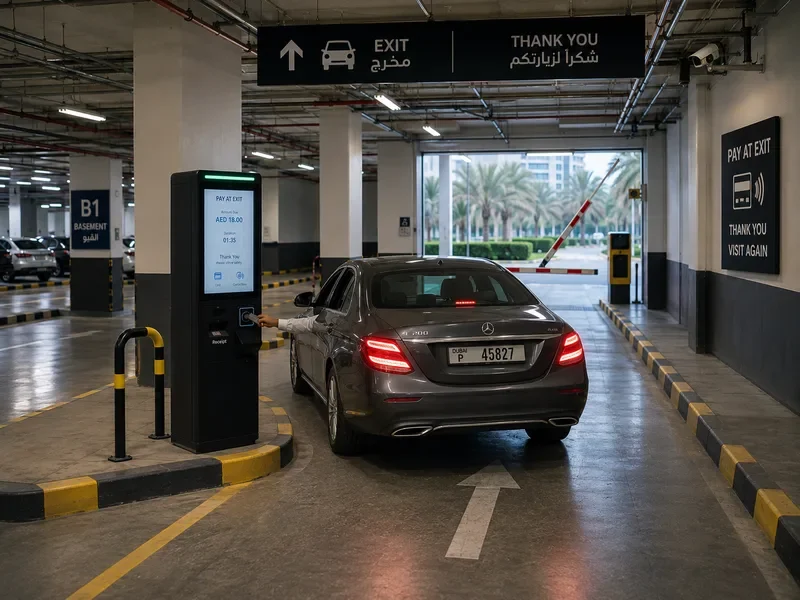
Payment can be provided at staffed cashier stations, automatic pay stations, exit terminals or through compatible digital channels.
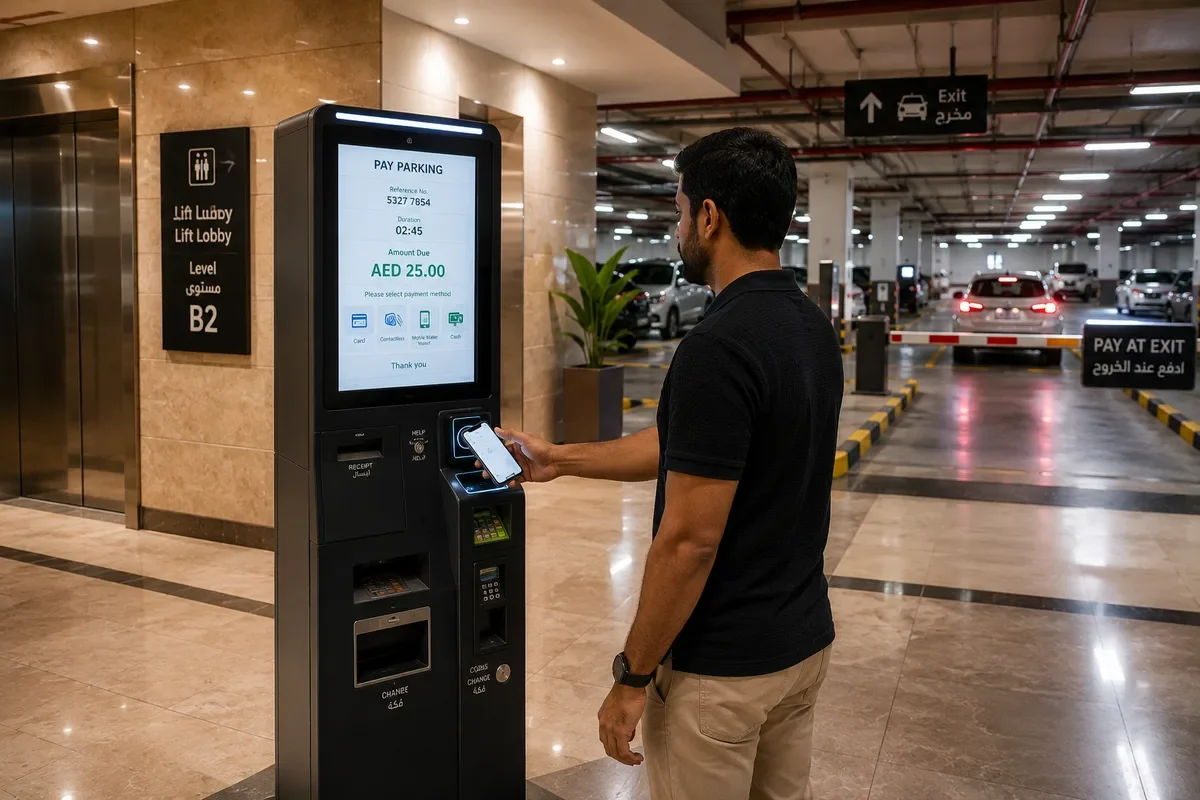
Automatic pay stations allow customers to complete payment without a staffed cashier. Depending on the selected equipment, the station may support card, contactless, cash or other payment methods.
Payment capabilities must be confirmed for the specific UAE deployment. Card acceptance, contactless functionality, acquiring services, terminal certification, digital payment options and settlement arrangements depend on the selected payment provider and commercial setup.
AZTÖR can integrate the parking equipment with suitable payment infrastructure, but financial settlement and merchant services remain subject to the agreements between the parking operator and the relevant payment service providers.
Parking payment data should be handled through appropriate payment infrastructure. Sensitive card information should not be unnecessarily stored in unrelated parking-control equipment.
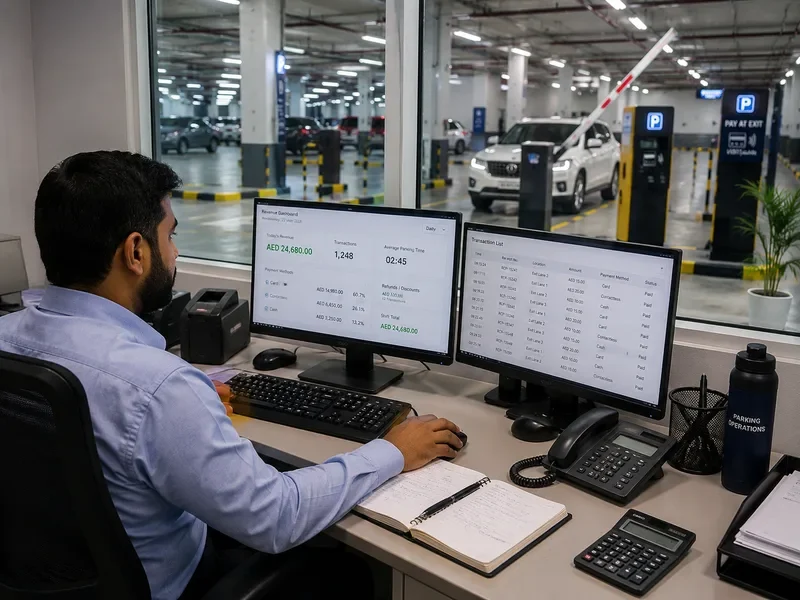
A revenue system can maintain a record of parking transactions, including information such as entry and exit times, parking duration, tariff applied, validation and payment status, subject to the capabilities of the selected platform.
Suitable systems can generate operational and financial reports for authorised personnel. Exact report formats, reconciliation functions and accounting exports depend on the selected software.
Cashier shift reporting can also be available where staffed payment points are used. This can help the parking operator reconcile transactions according to the platform's supported workflow.
Where cash payments are accepted, cash-handling procedures should address collection, replenishment, reconciliation and authorised access to the payment equipment.
Revenue reporting should not be confused with accounting or statutory financial reporting. Parking software can provide operational transaction data, while the customer's accounting treatment remains within its own financial systems and procedures.
Integration with external ERP, accounting or property-management systems may be possible through supported APIs, exports or interfaces. Compatibility must be confirmed with both systems before promising a specific integration.
For hotels and mixed-use developments, parking revenue can also interact with guest or tenant workflows where the selected parking and property systems provide compatible interfaces.
Season passes, subscriptions or long-term parking permissions can be managed on suitable platforms. These users can follow different access and charging rules from casual visitors.
Corporate accounts can also be considered where a parking operator needs to manage authorised groups or contracted parking allocations, subject to platform capabilities.
Lost-ticket management is another important operational function in physical ticket environments. The system should provide a controlled workflow based on the operator's approved policy.
ANPR can assist with parking-session verification where it is integrated into the system, although number-plate recognition should not be treated as infallible.
For ticketless parking, customers may be able to enter their number plate at a suitable payment interface to retrieve the parking session. Exact functionality depends on the selected platform.
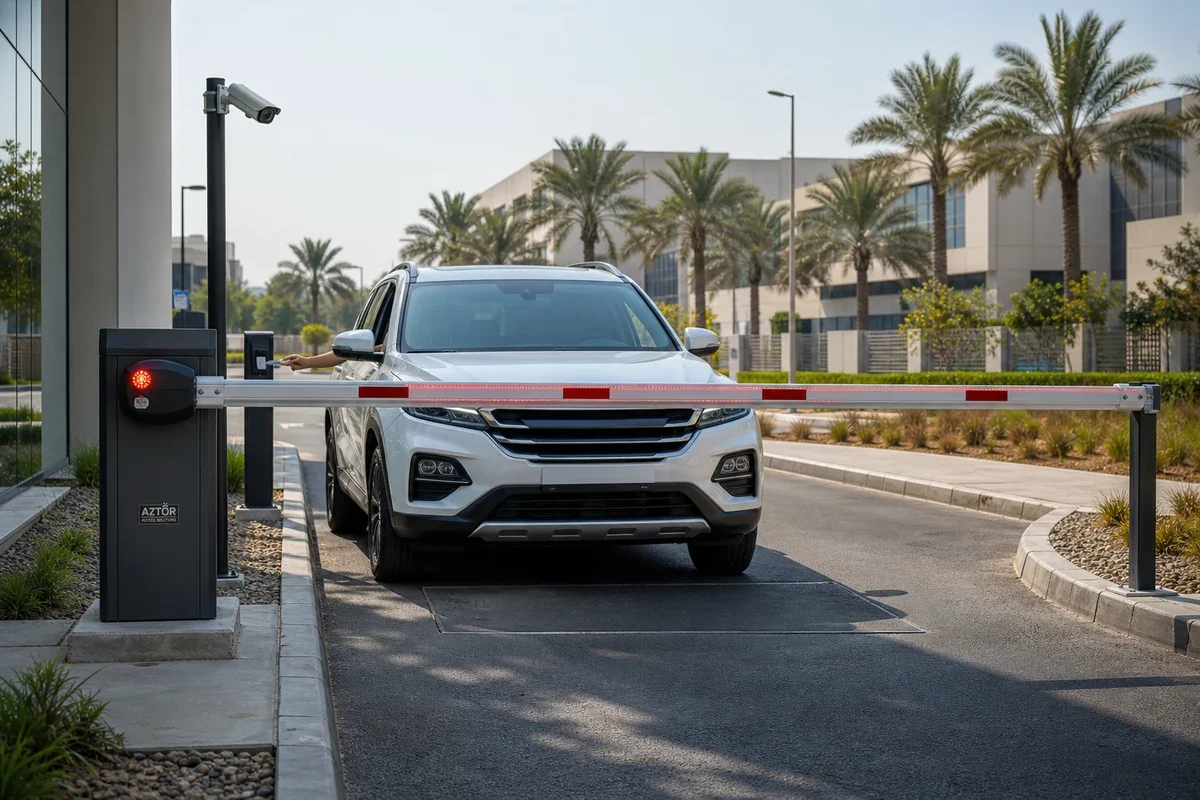
After the required payment or validation has been confirmed, the parking system can authorise the exit barrier according to its configured workflow.
Vehicle-detection loops, photocells and other suitable lane devices remain important. Payment authorisation tells the system whether the vehicle may leave; physical sensors help determine vehicle presence and safe barrier operation.
For high-volume car parks, the complete exit transaction needs to be fast enough to support expected traffic. A fast barrier alone cannot prevent queues if payment verification or customer interaction is slow.
Pre-payment can therefore be useful at busy sites because the commercial transaction is completed before the driver reaches the exit lane.
ANPR-based exit can further streamline suitable workflows by associating the arriving vehicle with a paid or validated parking session before the barrier command is issued.
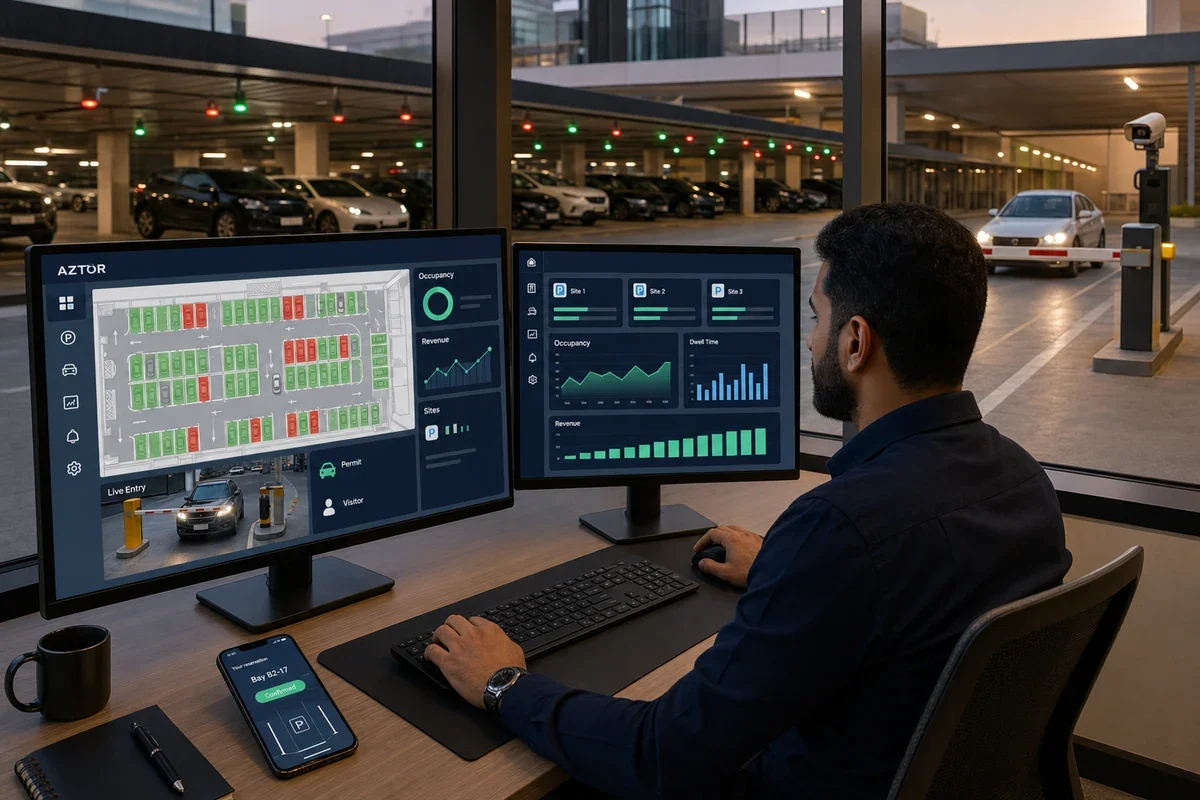
Central management can allow authorised operators to monitor multiple entry and exit lanes, payment stations and parking transactions from a common platform.
Suitable systems can also support multiple car parks or sites, although multi-site functionality depends on the selected parking software.
Revenue systems can integrate with Smart Parking Management so payment and tariff information becomes part of a wider parking operation that also includes vehicle access, occupancy and visitor management.
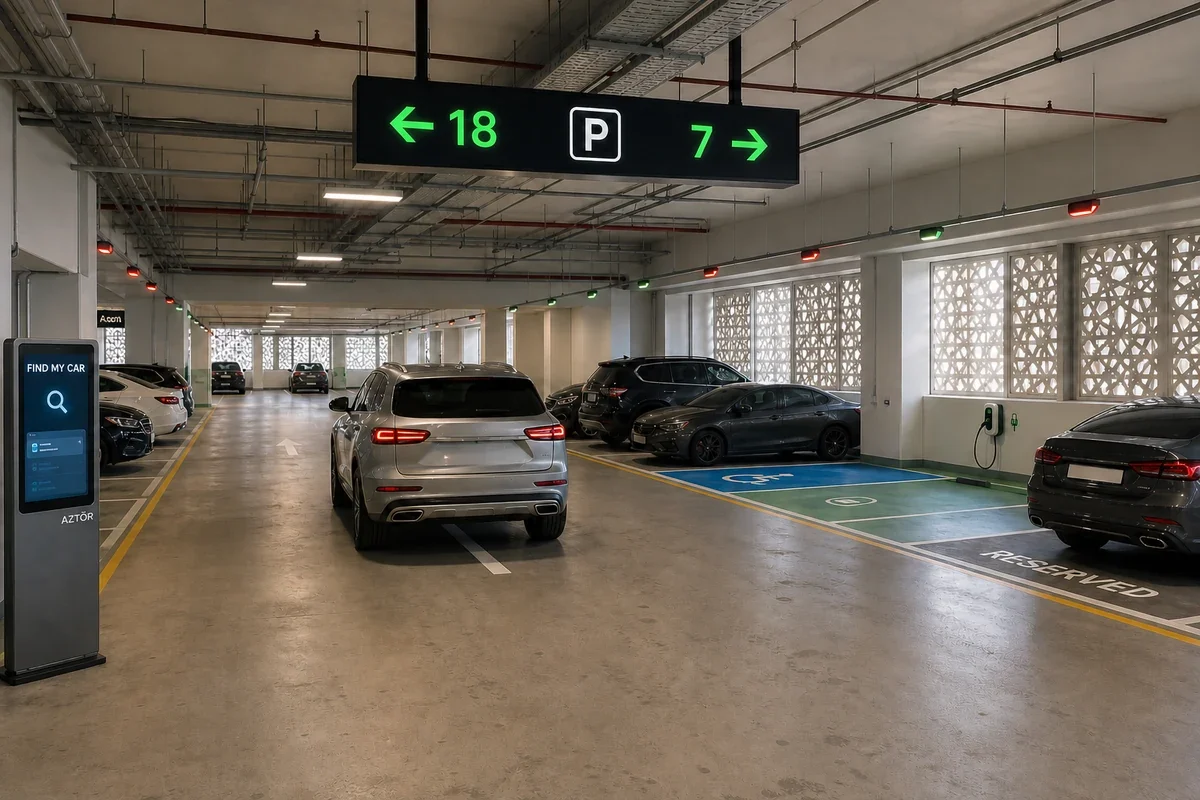
Parking Guidance can operate alongside the revenue platform to direct customers toward available floors, zones or individual spaces.
Automatic Parking Barriers provide the physical entry and exit control, while Ticketing Systems provide the parking-session credential workflow where physical or digital tickets are used.
This separation is important when designing the system. The barrier controls physical passage, ANPR or ticketing identifies the parking session, the revenue platform applies commercial rules, and the payment system processes the applicable transaction.
Existing paid parking facilities can often be upgraded. AZTÖR can assess existing barriers, terminals, loops, ANPR cameras, pay stations, network equipment and software interfaces to determine which components can reasonably be retained.
Older ticket-based facilities can also be assessed for migration toward hybrid or ticketless revenue management where technically and commercially suitable.
System resilience should be considered during design. Local equipment behaviour, authorised overrides, network redundancy, server availability and payment-service interruptions should have clearly defined operating procedures.
A revenue system should not simply open all barriers automatically whenever a connected service fails. The appropriate fallback workflow should balance customer movement, revenue protection and site security according to the operator's requirements.
Where number plates, customer information or identifiable parking records are processed, the project should consider applicable UAE privacy and data-protection requirements.
Access to revenue and transaction information should also be controlled. Cashiers, supervisors, administrators, finance personnel and technical users can be assigned different permissions where the selected platform supports role-based access.
Audit logs can provide a record of selected administrative or transaction actions where supported by the parking software.
AZTÖR also provides troubleshooting for parking revenue infrastructure. A failed parking transaction may originate from the pay station, ticket reader, ANPR system, payment terminal, network, server, parking software, controller or exit barrier.
Preventive maintenance can include entry and exit terminals, pay stations, ticket readers, printers, ANPR cameras, barriers, loops, photocells, controllers, intercoms and associated network equipment.
AZTÖR provides parking revenue system integration, upgrades, troubleshooting and maintenance across Dubai, Abu Dhabi, Sharjah, Ajman, Ras Al Khaimah, Fujairah and Umm Al Quwain, with suitable smart parking solutions available across the wider GCC.
Key Features
- Parking revenue management
- Paid parking management
- Parking tariff management
- Automated parking payment
- Ticket-based paid parking
- Ticketless paid parking
- Hybrid parking revenue systems
- ANPR parking revenue integration
- Parking ticketing integration
- Automatic barrier integration
- Parking session management
- Entry and exit transaction management
- Hourly parking tariffs
- Progressive tariff options
- Complimentary parking periods
- Grace-period management
- Daily maximum tariff options
- Operator-defined parking rules
- Parking validation
- Retail parking validation
- Hotel parking validation
- Hospital parking validation
- Restaurant parking validation
- Tenant parking rules
- Employee parking rules
- VIP parking rules
- Season-pass management
- Subscription parking options
- Long-term parking management
- Corporate parking options
- Automatic pay stations
- Cashier payment stations
- Exit payment options
- Card payment integration where supported
- Contactless payment integration where supported
- Cash payment options where required
- Digital payment integration where supported
- Receipt printing
- Parking duration calculation
- Lost-ticket management
- Number-plate session lookup where supported
- Transaction monitoring
- Parking revenue reporting
- Payment reporting
- Validation reporting
- Cashier shift reporting
- Operational reporting
- Transaction reconciliation features
- Central management dashboard
- Role-based user permissions
- Audit-log options
- Multi-entry management
- Multi-exit management
- Multi-lane management
- Multi-site management where supported
- ANPR integration
- UHF integration for regular users
- Smart Parking Management integration
- Parking Guidance integration
- Ticketing System integration
- Intercom integration
- Induction loop integration
- Safety photocell integration
- Existing revenue-system upgrades
- Ticketless parking conversion
- System troubleshooting
- Preventive maintenance and AMC support
Technical Specification
| Solution Type | Parking revenue management system |
|---|---|
| Primary Function | Manage paid parking sessions, tariffs, payments, validation and revenue transactions |
| Application | Commercial, public and privately operated paid parking facilities |
| Parking Mode | Ticketed, ticketless or hybrid |
| Parking Session | Ticket, ANPR or platform-specific identifier |
| Tariff Management | Software configurable |
| Hourly Tariffs | Available |
| Progressive Tariffs | Platform specific |
| Grace Period | Configurable on suitable platforms |
| Daily Maximum | Platform specific |
| Complimentary Parking | Available |
| Validation | Available |
| Lost Ticket Management | Available on ticket-based platforms |
| Season Passes | Available |
| Subscription Parking | Available on suitable platforms |
| Corporate Parking | Platform specific |
| ANPR | Available |
| Ticketing | Available |
| Automatic Barriers | Integrated |
| UHF Regular User Access | Available |
| Automatic Pay Station | Available |
| Cashier Station | Available |
| Payment at Exit | Available on suitable systems |
| Card Payment | Subject to selected payment provider |
| Contactless Payment | Subject to selected payment provider |
| Cash Payment | Available on suitable equipment |
| Digital Payment | Platform and provider specific |
| Receipt Printing | Available |
| Parking Duration | Available |
| Transaction Records | Available |
| Revenue Reports | Platform specific |
| Payment Reports | Platform specific |
| Validation Reports | Platform specific |
| Cashier Reports | Platform specific |
| Reconciliation | Platform and payment architecture specific |
| User Permissions | Platform specific |
| Audit Logs | Available on suitable systems |
| Central Dashboard | Available |
| Multi-Lane Management | Available |
| Multi-Site Management | Available on suitable platforms |
| ERP Integration | Subject to supported interface or API |
| Property System Integration | Subject to platform compatibility |
| Smart Parking Integration | Available |
| Parking Guidance Integration | Available |
| Vehicle Detection | Induction loop or compatible technology |
| Safety Detection | Photocells or suitable barrier safety devices |
| Network Architecture | Cloud, on-premises or manufacturer specific |
| Data Retention | Customer, platform and applicable requirement specific |
| Installation | New installation or existing system upgrade |
| Maintenance | Terminals, payment equipment, barriers, ANPR, sensors, controllers and network equipment |
Parking Revenue Systems should be designed around the operator's actual tariff model, parking capacity, transaction volume, payment methods, validation rules, entry and exit lanes and reporting requirements. Payment functionality, merchant acquiring, settlement, financial integrations and software features vary by provider and must be confirmed for the specific UAE deployment. AZTÖR provides a free site inspection before finalising the system architecture.
Typical Applications
- Shopping malls
- Retail developments
- Commercial towers
- Mixed-use developments
- Hotels
- Resorts
- Hospitals
- Healthcare facilities
- Office buildings
- Business parks
- Public car parks
- Private paid parking
- Multi-storey car parks
- Basement parking
- Airport parking
- Transport facilities
- Exhibition centres
- Entertainment venues
- Leisure destinations
- Universities
- Government facilities
- Visitor parking facilities
- Hotel guest parking
- Retail customer parking
- Hospital visitor parking
- Corporate parking facilities
- Long-term parking facilities
- Subscription parking facilities
- Managed parking operations
- Multi-site parking operators
- Existing paid parking upgrades
- Ticketless parking conversions