Loading Bay Doors
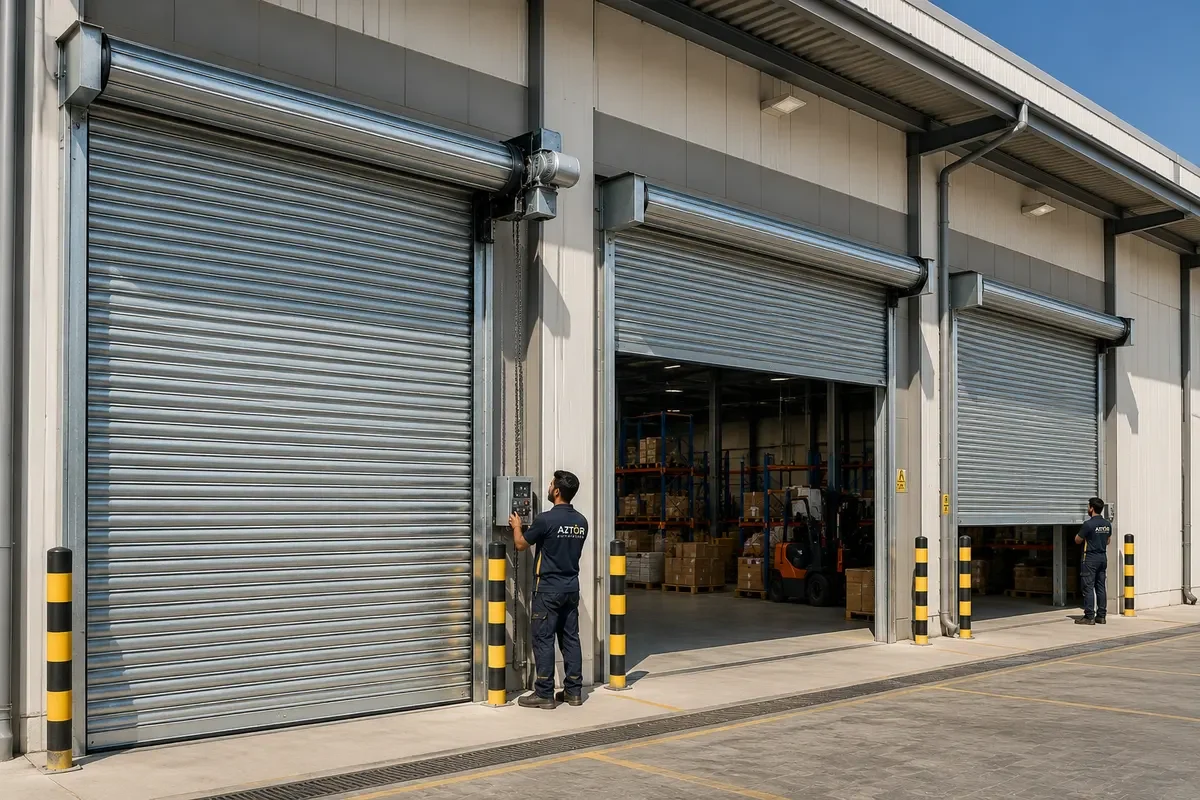
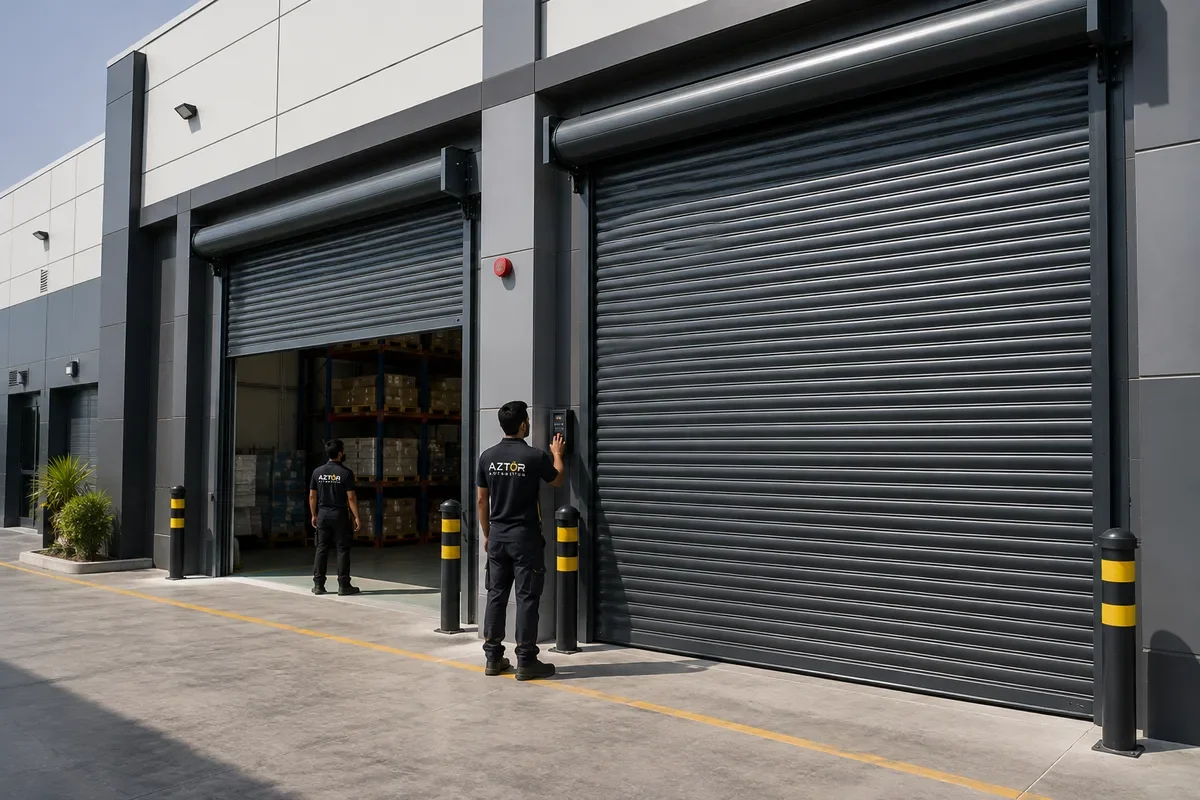
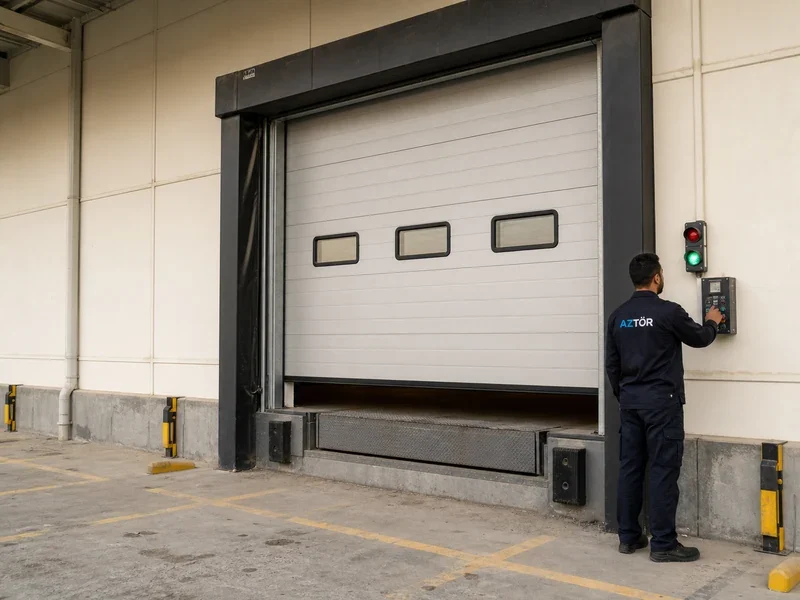
Loading bay doors form the main controlled opening between a warehouse or industrial building and its vehicle loading area. They need to provide reliable daily operation while working safely with forklifts, trucks, dock levellers and other loading-bay equipment.
AZTÖR supplies, installs, automates, repairs and maintains loading bay doors for warehouses, logistics centres, distribution facilities, factories, cold stores and commercial storage buildings across the UAE.
There is no single door type suitable for every loading bay. Door selection depends on the clear opening, dock configuration, vehicle traffic, operating frequency, environmental separation, available headroom, building structure and required level of insulation.
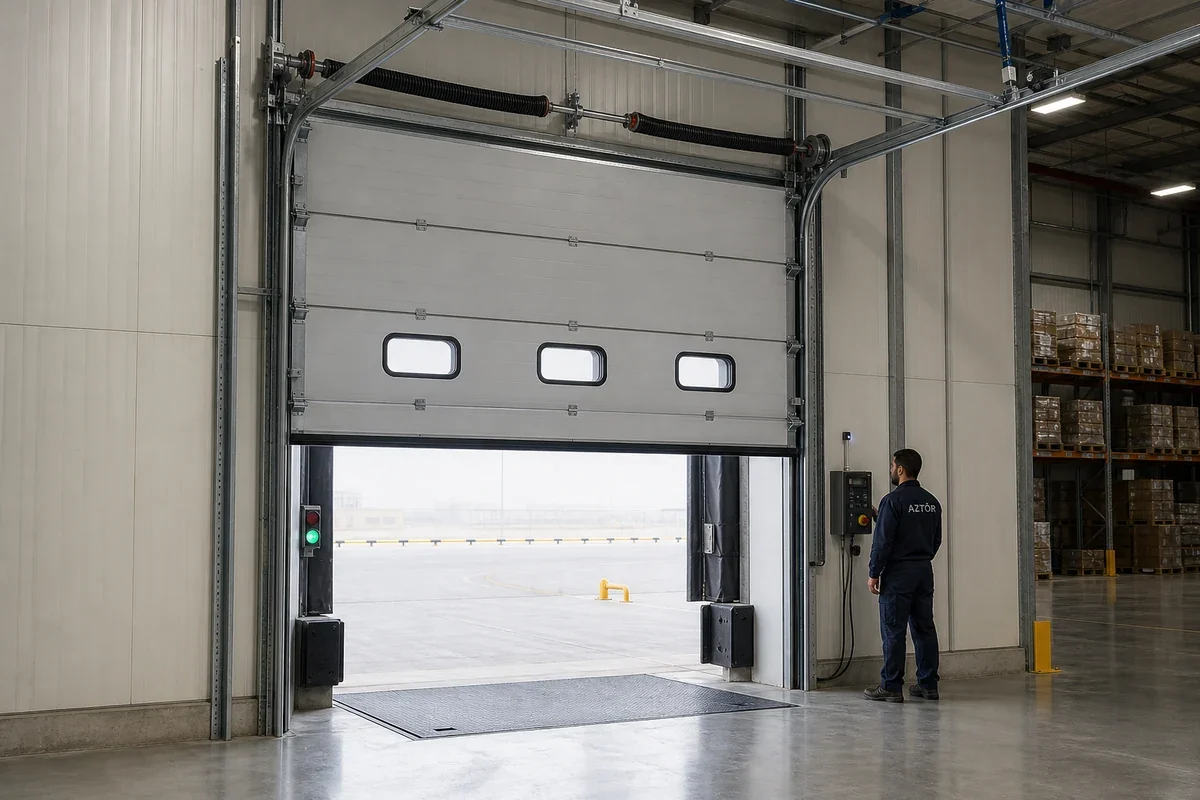
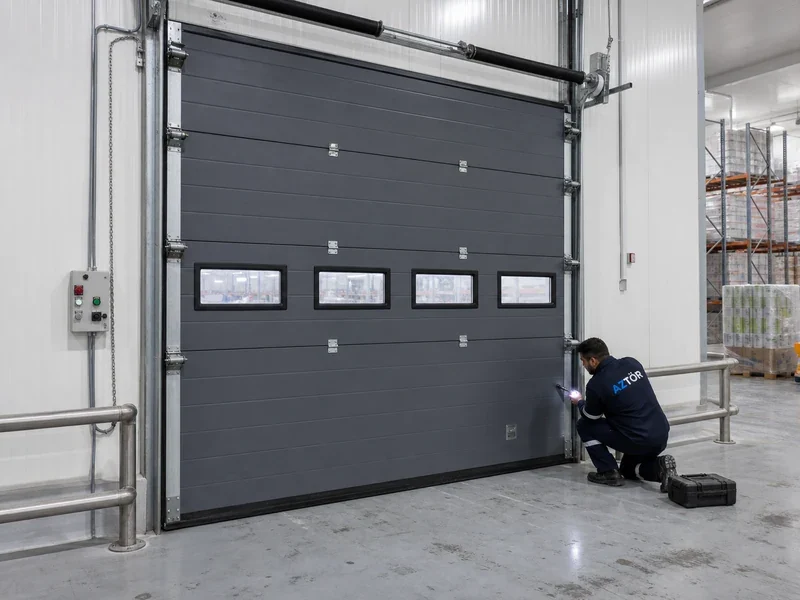
Insulated sectional overhead doors are widely used at conventional warehouse loading bays. Their connected panels rise vertically and travel along an overhead track arrangement, keeping the doorway clear without requiring an outward swing area.
Depending on the building geometry, sectional doors can use standard-lift, low-headroom, high-lift, vertical-lift or other manufacturer-specific track arrangements. The correct configuration is selected around the available space above and beside the opening.
Insulated sandwich panels can help reduce thermal transfer when the loading bay is closed. This is particularly useful for air-conditioned warehouses, food facilities, pharmaceutical storage and temperature-controlled logistics operations in the UAE.
Thermal performance should be assessed from the complete door rather than panel thickness alone. Panel joints, perimeter seals, bottom seals, glazing and installation details all influence overall performance.
Where loading bays operate very frequently, a high speed door may also be considered. Rapid opening and closing can improve traffic flow and reduce the time the warehouse opening remains exposed.
Some facilities use both systems: an insulated sectional door for secure or environmental closure and a high speed door for frequent operational traffic. The correct arrangement depends on the loading process and available space.
AZTÖR provides a free site inspection for applicable loading bay door projects. We assess the opening dimensions, headroom, side clearances, structural fixing areas, dock leveller, vehicle traffic, operating frequency and surrounding loading-bay equipment before final selection.
Loading bay doors can be manually operated or motorised according to their size, weight and operating requirements. Busy logistics facilities generally benefit from suitable industrial automatic operators and appropriately designed controls.
Motor selection is not based on door dimensions alone. Door balance, panel weight, operating cycles, lift configuration, speed, environmental conditions and required control functions all affect operator selection.
A sectional loading bay door uses springs, cables, drums, rollers and tracks to control the movement of the door. These components must remain correctly adjusted and maintained so the motor is not forced to compensate for a mechanically defective door.
Automatic operation can use push buttons, key switches, pull cords, remote controls or compatible access-control signals. Vehicle-detection systems can also be considered where the loading operation requires automated traffic movement.
Safety systems can include photocells, bottom safety edges, light curtains, cable-break protection, spring-break protection, anti-drop systems and other manufacturer-specific features according to the selected door.
Loading bay doors frequently operate alongside dock levellers. The door controls access to the building while the dock leveller bridges the height and distance between the warehouse floor and the truck or trailer bed.
Dock shelters or dock seals can also be installed around the doorway to reduce the exposed gap between the vehicle and building during loading. For cold stores and air-conditioned warehouses, this can help reduce unnecessary environmental exposure.
A complete loading-bay system can therefore combine the door, dock leveller, dock shelter or seal, dock bumpers, vehicle restraint, traffic lights, wheel guides and dock lighting according to the operational requirements of the facility.
Control interlocking can be considered where the loading sequence needs to be managed. For example, compatible systems can coordinate the loading bay door, dock leveller, vehicle restraint or traffic signals so equipment operates in the intended sequence.
The exact interlock logic should be designed around the selected equipment and the site's approved operating procedure rather than applying one universal sequence to every loading bay.
Dock bumpers are also important because they establish the intended vehicle stopping position and protect the loading-bay structure and equipment from normal truck contact.
For cold storage loading bays, the door specification requires additional attention to insulation, perimeter sealing, condensation and the temperature difference between the warehouse and external environment. Specialist cold storage doors may be more appropriate where temperatures are particularly demanding.
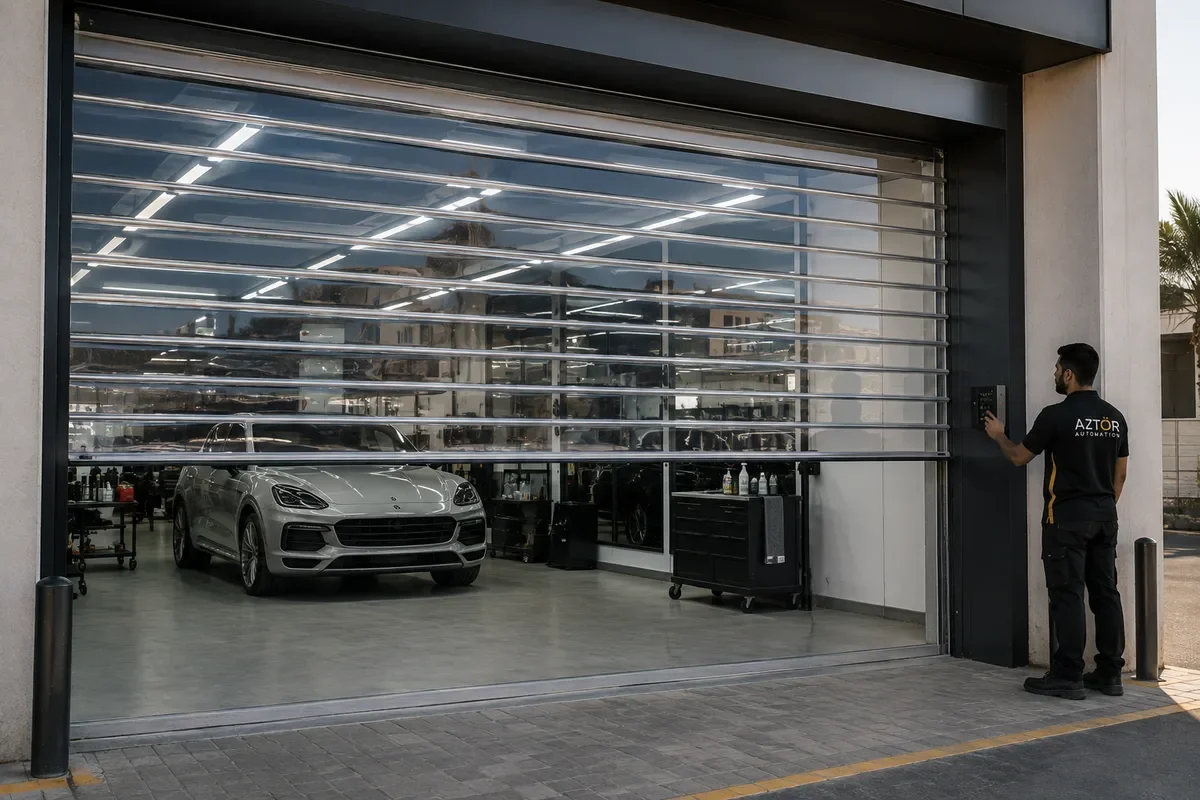
Vision panels can be incorporated into suitable sectional loading bay doors to provide natural light and visibility. Full-view glazed sections can also be considered for appropriate commercial or operational applications.
External loading bay doors in the UAE should be selected with consideration for heat, dust, sand, humidity, wind exposure and, where relevant, coastal conditions. Wind requirements become increasingly important as the door opening becomes larger.
A standard loading bay door should not automatically be described as fire rated, wind rated or security rated. Where a project specifies a particular performance classification, the selected complete door system should have appropriate supporting technical documentation.
Existing manual loading bay doors can sometimes be automated. AZTÖR first checks door balance, springs, cables, tracks, rollers, panels and structural condition before deciding whether adding an operator is technically appropriate.
AZTÖR also repairs existing loading bay doors. Typical faults include broken springs, damaged cables, worn rollers, bent tracks, damaged panels, defective motors, incorrect limits, control-board faults and failed safety sensors.
Broken springs and cables involve stored mechanical energy and should be handled by trained personnel. A damaged sectional door should not continue operating where its supporting or counterbalance system has been compromised.
Preventive maintenance is especially important at busy logistics facilities because loading bay doors can complete a large number of operating cycles. Mechanical, electrical and safety components should be inspected according to usage and manufacturer requirements.
AZTÖR provides loading bay door supply, installation, automation, repair and preventive maintenance across Dubai, Abu Dhabi, Sharjah, Ajman, Ras Al Khaimah, Fujairah and Umm Al Quwain, with suitable loading-bay support available across the wider GCC.
Key Features
- Industrial loading bay door systems
- Warehouse loading bay doors
- Logistics loading bay doors
- Insulated sectional overhead doors
- Automatic sectional doors
- Manual sectional doors
- High speed loading bay door options
- Cold storage loading bay options
- Insulated sandwich panels
- Single and double skin configurations according to selected system
- Standard-lift track options
- Low-headroom configurations
- High-lift configurations
- Vertical-lift configurations
- Project-specific track arrangements
- Industrial automatic operators
- High-cycle operator options
- Balanced spring systems
- Heavy-duty tracks
- Industrial rollers
- Cable and drum systems
- Perimeter sealing
- Bottom door seals
- Thermal separation options
- Vision panel options
- Full-view panel options where suitable
- Push-button operation
- Key-switch operation
- Pull-cord activation
- Remote-control options
- Compatible access-control integration
- Vehicle-detection integration where suitable
- Safety photocells
- Bottom safety edge options
- Safety light curtain options
- Cable-break protection according to selected system
- Spring-break protection according to selected system
- Anti-drop safety options
- Emergency operation according to selected system
- Dock leveller integration
- Dock shelter integration
- Dock seal integration
- Vehicle-restraint integration
- Traffic-light integration
- Dock bumper coordination
- Wheel-guide coordination
- Dock-light coordination
- Loading-bay control interlocking
- Existing door automation
- Panel replacement
- Spring replacement
- Cable replacement
- Track and roller repair
- Motor and gearbox repair
- Control-panel troubleshooting
- Sensor replacement
- Preventive maintenance and AMC support
Technical Specification
| Product Type | Industrial loading bay door |
|---|---|
| Primary Application | Warehouse, logistics and industrial loading bays |
| Door Configuration | Sectional, high speed, insulated or specialist loading-bay system |
| Primary Door Type | Insulated sectional overhead door where suitable |
| Panel Construction | Steel, aluminium, insulated sandwich or manufacturer-specific construction |
| Panel Thickness | Manufacturer and application specific |
| Insulation | Available according to selected door system |
| Thermal Performance | Complete-system and manufacturer specific |
| Opening Width | Project and selected-system specific |
| Opening Height | Project and selected-system specific |
| Track Configuration | Standard lift, low headroom, high lift, vertical lift or system specific |
| Headroom | Selected according to opening and track configuration |
| Operation | Manual or motorised |
| Counterbalance | Spring, cable and drum or manufacturer-specific system |
| Motor | Industrial door operator selected according to door and duty |
| Operating Frequency | Selected according to required duty cycle |
| Operating Speed | Manufacturer and system specific |
| Control | Push button, key switch, pull cord, remote or compatible access control |
| Vehicle Detection | Available where appropriate |
| Safety Photocells | Available |
| Safety Edge | Available according to selected system |
| Light Curtain | Available on compatible systems |
| Cable-Break Protection | According to selected sectional door |
| Spring-Break Protection | According to selected sectional door |
| Anti-Drop Protection | Manufacturer and system specific |
| Vision Panels | Available |
| Perimeter Sealing | Manufacturer-specific sealing system |
| Bottom Seal | Available |
| Wind Performance | Manufacturer, door-size and project specific |
| External Application | Available with suitable engineered system |
| Dock Leveller Integration | Compatible |
| Dock Shelter Integration | Compatible |
| Dock Seal Integration | Compatible |
| Vehicle Restraint Integration | Compatible where required |
| Traffic Light Integration | Available |
| Interlocking | Available with compatible loading-bay controls |
| Power Supply | According to selected operator and controls |
| Fire Rating | Only where supported by a specifically tested complete system |
| Installation | New installation, replacement or suitable automation retrofit |
| Maintenance | Panels, tracks, rollers, springs, cables, motors, controls and safety systems |
Loading bay doors must be selected according to the clear opening, available headroom, lift configuration, traffic frequency, environmental conditions, insulation requirement and surrounding dock equipment. Motor capacity alone does not determine suitability. Where thermal, wind, fire or other performance values are required, they should be supported by technical documentation for the selected complete system. AZTÖR provides a free site inspection before confirming the final door and loading-bay configuration.
Typical Applications
- Warehouses
- Logistics centres
- Distribution centres
- Fulfilment centres
- Loading bays
- Loading docks
- Factories
- Manufacturing facilities
- Industrial buildings
- Cold storage warehouses
- Temperature-controlled warehouses
- Refrigerated logistics centres
- Food distribution facilities
- Food-processing facilities
- FMCG warehouses
- Pharmaceutical warehouses
- Healthcare distribution facilities
- Retail distribution centres
- Supermarket distribution centres
- E-commerce fulfilment centres
- Third-party logistics facilities
- Cargo facilities
- Airport logistics facilities
- Freight terminals
- Automotive facilities
- Spare-parts warehouses
- Packaging facilities
- Commercial storage facilities
- Production facilities
- Industrial service centres
- Existing loading-bay upgrades