Removable Bollards
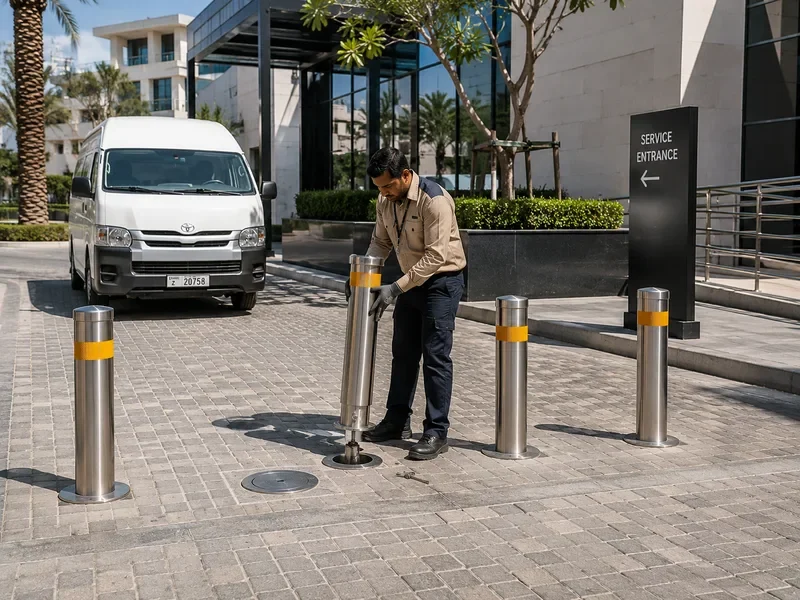
Removable Bollards provide a practical way to restrict vehicle access while retaining the ability to temporarily reopen an entrance when authorised vehicle passage is required.
AZTÖR Automation supplies and installs removable bollard systems for residential communities, commercial properties, parking areas, hotels, warehouses, industrial facilities, pedestrian zones and controlled vehicle entrances across the UAE.
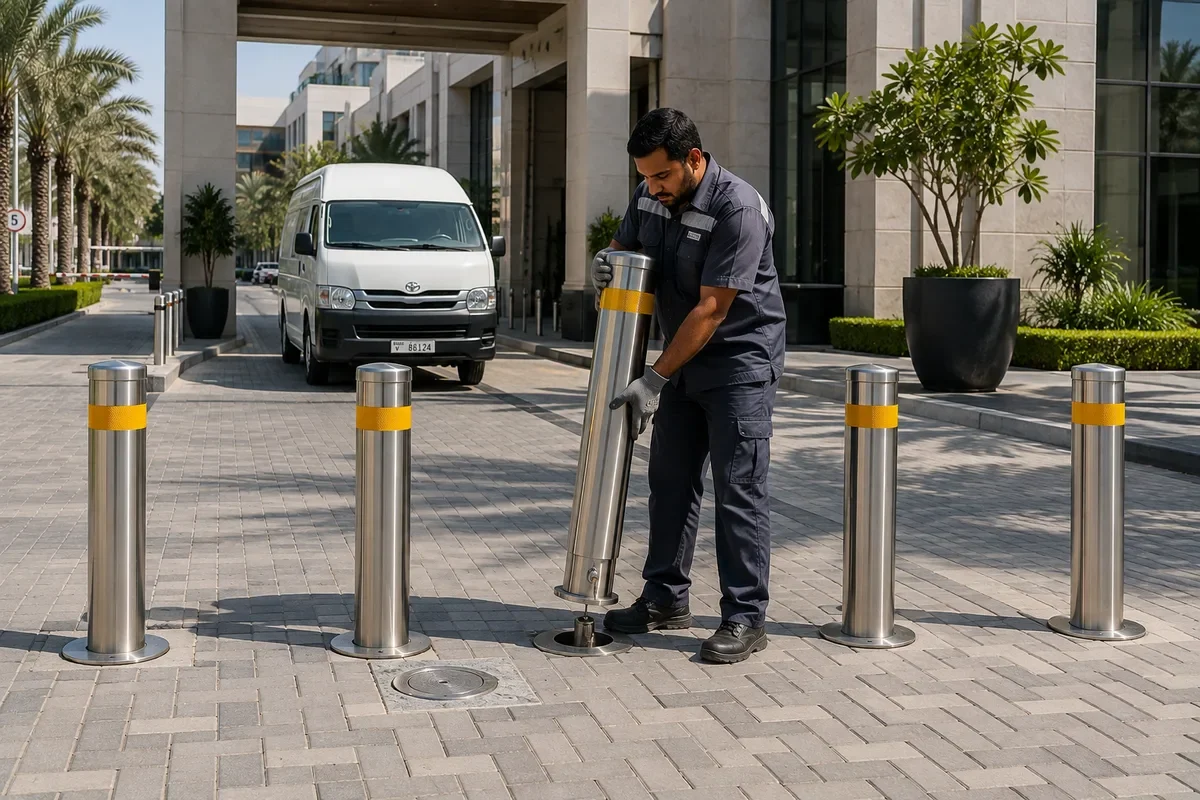
Unlike Fixed Bollards, which remain permanently in position, removable bollards can be unlocked and physically removed from their ground socket or mounting arrangement when access is required.
Unlike Automatic Bollards, removable bollards normally contain no motor, hydraulic drive or automatic raising and lowering mechanism. This makes them suitable for locations where vehicle access changes occasionally rather than many times throughout the day.
A typical application is an entrance that normally remains closed to vehicles but needs to be opened periodically for maintenance vehicles, deliveries, emergency access or authorised operational requirements.
AZTÖR provides a free site inspection for applicable removable bollard projects. We assess the entrance width, vehicle movements, frequency of removal, pedestrian routes, finished surface, underground services, drainage, required locking method and the intended level of physical protection before recommending a configuration.
Removable bollards are available in steel, stainless steel and other manufacturer-specific constructions.
Premium commercial, hospitality and residential projects can use stainless-steel or architectural finishes where the bollard needs to complement the surrounding property.
Galvanised, painted or powder-coated steel bollards can provide a practical solution for parking areas, warehouses, industrial facilities, service roads and other functional applications.
The removable section normally engages with a permanently installed ground socket, receiver or manufacturer-specific base arrangement.
When the bollard is required, it is inserted into the receiver and secured using the applicable locking mechanism.
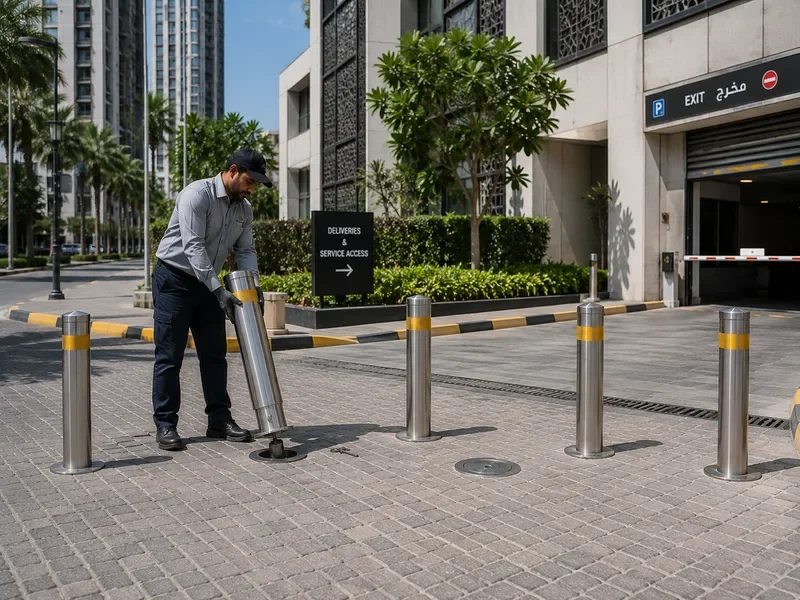
When authorised vehicle access is required, the bollard is unlocked, removed and stored in a suitable location.
The exposed ground receiver should be designed so that the area remains appropriately usable when the bollard has been removed.
Suitable systems may incorporate a hinged or removable cover for the empty socket. This can help reduce the entry of dirt and debris and provide a cleaner finished surface.
The exact socket and cover arrangement depends on the selected bollard system.
Drainage should be considered for ground-socket installations. Rainwater, cleaning water, irrigation and accumulated debris can enter below-ground components if the installation is poorly designed or maintained.
The manufacturer's installation requirements and actual site drainage conditions should therefore be considered when preparing the foundation.
Underground services must also be considered before excavation. Electrical cables, water pipes, irrigation, drainage, telecommunications and other utilities can affect the proposed bollard locations.
Removable bollards are available with different locking arrangements depending on the manufacturer and application.
Suitable systems may use an integrated lock, padlock arrangement, keyed mechanism or another manufacturer-specific locking system.
Key control is important where several people have authority to remove the bollard. The property should establish who is permitted to remove it and where the bollard and keys are stored.
For larger or heavier removable bollards, manual handling should be considered. A bollard that is technically removable may still be inconvenient for frequent operation if its size and weight make handling difficult.
If an entrance needs to open and close several times every day, an Automatic Bollard, Parking Barrier or automatic gate may provide a more practical vehicle access automation solution.
This is why AZTÖR considers operating frequency before recommending removable or automatic equipment.
Removable bollards can also be combined with Fixed Bollards. Fixed units can create permanent protection along most of a boundary while one or more removable units provide occasional authorised vehicle passage.
They can similarly be combined with Automatic Bollards where one part of the entrance requires frequent automated access and another requires only occasional manual access.
At parking facilities, removable bollards can restrict service lanes, reserved areas, unused entrances or locations that need occasional vehicle access.
They can also be used to prevent unauthorised parking or vehicle entry into private areas where a permanent Fixed Bollard would prevent required operational access.
Residential communities can use removable bollards for maintenance routes, emergency access points, service entrances and areas normally reserved for pedestrians.
Commercial properties can use them around plazas, pedestrian approaches, service roads and temporary vehicle-control points.
Hotels and resorts can use architectural removable bollards where occasional service or event access needs to be maintained without leaving a permanently open vehicle route.
Warehouses and industrial facilities can use suitable removable bollards around restricted areas, service zones and access points where occasional equipment or vehicle movement is necessary.
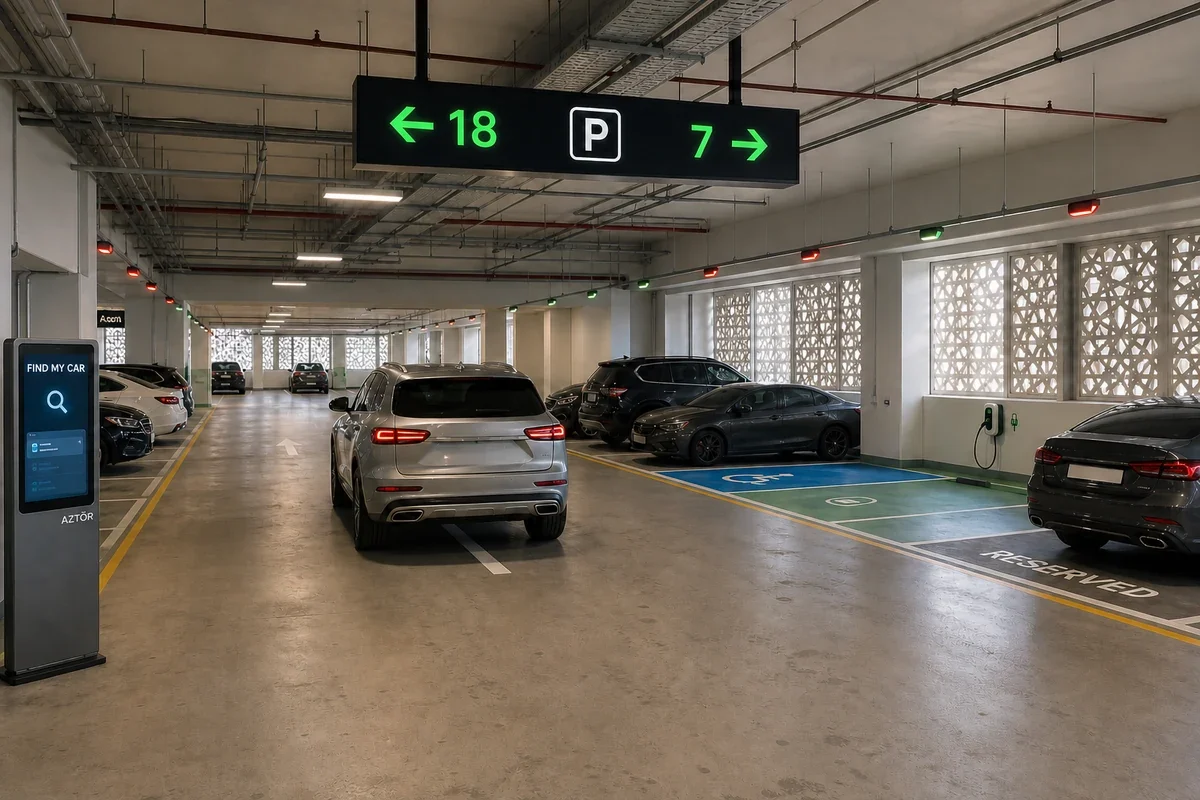
Removable bollards can also help protect parking automation equipment, utility infrastructure, EV charging equipment and other assets while allowing access when maintenance is required.
However, the bollard position should be designed so removal does not become necessary for routine operation unless that is the intended workflow.
Visibility is important in both vehicle and pedestrian environments. Reflective bands, contrasting finishes or other high-visibility features can be considered where appropriate.
When a removable bollard is taken out, the empty receiver should not create an unnecessary trip, wheel or maintenance hazard. Suitable covers and correct finished levels are therefore important.
Pedestrian accessibility should also be considered when determining bollard spacing and positioning.
Outdoor UAE installations need materials and finishes suitable for heat, strong sunlight, dust, sand, humidity and the actual environmental exposure.
Coastal projects may require additional consideration of corrosion-resistant materials and finishes.
Stainless steel provides good corrosion resistance and a premium appearance, but it still benefits from appropriate cleaning and inspection.
Galvanised and suitably coated steel can be selected for more functional installations depending on the environment.
Removable bollards should not automatically be described as crash rated, anti-ram or hostile-vehicle mitigation products.
A heavy removable steel bollard can provide physical vehicle restriction, but appearance, diameter, wall thickness or foundation size alone does not establish certified vehicle-impact performance.
Where a project requires protection against deliberate or high-energy vehicle impact, a specifically tested security bollard system should be selected.
Recognised vehicle-impact testing can include ASTM F2656/F2656M, IWA 14-1 or another standard specified for the particular security project.
Any claimed impact rating must correspond to the documented product, foundation and installation configuration.
Some manufacturers offer removable security bollards with documented impact performance. Where such protection is required, the exact tested system should be selected rather than applying a security rating to a conventional removable bollard.
The foundation is especially important for any impact-rated removable system because the ground receiver and supporting structure form part of the physical load path.
AZTÖR therefore distinguishes ordinary Removable Bollards used for flexible access control from specifically tested Crash-Rated or Anti-Ram Bollards used for hostile-vehicle mitigation.
Removable bollards can complement wider AZTÖR Automation vehicle-access projects even though the bollard itself is manually operated.
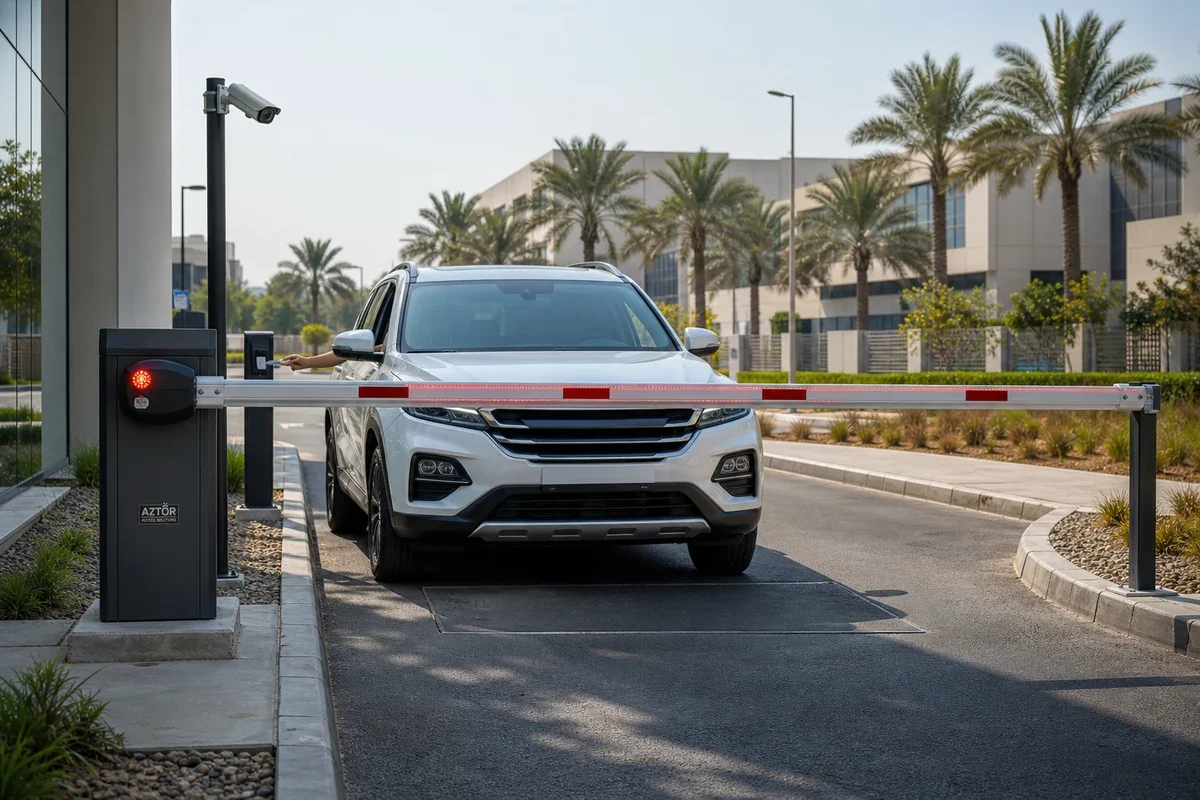
For example, a property may use automatic parking barriers, ANPR and UHF vehicle access at its main entrance while removable bollards secure secondary or emergency access routes.
This allows the overall vehicle access strategy to use automation where traffic is frequent and simpler physical control where access is occasional.
Emergency access requirements should be considered before installing removable bollards across a route intended for emergency vehicles.
If the route must be opened quickly, authorised personnel need reliable access to the unlocking method and a clear procedure for removing the bollards.
Where immediate or automated emergency opening is required, an Automatic Bollard or another suitable automated system may be more appropriate.
Removable bollards should have a defined storage location when they are not installed.
Leaving removed bollards unsecured near the entrance can create a trip hazard, damage the finish or result in the bollard being lost.
Suitable wall brackets, storage stands or designated secure storage areas can be considered depending on the product.
Existing removable bollards can also be replaced when posts, locks, sockets or covers become damaged.
A bollard that becomes difficult to remove may have debris, corrosion, deformation or damage within the ground receiver.
Forcing a damaged bollard out of the socket can cause additional damage, so the post and receiver should be inspected.
Ground sockets should be periodically cleaned so accumulated sand, dirt and debris do not interfere with correct insertion and removal.
Locks and moving locking components should be maintained according to the manufacturer's recommendations.
Following significant vehicle impact, the bollard, ground receiver, foundation and surrounding concrete or paving should be inspected.
Replacing only the visible removable post may not correct damage to the below-ground receiver or foundation.
Removable bollards generally require less maintenance than automatic bollards because there is no motorised drive system, but their locks, sockets, covers, foundations, finishes and physical condition still require periodic attention.
AZTÖR Automation provides removable bollard supply, installation and replacement as part of wider parking automation, gate automation and vehicle access solutions across Dubai, Abu Dhabi, Sharjah, Ajman, Ras Al Khaimah, Fujairah and Umm Al Quwain, with suitable project support available across the wider GCC.
Key Features
- Removable vehicle bollards
- Manual removable bollards
- Flexible vehicle access control
- Temporary vehicle passage
- Permanent ground socket
- Lockable removable posts
- Key-operated locking options
- Padlock options where applicable
- Integrated locking options
- Ground receiver systems
- Ground socket covers
- Flush receiver options where available
- Steel bollards
- Stainless-steel bollards
- Galvanised steel options
- Powder-coated finish options
- Architectural finish options
- Reflective band options
- High-visibility options
- Residential bollards
- Commercial bollards
- Parking bollards
- Industrial bollards
- Pedestrian-zone bollards
- Private road access
- Service road access
- Emergency access applications
- Maintenance access
- Delivery access
- Restricted parking areas
- Fixed Bollard integration
- Automatic Bollard integration
- Parking Barrier integration
- Parking automation project integration
- Gate automation project integration
- Vehicle access automation integration
- ANPR entrance project integration
- UHF vehicle access project integration
- RFID vehicle access project integration
- Equipment protection
- EV charger protection
- Utility protection
- Pedestrian separation
- Occasional vehicle access
- Manual access without electrical power
- No motor required
- No hydraulic drive required
- Outdoor UAE installation
- Corrosion-resistant options
- Ground socket cleaning
- Lock replacement
- Damaged bollard replacement
- Ground receiver replacement
- Foundation inspection
- Retrofit installation
- New construction installation
- Impact-rated options only where specifically tested and documented
Technical Specification
| Solution Type | Removable vehicle-control bollard |
|---|---|
| Primary Function | Flexible vehicle restriction with occasional manual access |
| Operation | Manual removal and reinstatement |
| Automation | Not required for standard removable bollards |
| Application | Parking, pedestrian, residential, commercial and industrial areas |
| Construction | Steel, stainless steel or manufacturer specific |
| Bollard Diameter | Manufacturer and project specific |
| Bollard Height | Manufacturer and project specific |
| Wall Thickness | Manufacturer and model specific |
| Finish | Stainless steel, galvanised, painted, powder-coated or manufacturer specific |
| Reflective Band | Available |
| Architectural Finish | Available |
| Ground Receiver | Manufacturer-specific socket or base system |
| Locking | Key, integrated lock, padlock or manufacturer specific |
| Socket Cover | Available on suitable systems |
| Removal Method | Manual |
| Storage | Designated secure storage recommended |
| Foundation | Product, substrate and application specific |
| Drainage | Site and manufacturer specific |
| Spacing | Application, vehicle and pedestrian requirement specific |
| Outdoor Application | Available |
| Corrosion Protection | Selected according to environment |
| Fixed Bollard Integration | Available |
| Automatic Bollard Integration | Available |
| Parking Automation Integration | Applicable as part of wider access design |
| Gate Automation Integration | Applicable as part of wider access design |
| Emergency Access | Suitable where manual removal procedure meets project requirements |
| Crash Rating | Only for independently tested and documented systems |
| Impact Rating | Product and tested configuration specific |
| Vehicle Impact Standard | Project-specified recognised standard where required |
| Installation | New construction or retrofit |
| Maintenance | Lock, socket, cover, foundation, corrosion and physical-condition inspection |
Removable bollards are most suitable where vehicle access is required occasionally rather than continuously throughout the day. Bollard construction, weight, spacing, locking method, ground receiver, foundation and drainage should be selected according to the actual site and operating requirement. Conventional removable bollards must not be described as crash rated unless the complete selected system has documented vehicle-impact test performance. AZTÖR Automation provides a free site inspection before finalising the bollard layout and installation.
Typical Applications
- Residential communities
- Gated communities
- Villa developments
- Apartment buildings
- Commercial towers
- Office buildings
- Business parks
- Corporate campuses
- Hotels
- Resorts
- Shopping developments
- Mixed-use developments
- Pedestrian zones
- Pedestrian plazas
- Private roads
- Private parking
- Reserved parking areas
- Service roads
- Maintenance entrances
- Secondary vehicle entrances
- Emergency access routes
- Delivery entrances
- Event access routes
- Building entrances
- Storefront areas
- Parking facilities
- Basement parking
- Multi-storey parking
- EV charging areas
- Utility equipment areas
- Government facilities
- Hospitals
- Schools
- Universities
- Warehouses
- Logistics centres
- Factories
- Industrial facilities
- Restricted vehicle areas
- Automatic gate projects
- Automatic bollard projects
- Parking barrier projects
- ANPR vehicle access projects
- UHF vehicle access projects
- Parking automation projects