Parking Barriers
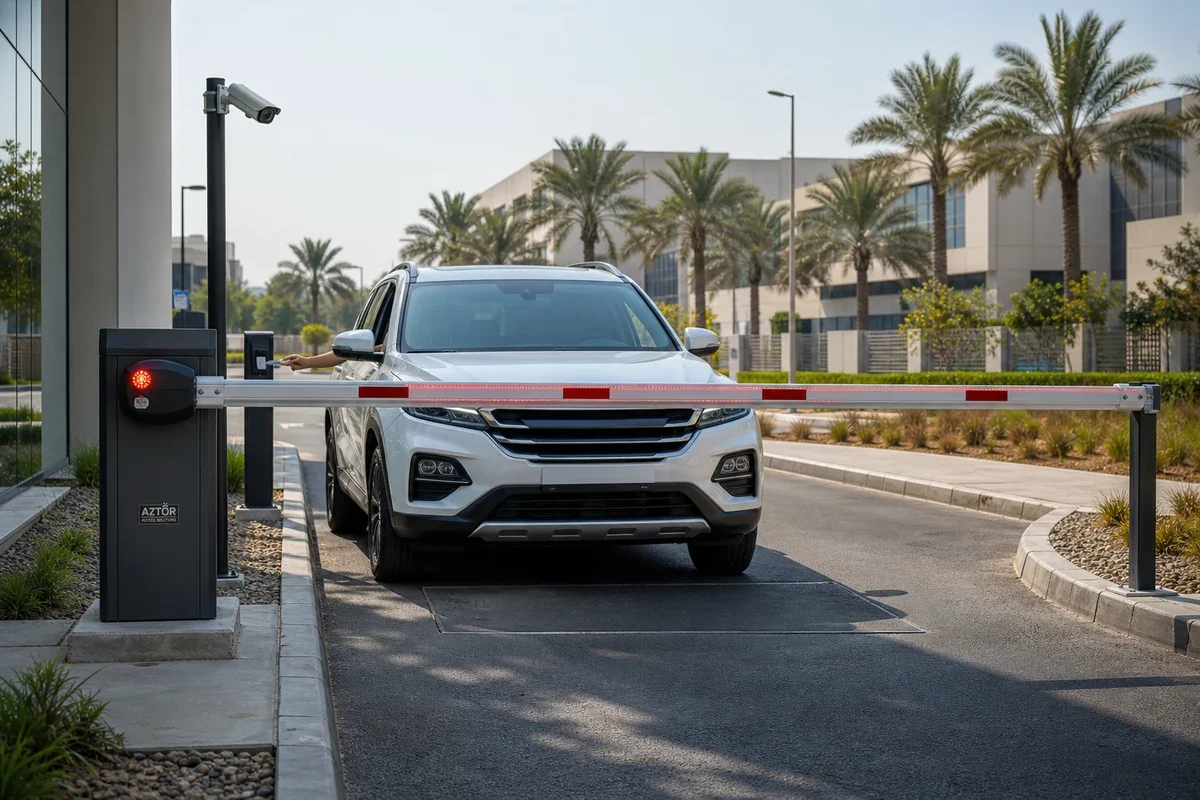
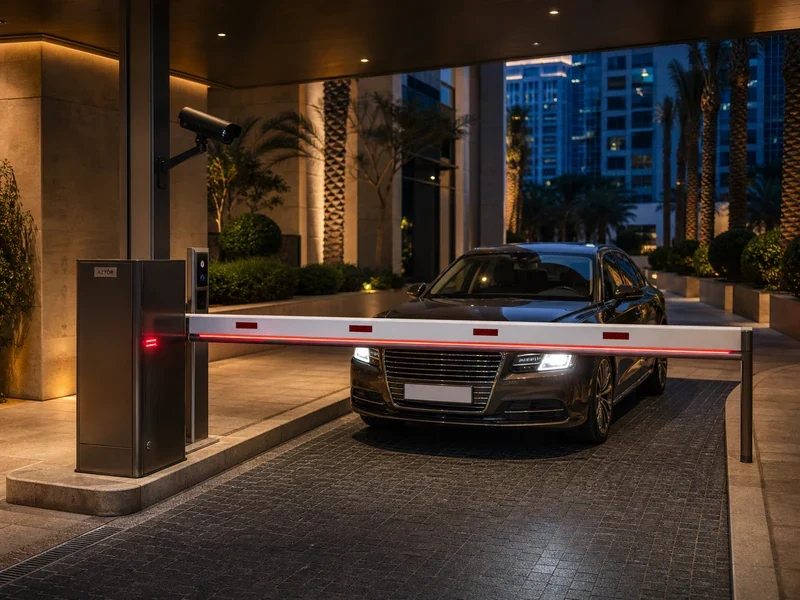
Parking barriers provide controlled vehicle access at car parks, residential communities, commercial buildings, offices, hotels, warehouses and other managed entrances. A motorised barrier arm opens only after receiving an authorised command or approved vehicle-access signal.
AZTÖR supplies, installs, integrates, repairs and maintains automatic parking barrier systems across the UAE, from simple remote-controlled entrances to high-traffic barriers integrated with advanced vehicle access systems.
The correct barrier should be selected around the actual entrance rather than simply choosing an arm length. Clear passage width, traffic frequency, opening speed, vehicle flow, operating hours, environmental exposure, access-control method and safety requirements all influence the final configuration.
Automatic boom barriers are available in different duty classes for residential, commercial and intensive-use applications. A lightly used villa or small private parking entrance does not necessarily require the same operator as a busy office tower, hospital, shopping centre or logistics facility.
Barrier arm length is determined by the clear vehicle lane and selected manufacturer's operating limits. Longer arms can affect opening speed and require appropriate balancing, supports or manufacturer-specific accessories.
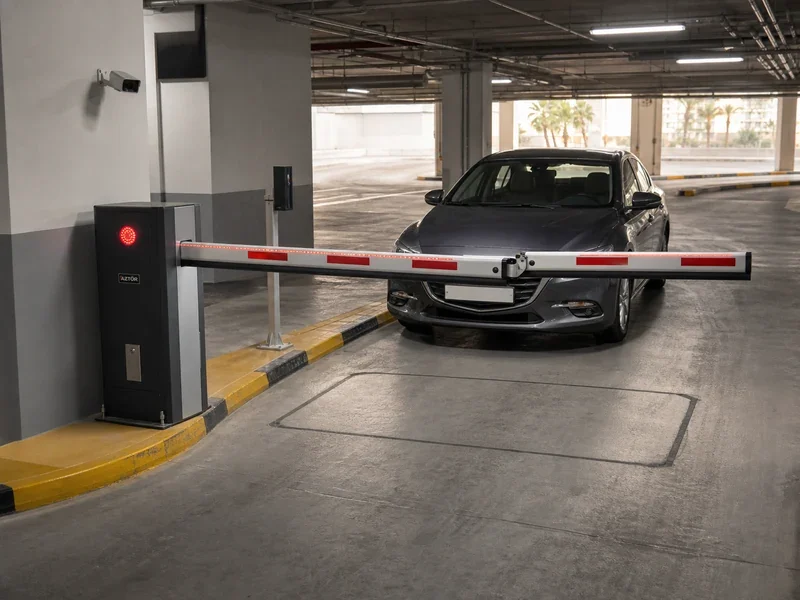
For entrances with restricted overhead clearance, articulated or folding barrier arms can be considered on compatible systems. These are useful in basement parking areas where a conventional straight arm cannot rise vertically through its normal travel.
AZTÖR provides a free site inspection for applicable parking barrier projects. We assess lane width, traffic direction, daily vehicle movements, road geometry, available foundations, power supply, access-control requirements and safety-device positions before recommending the system.
AZTÖR works with established vehicle-access automation brands used in the UAE and GCC, including FAAC, CAME, BFT, Nice and Benincà, selecting suitable equipment according to project requirements and product availability.
Parking barriers can be operated using handheld remote controls, push buttons, guard-room controls, key switches or other compatible command devices.
For controlled parking facilities, the barrier can also integrate with RFID or UHF vehicle readers, access cards, keypads, intercoms, GSM controllers, ticketing systems and other authorised access technologies.
Automatic Number Plate Recognition can be integrated where a suitable access-management system is required. An authorised vehicle's plate can be recognised by the ANPR system and an opening command sent to the barrier controller according to the configured permissions.
Long-range UHF access is particularly useful for residential communities, staff parking, offices and other locations where registered vehicles need convenient hands-free entry without stopping to present a conventional card.
Visitor access can also be coordinated with compatible intercom, QR, pre-registration or access-management platforms depending on the project and selected third-party system.
Induction loops installed in the roadway can perform vehicle-detection functions. Depending on the design, separate loops can be used for presence detection, opening logic, passage confirmation or protection against inappropriate barrier closing.
Photocells and other suitable safety devices can also be incorporated. Their purpose is different from access control: they monitor the barrier operating area and provide safety information to the controller.
A parking barrier should not be configured to close simply because a fixed timer has expired without considering vehicles still passing through the lane. Suitable presence and safety detection should be selected around the actual traffic arrangement.
Barrier arms can incorporate reflective markings, lighting or manufacturer-specific visibility accessories to make the boom easier for approaching drivers to identify, particularly at night or in basement parking.
Warning lights can also be installed where required. Traffic lights may be incorporated at controlled entrances where red and green vehicle instructions are useful.
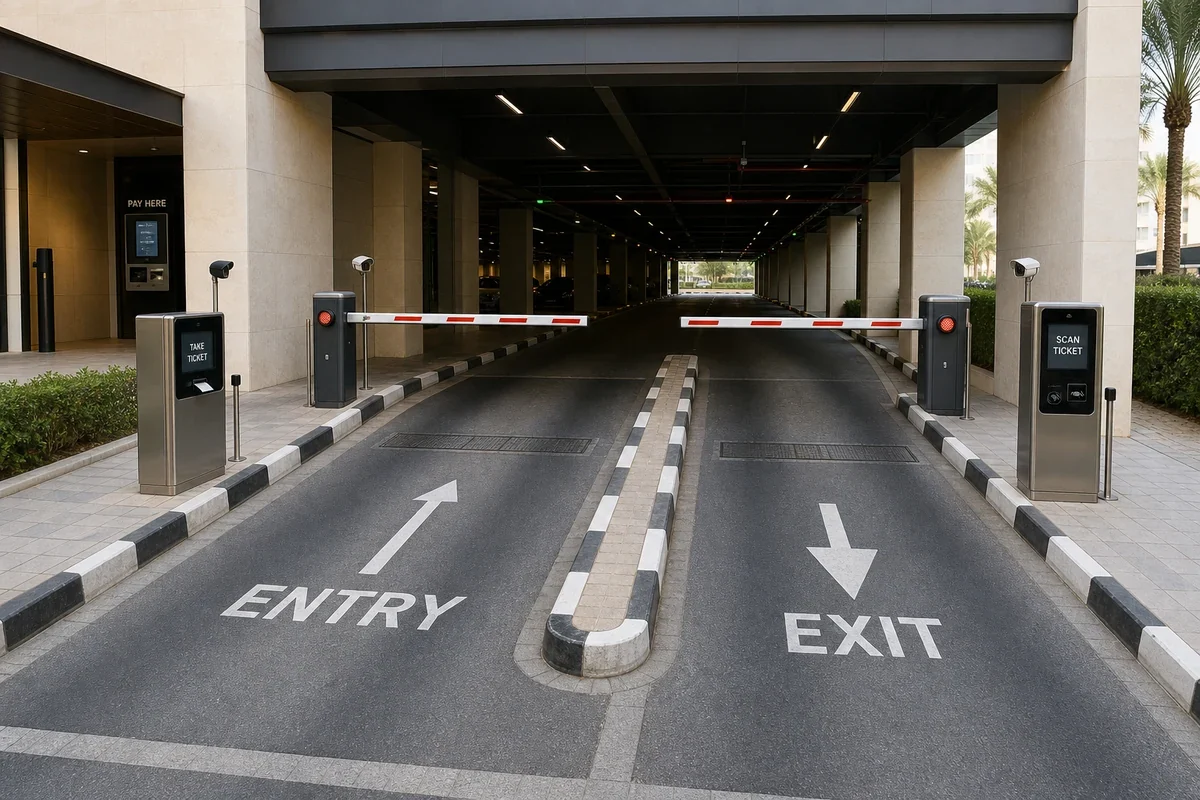
At two-way or multi-lane entrances, barrier operation should be coordinated with lane direction and traffic-management requirements. Entry and exit barriers may operate independently or as part of an integrated access-control system.
For high-traffic entrances, operating speed and duty capability become especially important. The barrier should be selected for the expected number and pattern of movements rather than relying only on a manufacturer's maximum boom length.
The physical lane layout is equally important. Islands, kerbs, bollards, reader pedestals, guard cabins and barrier cabinets should be positioned so that drivers can approach the access device without creating unnecessary vehicle conflicts.
For outdoor UAE installations, equipment should be selected for high ambient temperatures, dust, sand, humidity, direct sunlight and the expected site environment. Suitable foundations, cabinets, electrical protection and drainage around equipment also require attention.
Barrier foundations need to provide stable support for repeated operation and arm movement. Installing a suitable operator on weak or incorrectly constructed concrete can lead to movement, alignment problems and premature equipment failure.
Power and communication cabling should be routed through suitable conduits and coordinated before foundation works wherever possible. Loop-detector cables also require correct road-cutting and installation where induction loops are specified.
Battery backup can be provided on compatible barrier systems where limited operation during a power interruption is required. Actual operating cycles depend on the selected system, battery condition, accessories and power consumption and should not be stated as one universal figure.
Manual release or emergency operation is available on many automatic barrier systems. The exact procedure depends on the selected manufacturer and should remain accessible to authorised personnel.
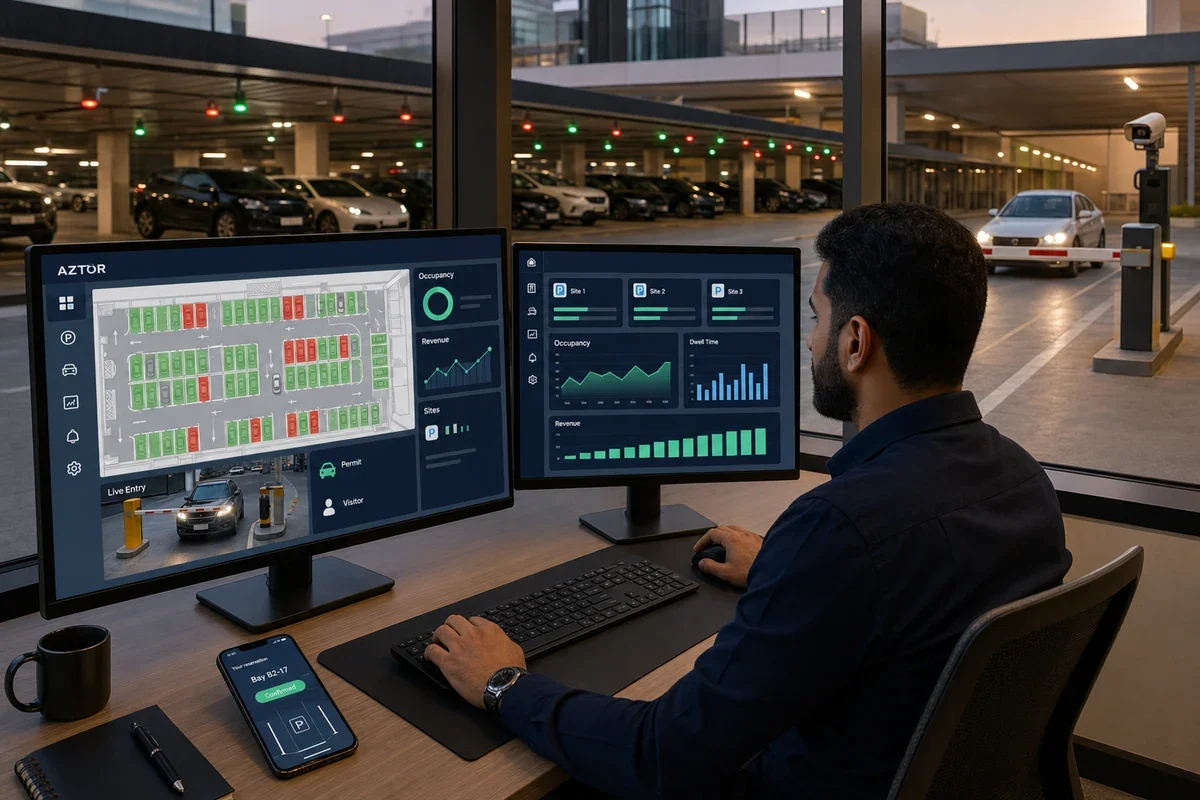
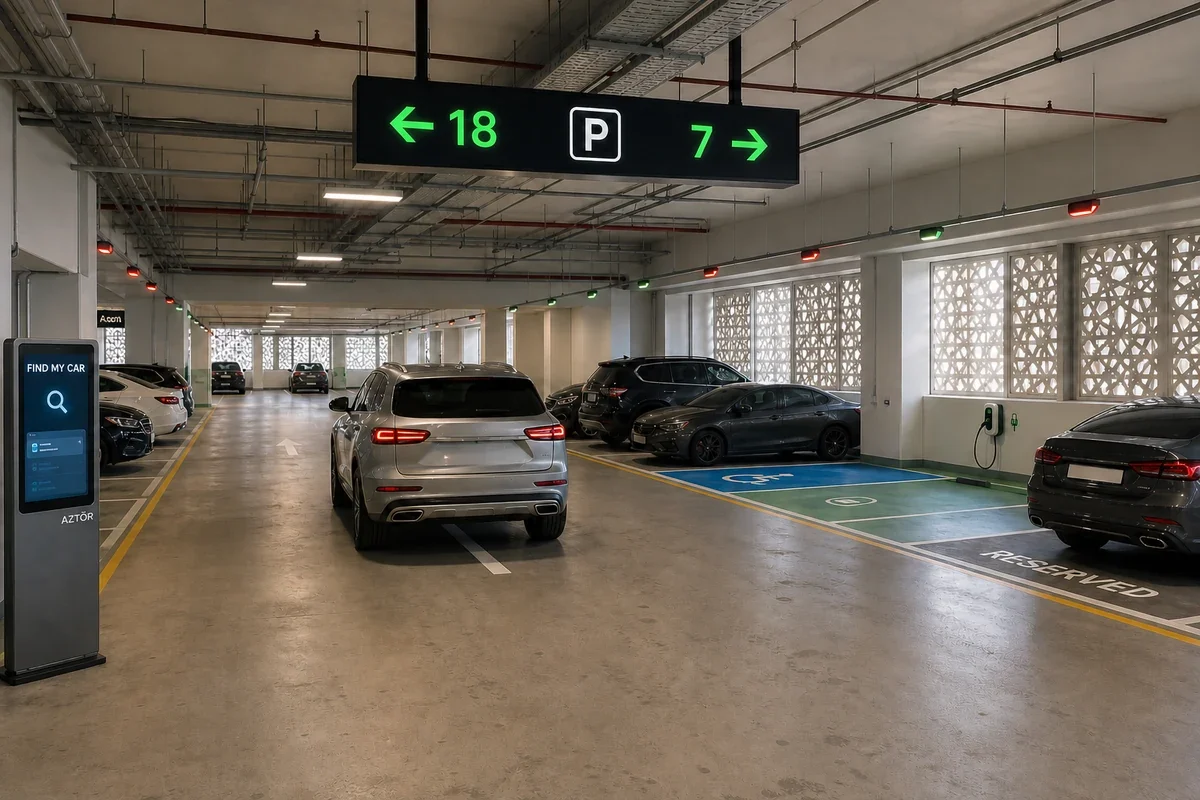
Parking barriers can also be integrated with broader parking-management systems for registered users, visitors, staff, tenants or paid parking. The barrier itself controls physical vehicle passage, while the connected software or access system determines who is authorised.
For residential communities, parking barriers can be combined with UHF vehicle credentials, visitor pre-registration and guard controls to reduce dependence on large numbers of conventional handheld remotes.
For commercial buildings, integration can include employee access, visitor management, ANPR, intercoms and compatible parking-management platforms.
AZTÖR can also upgrade existing barrier systems. Where the mechanical barrier remains suitable, access-control equipment, receivers, sensors, loop detectors, controllers or communication devices can often be modernised without replacing the entire installation.
Common barrier faults include the boom not opening, failing to close, stopping midway, repeatedly reopening, operating slowly, losing position or failing to respond to the access-control system.
The cause may be mechanical, electrical or control related. Springs or balancing mechanisms, motors, gearboxes, encoders, limit systems, control boards, photocells, loops, receivers and access-control interfaces may all need to be checked before deciding which component requires replacement.
A barrier arm that has been struck by a vehicle should be inspected before normal operation continues. The arm may be visibly damaged, but the cabinet, shaft, balancing mechanism, gearbox, foundation and internal components can also have been affected.
AZTÖR provides replacement barrier arms, motors, control boards, springs or balancing components, loop detectors, photocells, remote receivers and other compatible spare parts subject to the installed system.
Preventive maintenance is particularly valuable at high-use entrances. Mechanical movement, arm balance, cabinet condition, foundation, motor, controller, sensors, loops, safety equipment and access-control operation should be checked at suitable intervals.
AZTÖR provides parking barrier installation, access-control integration, repair and preventive maintenance across Dubai, Abu Dhabi, Sharjah, Ajman, Ras Al Khaimah, Fujairah and Umm Al Quwain, with suitable vehicle-access support available across the wider GCC.
Key Features
- Automatic parking barriers
- Automatic boom barriers
- Vehicle access barriers
- Residential parking barriers
- Commercial parking barriers
- Industrial entrance barriers
- High-traffic barrier options
- Fast-opening barrier options
- Straight boom arms
- Articulated boom arms
- Folding boom options
- Different boom lengths
- Heavy-duty barrier cabinets
- Balanced boom mechanisms
- Automatic barrier motors
- Programmable control panels
- Remote-control operation
- Guard-room controls
- Push-button operation
- Key-switch operation
- RFID access integration
- UHF long-range vehicle access
- Card-reader integration
- Keypad integration
- GSM controller integration
- Intercom integration
- ANPR integration
- Visitor access integration
- Parking-management integration
- Ticketing-system integration where compatible
- Induction loop detectors
- Vehicle presence detection
- Passage detection
- Safety photocells
- Safety sensor integration
- Automatic closing logic
- Traffic-light integration
- Warning-light integration
- Reflective boom markings
- LED boom options where available
- Entry and exit lane control
- Multi-lane integration
- Access-control interlocking
- Battery backup options
- Manual emergency release
- Outdoor UAE configurations
- Existing barrier upgrades
- Barrier arm replacement
- Motor and gearbox repair
- Control-board repair
- Loop detector troubleshooting
- Photocell replacement
- Remote receiver replacement
- Preventive maintenance and AMC support
Technical Specification
| Product Type | Automatic parking barrier |
|---|---|
| Primary Function | Controlled vehicle entry and exit |
| Application | Residential, commercial, parking and industrial vehicle entrances |
| Barrier Type | Automatic boom barrier |
| Boom Configuration | Straight, articulated, folding or manufacturer-specific |
| Boom Length | Selected according to lane width and manufacturer limits |
| Opening Speed | Manufacturer, boom length and model specific |
| Operating Duty | Residential, commercial, intensive-use or manufacturer specific |
| Motor | Manufacturer-specific automatic barrier operator |
| Balancing System | Spring or manufacturer-specific counterbalance arrangement |
| Control Panel | Programmable barrier controller |
| Operation | Automatic, controlled or authorised manual command |
| Remote Control | Available |
| Push Button | Available |
| Guard Control | Available |
| RFID Integration | Available |
| UHF Integration | Available |
| ANPR Integration | Available |
| Card Reader Integration | Available |
| Keypad Integration | Available |
| Intercom Integration | Available |
| GSM Integration | Available |
| Parking System Integration | Available with compatible systems |
| Induction Loops | Available |
| Vehicle Presence Detection | Available |
| Safety Photocells | Available |
| Traffic Lights | Available |
| Warning Lights | Available |
| Boom Lighting | Available on compatible models |
| Automatic Closing | Programmable with appropriate detection and safety logic |
| Battery Backup | Available on compatible systems |
| Manual Release | According to selected manufacturer |
| Foundation | Manufacturer and project specific |
| Power Supply | According to selected barrier operator |
| Communication | Manufacturer and integrated-system specific |
| Outdoor Application | Available with suitable equipment |
| Environmental Rating | Manufacturer and model specific |
| Installation | New installation, replacement or access-system upgrade |
| Maintenance | Boom, balancing mechanism, motor, controls, sensors and access equipment |
Parking barrier selection should consider lane width, boom length, expected daily traffic, required opening speed, operating duty, vehicle-detection method and access-control requirements. A longer boom or faster opening time should not be specified independently of the selected manufacturer's operating limits. Safety devices and loop positions must be designed around the actual lane. AZTÖR provides a free site inspection before confirming the final barrier configuration.
Typical Applications
- Residential communities
- Villa compounds
- Apartment buildings
- Residential towers
- Commercial buildings
- Office towers
- Business parks
- Shopping centres
- Retail developments
- Hotels
- Hospitals
- Schools
- Universities
- Government facilities
- Staff parking areas
- Visitor parking areas
- Private car parks
- Basement parking
- Multi-storey car parks
- Warehouses
- Logistics centres
- Factories
- Industrial facilities
- Distribution centres
- Gated communities
- Mixed-use developments
- Corporate offices
- Vehicle checkpoints
- Controlled parking entrances
- Employee parking
- Tenant parking
- Existing barrier upgrades